
30 Basement Bathroom Maintenance Tips Every Homeowner Should Know
You should inspect your basement bathroom regularly for leaks, check pipes and fixtures for drips or corrosion, and tighten or replace worn parts promptly. Keep drains clean and clear by using enzymatic cleaners and monitor your sump pump’s function twice a year. Maintain proper ventilation to control moisture and prevent mold with exhaust fans and dehumidifiers. Seal walls with vapor barriers and use mildew-resistant materials. Track repairs in a log to stay ahead—there’s plenty more to help keep your bathroom in top shape.
Check Basement Bathroom Ventilation for Moisture Control
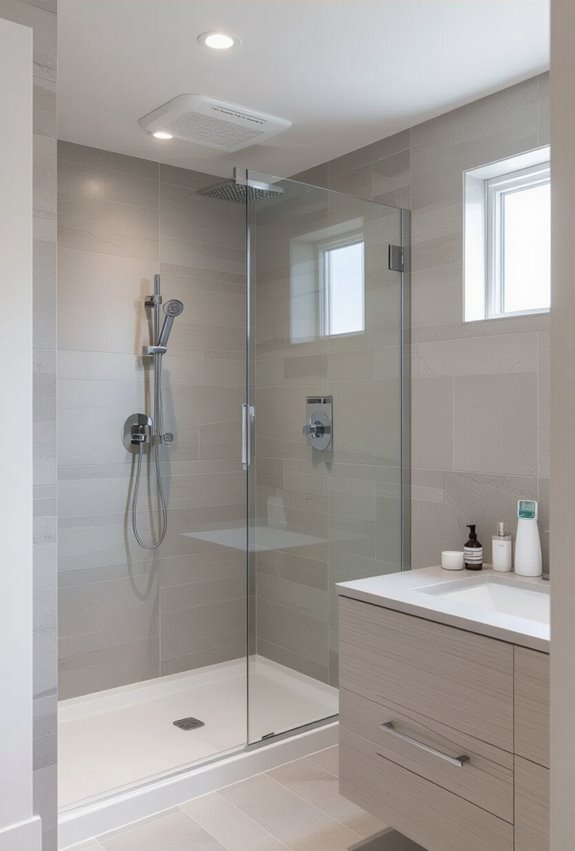
After checking for leaks, turn your attention to ventilation to keep moisture in check. Conduct an airflow assessment to guarantee proper circulation, which helps prevent mold and mildew.
Verify vent placement directs humid air outside efficiently. If ventilation feels weak or vents are poorly positioned, consider upgrading or repositioning them to maintain a dry, healthy basement bathroom environment.
Test Basement Bathroom Sump Pump Functionality
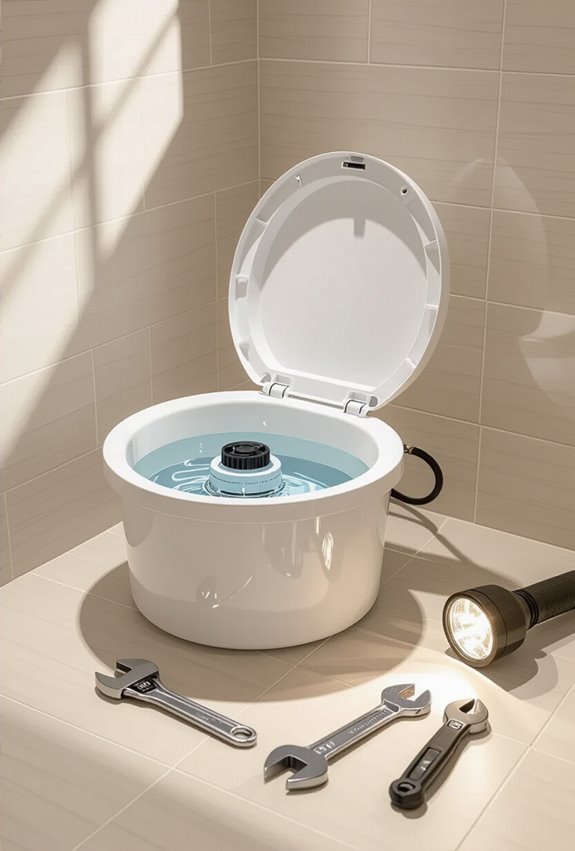
You should test your basement bathroom sump pump at least twice a year to make sure it’s working properly when you need it most. Check both the pump and the battery backup system during your test frequency routine.
Regular testing helps avoid failures and costly water damage, ensuring your sump pump activates promptly during heavy moisture or flooding events.
Seal Basement Bathroom Walls Against Water Seepage
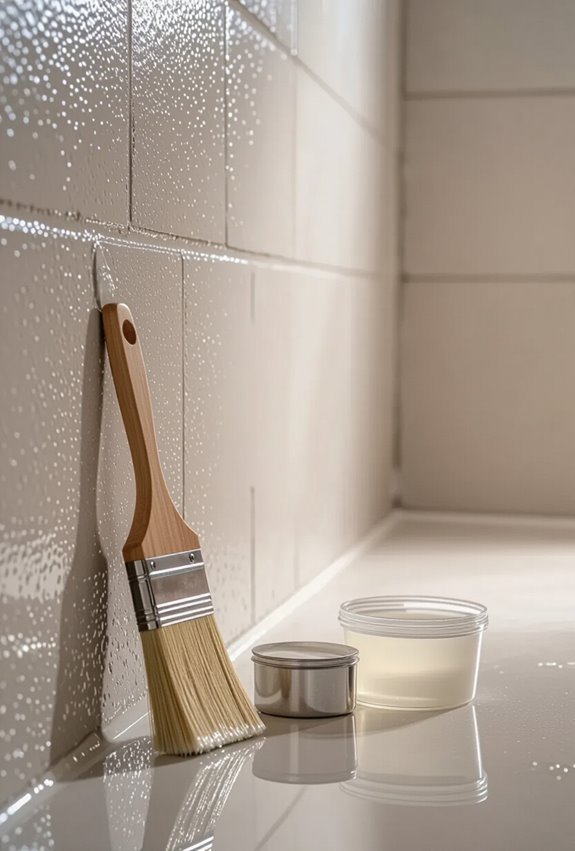
Regularly testing your sump pump helps prevent water buildup, but sealing your basement bathroom walls adds another layer of protection against seepage.
Apply a vapor barrier on the walls to block moisture and install a capillary break between the concrete and drywall. This combination stops water from creeping through tiny pores, keeping your bathroom dry and mold-free.
Maintain Grout and Caulk in Basement Bathroom Tile
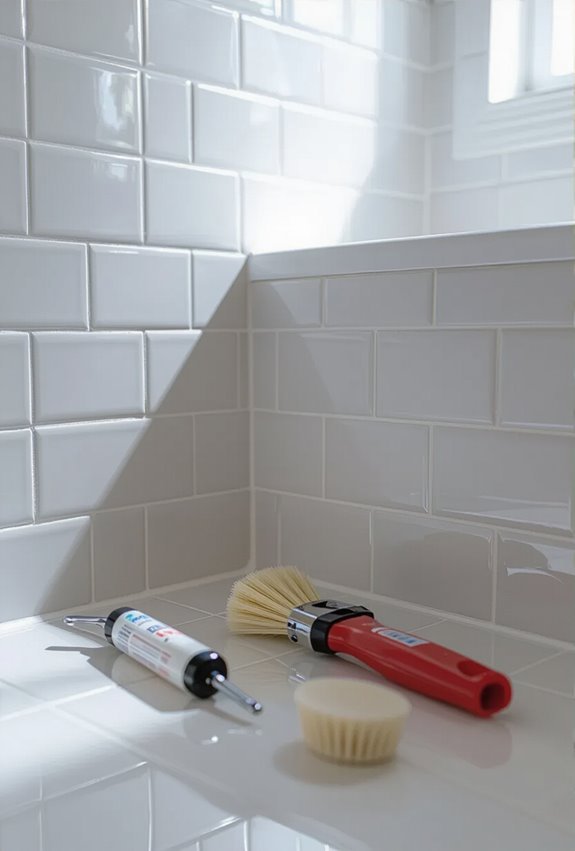
Maintaining grout and caulk in your basement bathroom tile prevents water from seeping into walls and floors, which can lead to mold and damage.
Use epoxy grout for its durability and resistance to moisture.
Regularly inspect and replace cracked grout or silicone caulk to maintain a watertight seal.
This simple upkeep keeps your basement bathroom dry and mold-free.
Replace Worn-Out Basement Bathroom Fixtures Promptly
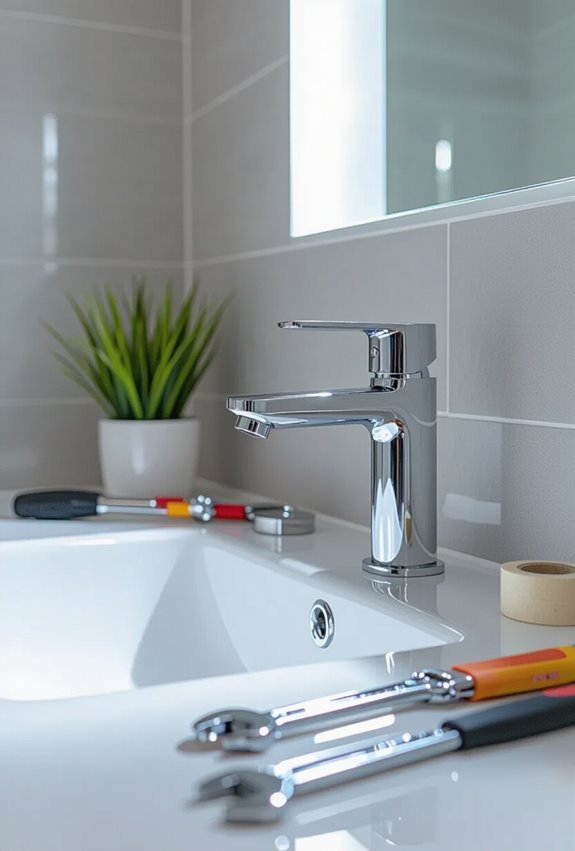
Keeping grout and caulk in good shape helps prevent water damage, but your basement bathroom fixtures also need attention. Replace worn-out fixtures promptly to avoid leaks and discomfort. Choose budget fixtures with ergonomic handles to improve usability without breaking the bank.
Timely replacements keep your bathroom functional and prevent costly repairs down the line. Don’t delay—act now to maintain efficiency.
Clean Basement Bathroom Exhaust Fans to Improve Airflow
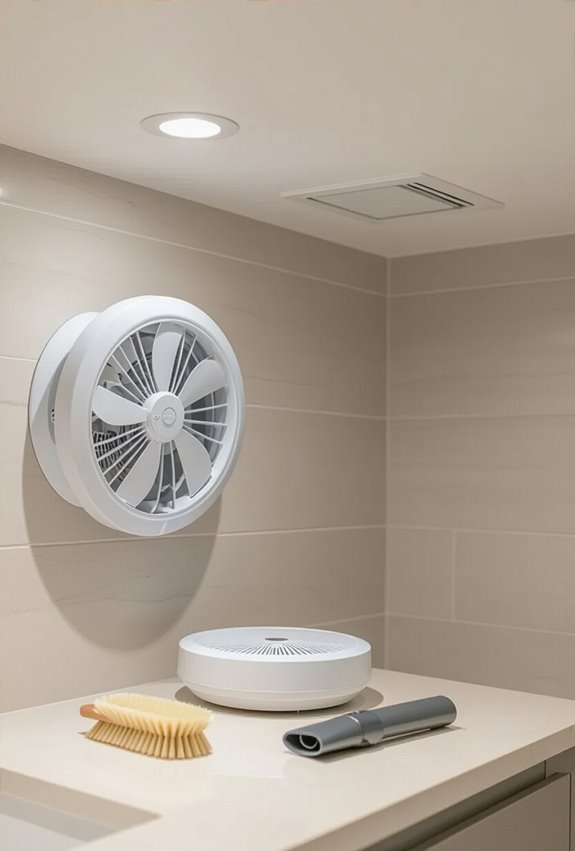
You should regularly clean your basement bathroom exhaust fan to guarantee it runs efficiently and keeps the air fresh. Dust buildup can cause motor noise and reduce fan balance, leading to inefficient airflow.
Remove the cover, clean the blades thoroughly, and check for any wobbling. Proper maintenance prevents strain on the motor and extends the fan’s lifespan.
Use Mold-Resistant Paint in Basement Bathroom Areas
After ensuring your exhaust fan runs smoothly, the next step is to protect your basement bathroom from moisture damage.
Use mold-resistant paint with low VOC coatings to keep the air quality safe.
Apply antimicrobial primers before painting to prevent mold growth on walls.
These products create a durable barrier, helping you maintain a cleaner, healthier basement bathroom environment.
Inspect Basement Bathroom Pipes for Corrosion or Damage
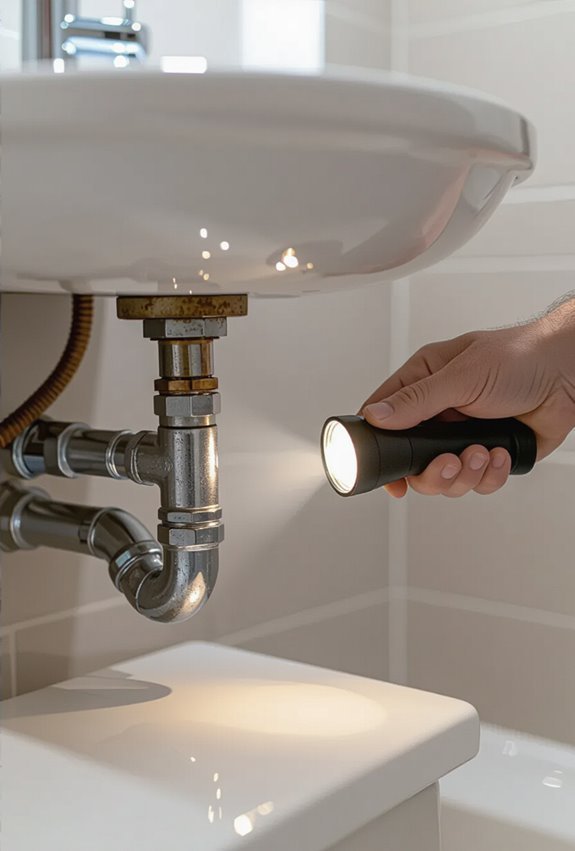
Because basement bathrooms are prone to moisture and temperature fluctuations, their pipes can corrode or sustain damage over time.
You should regularly inspect pipe insulation for wear and make certain joint consolidation is secure to prevent leaks.
Address any signs of rust or cracks promptly to avoid costly repairs and maintain your plumbing’s efficiency in this damp environment.
Install a Dehumidifier in the Basement Bathroom if Needed
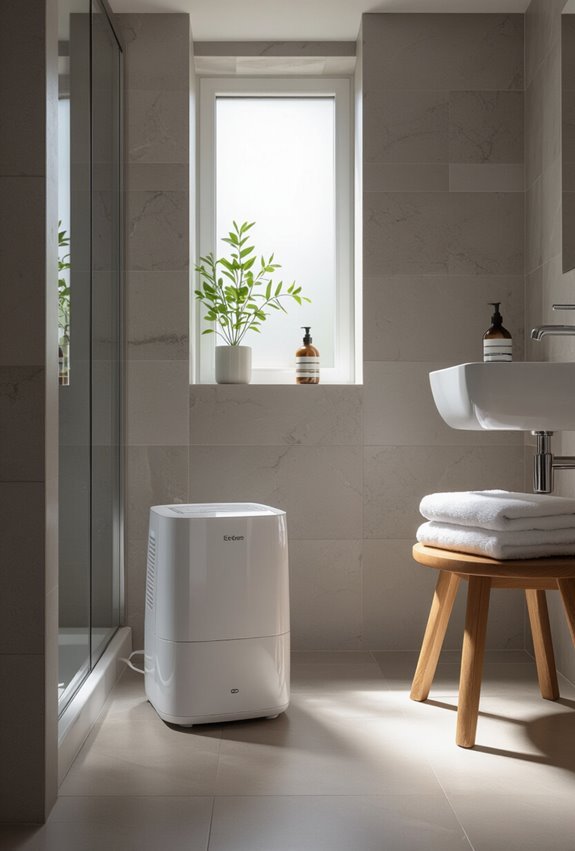
You’ll often find that basement bathrooms struggle with excess moisture, making a dehumidifier a smart addition.
Choose a portable dehumidifier for flexibility and ease of use.
Look for energy efficient models to keep electricity costs low while preventing mold and mildew growth.
Regularly monitor humidity levels to maintain a comfortable, dry environment in your basement bathroom.
Tighten Loose Basement Bathroom Faucet Handles
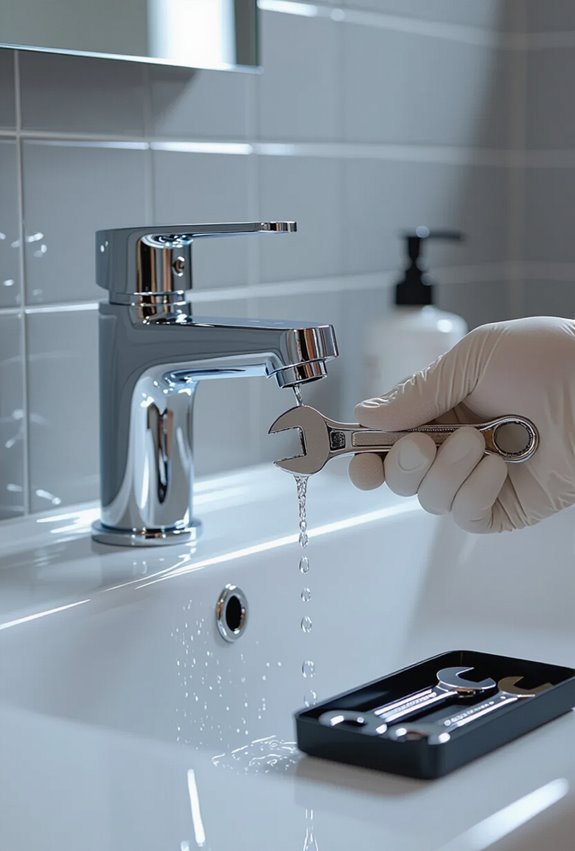
Check your basement bathroom faucet handles for looseness to prevent leaks and water waste. If you notice any wobbling, perform handle tightening using a screwdriver or wrench.
Tightening handles regularly helps avoid unnecessary drips and extends the faucet’s life. If tightening doesn’t fix the issue, consider valve replacement to stop leaks and maintain proper water flow.
Use Water-Efficient Fixtures in the Basement Bathroom
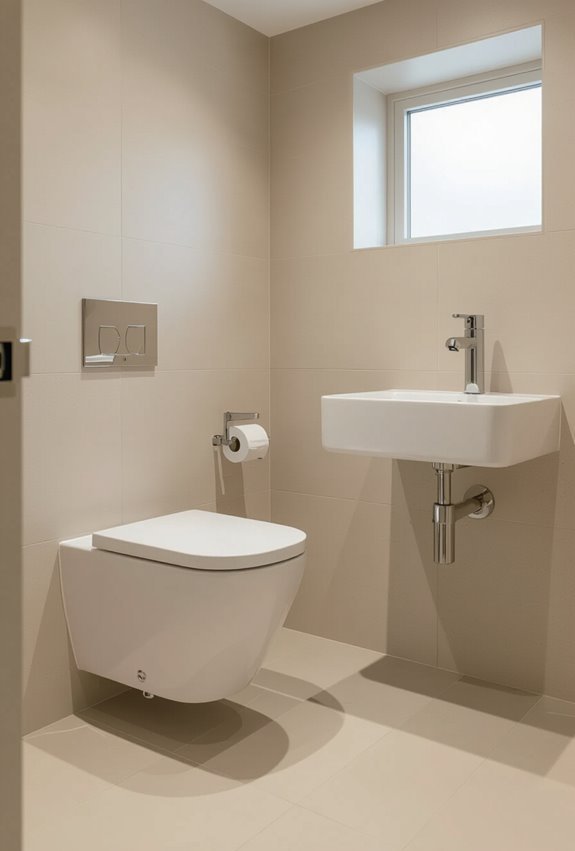
Installing water-efficient fixtures in your basement bathroom can markedly reduce water consumption and lower utility bills.
Swap out old fixtures for low flow faucets to minimize water waste without sacrificing pressure.
Consider dual flush toilets to control water usage for liquid and solid waste efficiently.
These upgrades save money and help conserve water, making your basement bathroom more eco-friendly and cost-effective.
Clear Basement Bathroom Vents and Air Returns of Dust
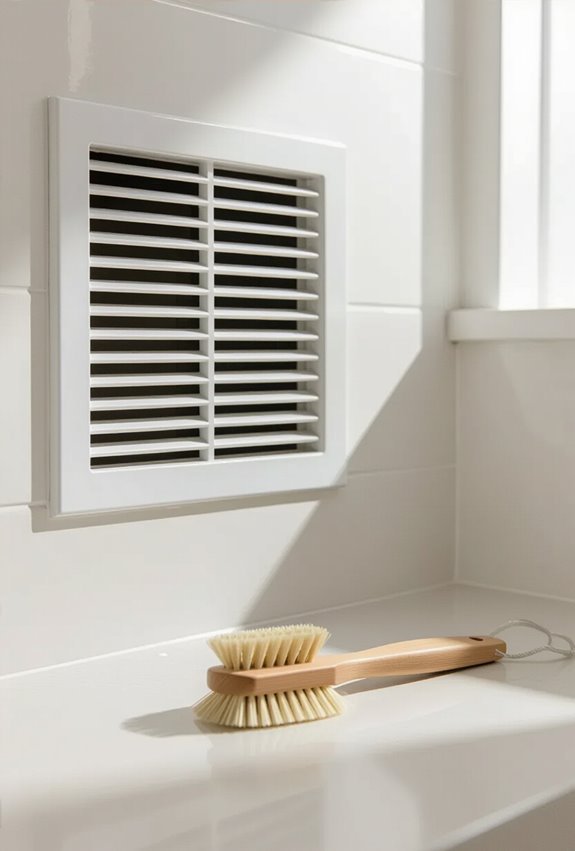
Dust often builds up quickly in basement bathroom vents and air returns, reducing airflow and affecting air quality.
To maintain fresh air, clean ducts regularly and replace filters as needed.
This duct cleaning prevents dust buildup, improves ventilation, and keeps your bathroom healthier.
Don’t forget to check vents for blockages to guarantee peak performance and prolong your HVAC system’s life.
Inspect Basement Bathroom Windows for Drafts or Leaks
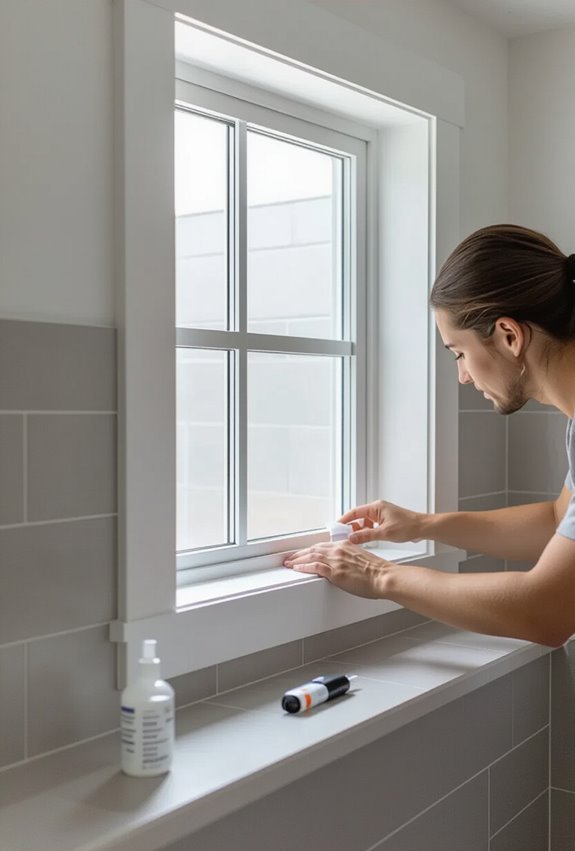
Feel around the edges of your basement bathroom windows to spot any drafts or leaks that could be letting cold air in and warm air out.
If you find gaps, improve window insulation by applying weatherstripping or using draft stoppers.
Also, check the glass sealant for cracks or wear, and reseal as needed to keep your bathroom energy-efficient and comfortable year-round.
Regularly Test Basement Bathroom GFCI Outlets for Safety
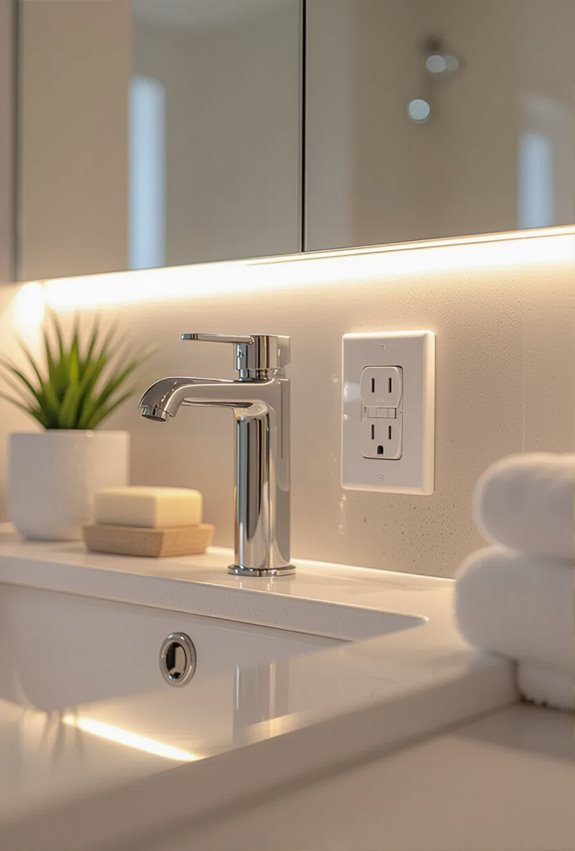
Maintaining your basement bathroom goes beyond preventing plumbing clogs. You should regularly perform GFCI testing to guarantee the outlets trip properly, protecting you from electrical shocks in damp areas.
Don’t forget to check for clear outlet labeling, so everyone knows which outlets are GFCI-protected. This simple step keeps your bathroom safe and up to code.
Maintain Basement Bathroom Lighting Fixtures and Bulbs
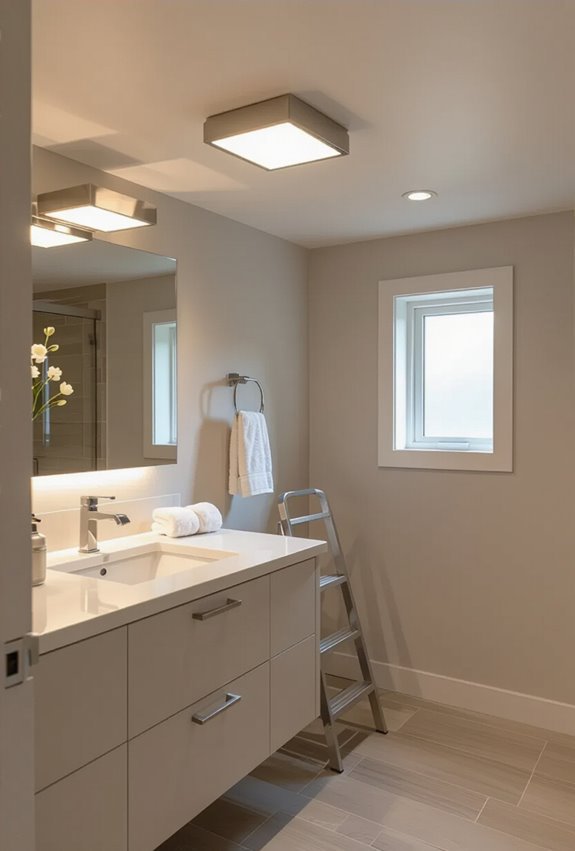
Keep an eye on your basement bathroom lighting fixtures and bulbs to make sure they’re working efficiently and safely.
Consider LED upgrades to save energy and reduce bulb replacements. Installing dimmers lets you adjust brightness for comfort and ambiance while extending bulb life.
Regularly clean fixtures to prevent dust buildup, ensuring consistent light and preventing overheating.
Check Basement Bathroom Door Seals to Prevent Drafts
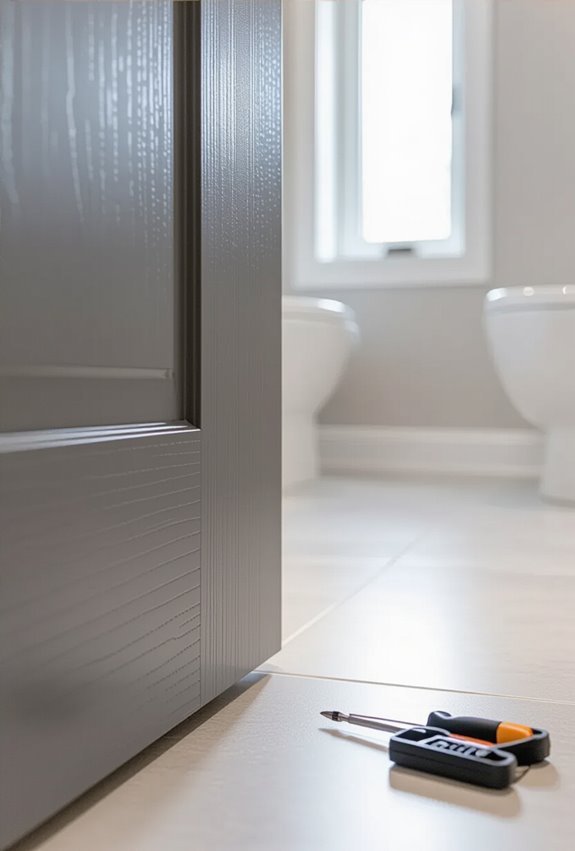
Regularly inspecting the door seals in your basement bathroom helps prevent chilly drafts and moisture intrusion.
Check for gaps or worn weather stripping, and replace it as needed to maintain a tight seal.
Don’t forget threshold insulation, which blocks cold air at the bottom of the door.
Keeping these components in good shape guarantees your bathroom stays comfortable and energy-efficient.
Use Mildew-Resistant Shower Curtains or Doors
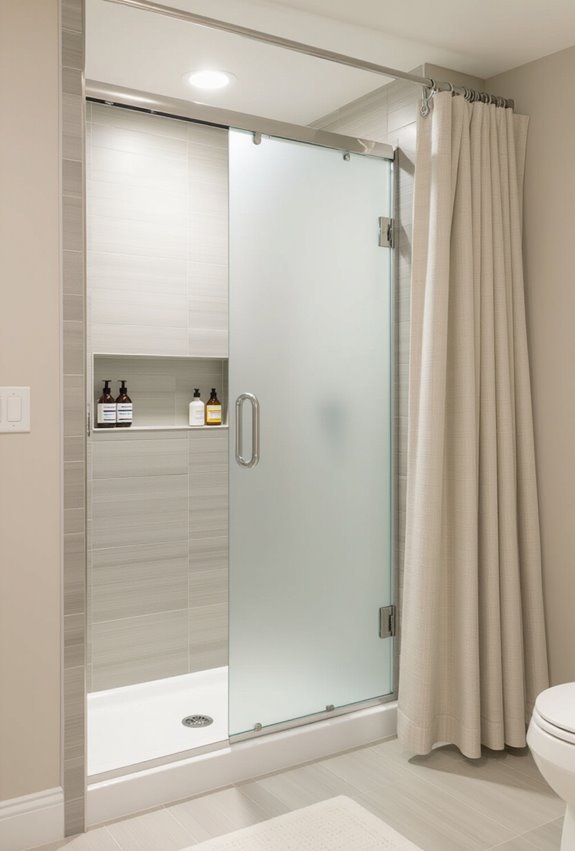
When you choose mildew-resistant shower curtains or doors, you greatly reduce the chance of mold growth in your basement bathroom. Opt for anti mildew liners combined with quick drying fabrics to keep moisture at bay.
These materials prevent dampness buildup, making your bathroom cleaner and healthier. Installing them is a simple step that helps maintain a fresh, mold-free environment.
Dry Basement Bathroom Surfaces After Use to Prevent Mold
Choosing mildew-resistant shower curtains or doors is a great start, but keeping your basement bathroom surfaces dry after each use plays an equally important role in preventing mold.
Use a post shower towel to quickly wipe down wet areas, and consider installing a mirror defogger to reduce condensation buildup. These simple steps help maintain a clean, mold-free bathroom environment.
Keep a Maintenance Log for Basement Bathroom Repairs and Checks
Noticing fluctuations in water pressure is just one part of keeping your basement bathroom in good shape.
You should keep a maintenance journal to track repairs and routine checks. This helps you spot patterns and plan ahead.
Recording a detailed repair timeline makes certain you don’t miss important fixes, saving you time and preventing costly issues down the road.
Regular Inspections
Regular inspections are essential for maintaining your basement bathroom’s functionality and safety.
Check fixtures, plumbing, and electrical systems regularly to catch any signs of wear or damage early.
Look for leaks, corrosion, or loose connections that could lead to bigger issues down the line.
Check for Moisture
After completing your regular inspections, it’s time to check for moisture, which can lead to significant problems if left unaddressed.
Look for:
- Dark spots on walls or ceilings that indicate water damage.
- Musty odors that signal hidden mold.
- Condensation on pipes or surfaces suggesting excess humidity.
Address these issues promptly to protect your basement bathroom from costly repairs.
Maintain Proper Ventilation
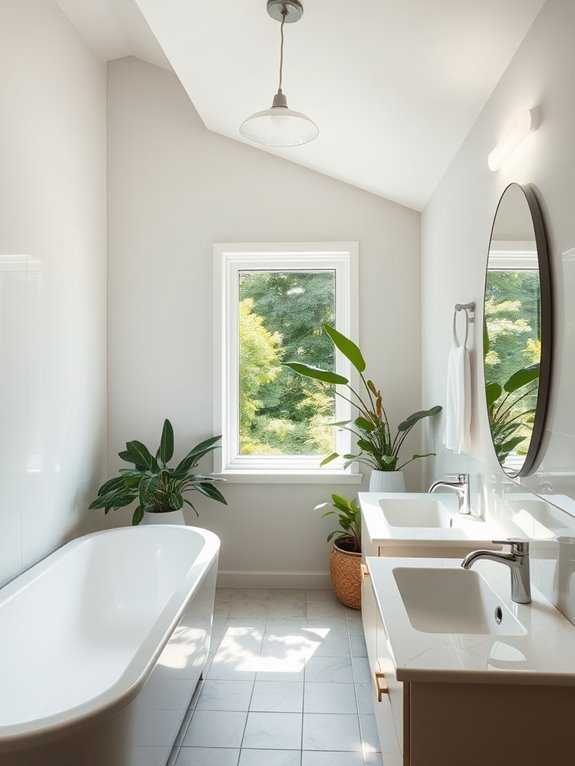
Since proper ventilation is essential in a basement bathroom, you should confirm fresh air circulates to prevent moisture buildup and mold growth. Install an exhaust fan, open windows when possible, and consider a dehumidifier. Regularly check vents for blockages to maintain airflow.
| Tip | Action |
|---|---|
| Install Exhaust Fan | Verify it’s functional |
| Open Windows | When weather permits |
| Use Dehumidifier | Set to ideal level |
| Check Vents | Monthly inspections |
| Monitor Humidity | Aim for 30-50% levels |
Clean the Toilet Regularly
Maintaining a clean toilet in your basement bathroom is just as important as ensuring proper ventilation.
Regular cleaning prevents odors and bacteria buildup. To keep it fresh, follow these steps:
- Scrub the bowl with a toilet brush and cleaner.
- Wipe the seat and lid with disinfectant wipes.
- Check and refill the toilet tank with cleaner tablets.
Stay on top of it for a healthier space!
Inspect Plumbing Fixtures
Regularly inspecting your plumbing fixtures is essential for preventing leaks and ensuring everything functions smoothly.
Check your faucets, showerheads, and pipes for any signs of wear or damage. Look for corrosion, loose connections, or water stains.
Tighten any loose fittings and replace worn washers to avoid future issues. Staying proactive with these inspections will help maintain a healthy and functional basement bathroom.
Test Water Pressure
To guarantee your basement bathroom functions properly, testing the water pressure is essential.
Low or high pressure can lead to issues. Here’s how you can check it:
- Use a pressure gauge on the faucet.
- Turn on the faucet fully, noting the reading.
- Compare the result with standard recommendations (40-60 psi).
Seal Grout Joints
After ensuring your water pressure is just right, focus on sealing grout joints to protect your basement bathroom from moisture damage.
Apply a high-quality grout sealer to all joints, preventing water from seeping in.
Make sure to reapply every year or as needed, especially in high-moisture areas.
This simple step can save you from costly repairs down the line.
Clean Showerheads and Faucets
Cleaning showerheads and faucets is essential for maintaining water flow and preventing mineral buildup.
Regular cleaning keeps your fixtures looking great and functioning properly. Here are three simple steps to follow:
- Soak the showerhead in a vinegar solution to dissolve mineral deposits.
- Wipe faucets with a soft cloth to avoid scratches.
- Rinse everything thoroughly to guarantee no residue remains.
Replace Worn Caulk
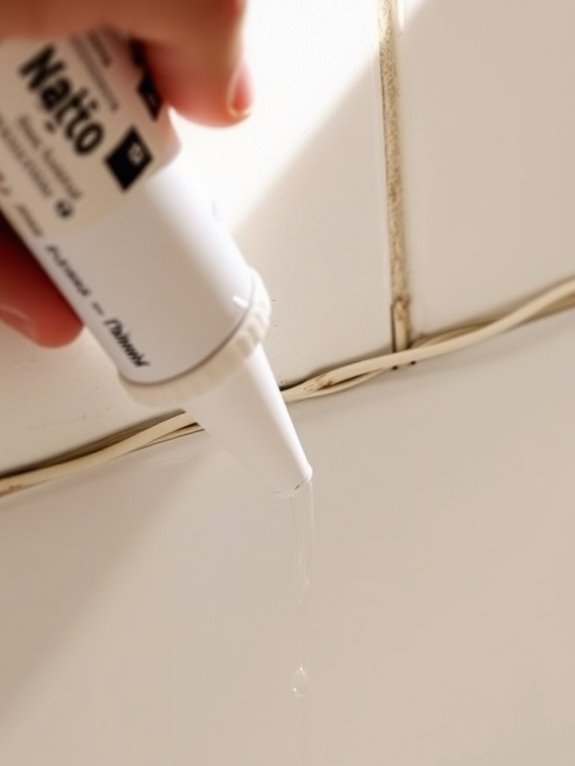
Replacing worn caulk is essential for preventing water damage and maintaining a clean, polished look in your basement bathroom.
Inspect the caulk around sinks, tubs, and showers regularly. If you notice cracks or peeling, remove the old caulk with a utility knife and clean the area thoroughly.
Apply fresh caulk smoothly and evenly, ensuring a tight seal to protect against leaks.
Monitor for Mold Growth
While you’re keeping an eye on your basement bathroom’s overall condition, monitoring for mold growth is essential.
Mold can thrive in damp areas, so check for:
- Dark spots on walls or ceilings, often indicating hidden moisture.
- Musty odors that signal mold presence.
- Peeling paint or wallpaper, which can suggest underlying mold issues.
Stay vigilant to keep your space healthy and mold-free!
Keep Drains Clear
To maintain a functional basement bathroom, keeping drains clear is essential, as clogged drains can lead to unpleasant odors and potential water damage.
Regularly check and clean your drains by removing hair, soap scum, and other debris. You can use a mixture of baking soda and vinegar for maintenance.
Additionally, consider installing drain screens to catch larger particles and prevent clogs.
Inspect Lighting Fixtures
One of the key aspects of maintaining your basement bathroom is regularly inspecting the lighting fixtures.
Make sure to check for any flickering lights, burnt-out bulbs, or loose connections. Addressing these issues can improve both safety and ambiance.
Here are three important tasks to keep in mind:
- Replace any burnt-out bulbs immediately.
- Tighten loose fixtures.
- Clean light covers for maximum brightness.
Consider Water Softening
If you’ve noticed hard water stains or scaling in your basement bathroom, considering water softening could make a significant difference.
Hard water can lead to build-up on fixtures and appliances, causing damage over time. A water softener reduces mineral content, helping to prevent stains and prolong the life of your bathroom features.
Plus, it can improve soap lathering and overall cleaning efficiency.
Update Bathroom Design
Updating your basement bathroom design can transform it into a more inviting and functional space.
Consider these ideas to enhance the aesthetic:
- Add a stylish vanity for extra storage and a modern touch.
- Incorporate bright lighting to create a warm ambiance.
- Use vibrant tiles to add personality and make the space feel larger.
These changes will refresh your basement bathroom beautifully!
Schedule Professional Maintenance
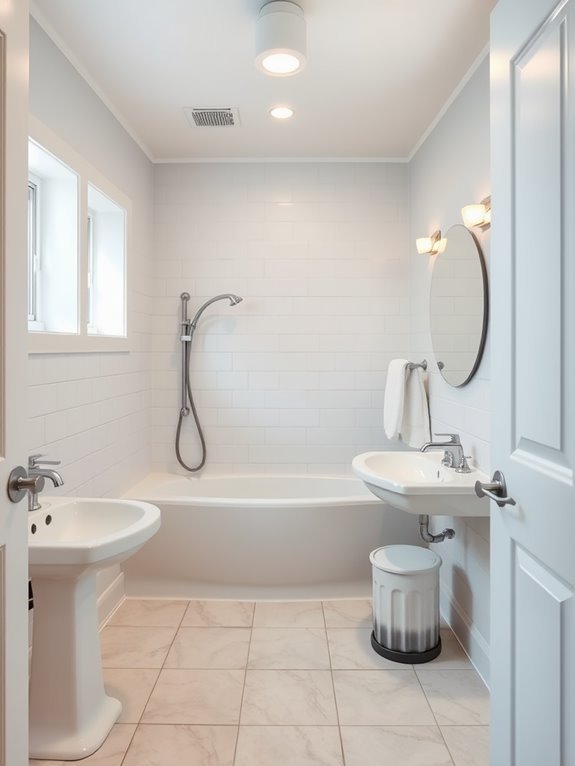
Scheduling professional maintenance for your basement bathroom is essential, especially since regular upkeep can prevent costly repairs down the line.
Hire experts to inspect plumbing, ventilation, and electrical systems. They’ll identify potential issues before they escalate.
Aim for annual maintenance checks, ensuring everything functions smoothly.
Conclusion
By nurturing your basement bathroom like a thriving garden, you can cultivate a space that’s both functional and inviting. Regular inspections and diligent maintenance act as the sunlight and water, keeping issues at bay. Just as you prune dead branches, don’t hesitate to update old fixtures or designs. With proper ventilation and cleanliness, your bathroom will bloom with freshness, becoming a sanctuary you can enjoy. Embrace these tips, and watch your basement oasis flourish!
