
How to Clean Mold Off Painted Wood the Right Way
You can safely remove mold from painted wood by ventilating the area, wearing coveralls, gloves, goggles and an N95/P100 mask, and moving nearby items away. Test a mild detergent or vinegar solution on an inconspicuous spot, gently scrub with a soft cloth or small tools, then rinse and dry thoroughly using fans or a dehumidifier. Monitor moisture sources and repair leaks; sand, prime and repaint if needed. Keep going to learn when to repair, replace, or call pros.
Quick Steps to Remove Mold From Painted Wood
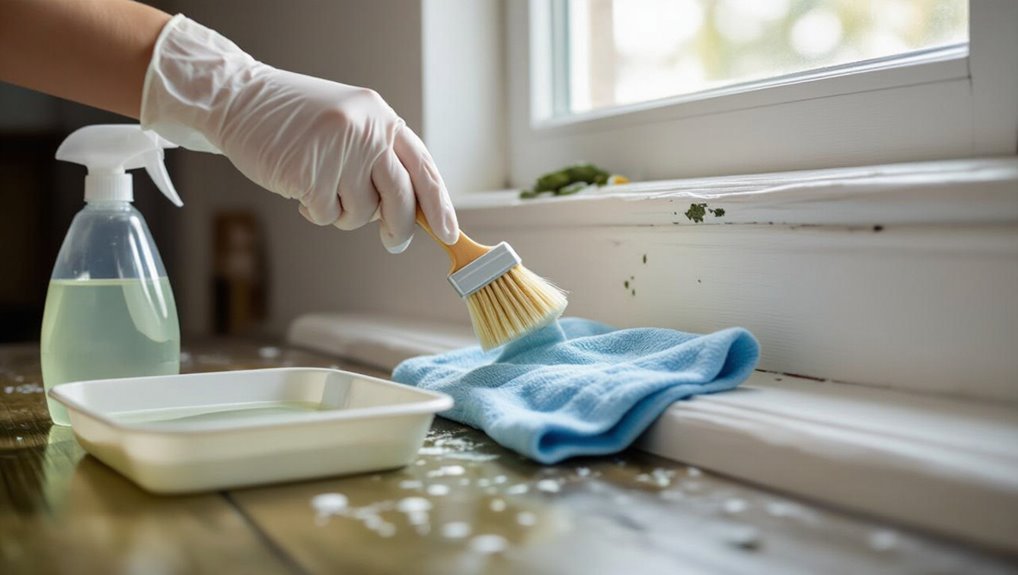
Start by prepping the area: open windows for ventilation, put on gloves and a mask, and move nearby items away from the painted wood.
Scrub gently with a mild detergent or vinegar solution, rinse, and dry thoroughly. Dispose of rags safely.
Note mold prevention tips: control humidity and inspect surfaces regularly.
Set a reasonable cleaning frequency to catch regrowth early.
Surface Stain or Structural Mold?
After you’ve removed surface growth and dried the area, you’ll need to determine whether the discoloration was just a stain or a sign of deeper, structural mold.
Inspect texture, odor, and paint penetration: staining alone leaves no soft substrate. If paint flakes or wood is spongy, it’s structural.
Knowing mold types helps decide remediation; combine repair with prevention methods to stop recurrence.
Locate Moisture and Hidden Mold
Start by checking common moisture sources like roof leaks, plumbing, and poor ventilation since they’re where mold usually begins.
Inspect hidden cavities—behind baseboards, inside wall cavities, and under trim—for discoloration or a musty smell.
If you’re unsure, use moisture detection tools (moisture meters, infrared cameras) to pinpoint damp spots before you clean.
Check Common Moisture Sources
Before you scrub mold from painted wood, check where moisture’s coming from—hidden damp is often the culprit.
You’ll look for leaks, condensation, and poor ventilation, then improve humidity control and install moisture barriers as needed.
- Roof and gutter leaks
- Plumbing drips
- Poor ventilation/condensation spots
- Groundwater or grading issues
Inspect Hidden Cavities
Any hidden cavity can hide both moisture and mold, so you’ll want to inspect wall voids, crawlspaces, attics, and behind built-ins where damp collects.
When you peek into gaps, follow systematic inspection techniques: look for staining, peeling paint, musty odors, and soft wood.
Note locations of hidden mold and document findings so you can prioritize repairs and targeted cleanup.
Use Moisture Detection Tools
A moisture meter and thermal camera can quickly point you to damp spots you can’t see, so you’ll know where to probe further for hidden mold.
Use moisture meters and infrared scans for accurate mold detection.
Then:
- Scan walls and baseboards.
- Check behind trim and cabinets.
- Probe suspect flooring seams.
- Re-scan after drying to confirm remediation.
Safety Gear and Ventilation You Actually Need
Before you start scrubbing, put on the right protective clothing—long sleeves, gloves, and eye protection—to keep mold and cleaning solutions off your skin.
Pick a respirator or mask rated for mold spores (N95 or better for light jobs; a P100 or half-mask with cartridges for heavy work) so you don’t breathe contaminated air.
Finally, keep fresh air moving with open windows, a box fan blowing outward, or a portable exhaust to remove spores and fumes.
Protective Clothing Essentials
When you tackle mold on painted wood, wear the right protective clothing so spores and cleaning chemicals don’t end up on your skin or in your lungs.
You’ll need gear that’s disposable or washable, resists liquid, and covers exposed skin. Don’t forget protective gloves and review mold masks options in the next section.
- Coveralls with hood
- Nitrile protective gloves
- Waterproof boots
- Safety goggles
Respiratory Protection Choices
You’ve got your coveralls, gloves, boots, and goggles ready — now pick respirators and ventilation that actually stop mold spores and fumes from the cleaning agents.
Choose N95 or P100 respiratory masks for spores; for chemical cleaners, use cartridges rated for organic vapors plus particulate safety filters.
Fit-test masks, replace filters per manufacturer guidance, and avoid loose bandanas or dust masks.
Ventilation And Airflow
Although dry brushing and scrubbing dislodge mold spores and fumes, you need targeted ventilation to keep them from lingering in your workspace and home.
Use exhaust fans, open windows, and a HEPA air purifier to clear spores.
Follow these air circulation tips and mold prevention strategies:
- Position window and door cross-ventilation.
- Run exhaust fans during cleaning.
- Use a HEPA purifier.
- Dry surfaces promptly.
Choose the Right Cleaner for Painted Wood
Because painted wood is delicate, pick cleaners that kill mold without stripping paint or leaving residue.
Test cleaners on an inconspicuous spot first. Prefer natural cleaners and eco-friendly options like diluted vinegar or mild hydrogen peroxide solutions labeled safe for painted surfaces.
Avoid abrasive scrubs and harsh solvents. Follow manufacturer guidance and rinse gently, ensuring surfaces dry completely to prevent regrowth.
Step-by-Step: Remove Visible Mold Safely
Now that you’ve picked a safe cleaner, it’s time to remove the visible mold without harming the paint.
You’ll work gently, test a hidden spot, and avoid scrubbing harshly. Use eco-friendly cleaners and follow mold prevention tips to stop recurrence.
- Test cleaner on inconspicuous area.
- Wear gloves and mask.
- Gently wipe with soft cloth.
- Rinse and dry thoroughly.
Clean Crevices, Trim, and Painted Molding
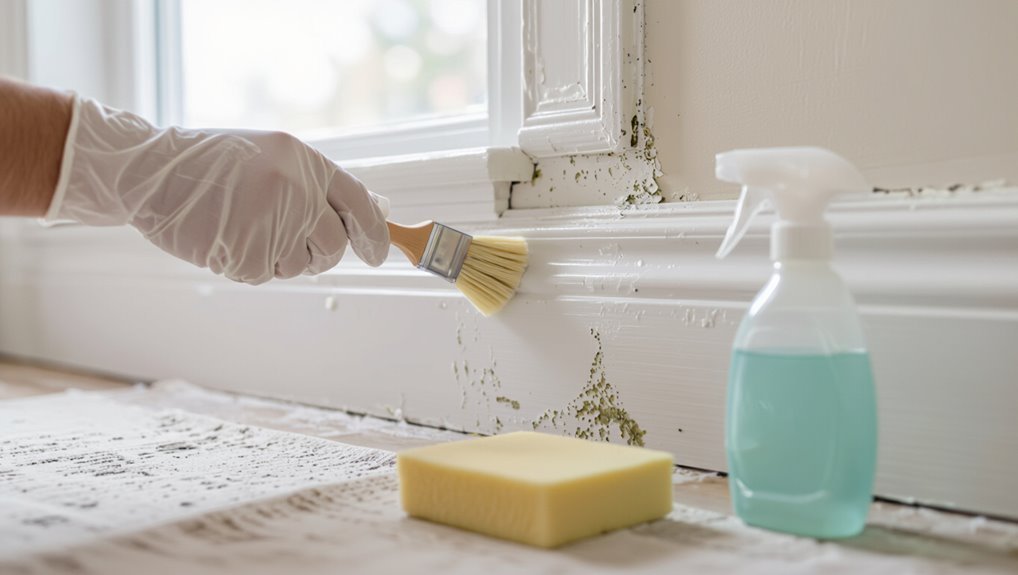
Crevices, trim, and painted molding trap moisture and spores, so tackle them with small tools and steady hands to avoid damaging the finish.
Use a soft-bristle brush, cotton swabs, and mild detergent to loosen grime, then dry thoroughly.
Inspect joints and caulking for gaps.
Follow mold prevention tips and wood maintenance strategies to keep surfaces dry, sealed, and regularly checked to prevent recurrence.
Why Avoid Bleach on Painted Wood and Safe Alternatives
Don’t use bleach on painted wood—its harsh chemicals can strip or discolor the finish and seep into seams.
It also gives off fumes that can irritate your lungs and eyes, especially in enclosed spaces.
Instead, try gentler options like diluted vinegar, a mild detergent solution, or a commercial mold cleaner formulated for painted surfaces.
Why Bleach Damages Paint
Although bleach can kill surface mold quickly, it also weakens and discolors paint because its strong oxidizing chemicals strip pigments and break down binders, causing chalking, fading, and peeling over time.
You should favor bleach alternatives to protect finish and guarantee paint preservation. Consider safer options and gentle techniques:
- Mild detergent and water
- Vinegar solution
- Hydrogen peroxide
- Commercial mold cleaners labeled safe for paint
Health Risks Of Bleach
Because bleach releases strong fumes and can form harmful byproducts, you should avoid using it on painted wood unless you’re fully prepared with proper ventilation and protective gear.
Bleach exposure can cause respiratory irritation, skin burns, and worsen asthma—serious health effects you shouldn’t risk.
Consider safer bleach alternatives and test methods that protect your health, paint integrity, and indoor air quality before cleaning.
Safe Mold-Cleaning Alternatives
While bleach can kill surface mold, you should avoid it on painted wood because it can strip paint, leave behind toxic fumes, and often only treats the stain rather than the underlying mold roots.
Use safer, eco-friendly solutions that offer vinegar benefits and gentle detergents.
Try these:
- White vinegar spray
- Baking soda paste
- Hydrogen peroxide mist
- Mild dish soap and water
Drying and Dehumidifying Painted Wood to Prevent Regrowth
Once the visible mold’s gone, you’ll need to dry and dehumidify the painted wood promptly to stop spores from coming back; moisture is the main driver of regrowth, so remove surface water, increase air circulation, and lower indoor humidity until the wood’s fully dry.
Use preventive measures like fans, dehumidifiers, and targeted drying techniques; monitor moisture with a meter and keep ventilation consistent.
Repair, Repaint, or Replace Painted Wood?
How badly is the paint and wood damaged—can you fix it, or do you need to replace the piece?
Inspect rot, deep stains, and structural integrity; choose repair options if sound, replace if soft or crumbling.
Use proper repaint techniques after sanding and priming.
Consider cost, time, and longevity.
- Patch and seal
- Sand and prime
- Full repaint
- Replace section
When to Call a Professional Mold Remediation Service
If the damage to painted wood goes beyond surface stains, call a professional mold remediation service—especially when you spot widespread growth, recurring mold after cleaning, a musty odor, or visible wood rot that compromises structure.
You should get a professional assessment to identify mold types, hidden contamination, and moisture sources.
Pros will contain spread, advise safe removal, and recommend repairs or replacement.
Frequently Asked Questions
Can Mold on Painted Outdoor Furniture Be Handled Differently Than Indoor Wood?
Want to spot differences quickly? You can treat mold on painted outdoor furniture differently than indoor wood: prioritize outdoor cleaning with gentler scrubbing, rinsing, and sun drying to aid furniture preservation while avoiding harsh indoor chemicals.
Will Mold Removal Affect VOC Levels From Old Paint?
Yes — removing mold can temporarily raise VOCs from old paint, so you should ventilate, wear protection, and use low-VOC cleaners; prioritize mold health risks while balancing paint safety to minimize exposure and prevent damage.
Can Pets Spread Mold Spores Between Rooms?
Yes, pets can. They track spores on fur, carry spores on paws, and stir spores into air; you’ll need mold prevention routines for surfaces and ventilation, and protect pet health with grooming, cleaning, and reducing damp areas.
Are There Eco-Friendly Cleaners Safe for Painted Wood and Septic Systems?
Yes — you can use eco friendly solutions like diluted vinegar, hydrogen peroxide, or eco cleaners labeled biodegradable options; you’ll test a small area first, avoid harsh detergents, and they’re typically safe for painted wood and septic systems.
How Long Should Occupants Stay Out of a Room After Treatment?
Better safe than sorry: you should stay out for at least 24–48 hours after treatment to guarantee mold safety, letting room ventilation run continuous, windows open, and fans circulating until odors and residues are gone.
