
How to Dry Spray Paint Fast Without Damaging Finish
You can speed spray-paint drying without wrecking the finish by spraying thin, even coats and keeping a steady gun distance (6–12″ handheld, 12–18″ HVLP). Use quick-dry primers and paints, work in a warm, low-humidity, dust-free area with gentle airflow, and allow tack time between passes. Avoid heat guns and thick layers that trap solvents; wet-sand minor runs before they cure. Follow safety and ventilation practices — keep going for tips on products, troubleshooting, and best technique.
Fast, Safe Spray-Paint Drying: Quick Workflow
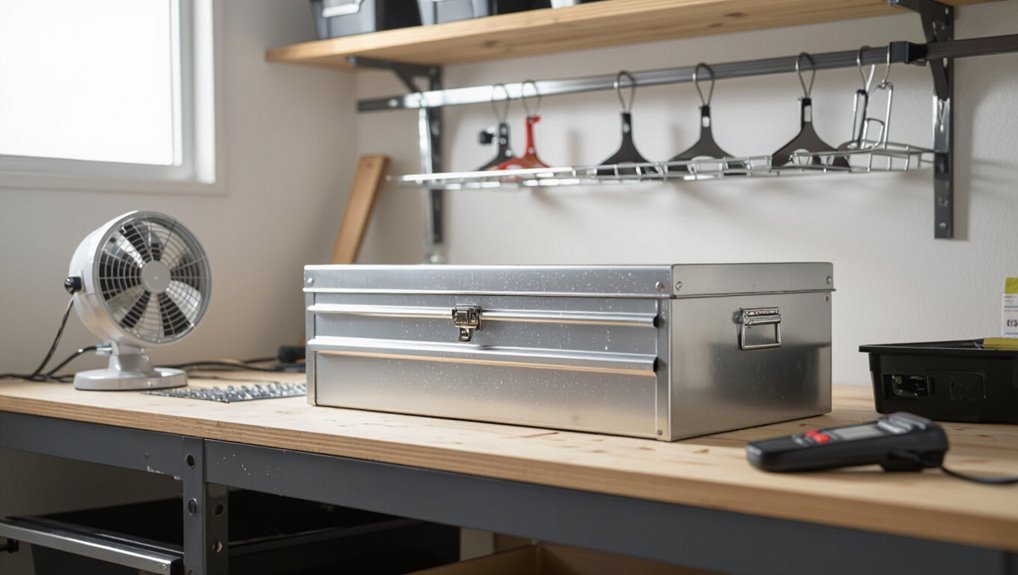
When you need spray paint to dry quickly without risking runs or damage, follow a compact, safe workflow that balances heat, airflow, and tack reduction.
You’ll choose quick drying paint types, adjust spray settings, and use proven paint techniques. Control environmental factors and drying conditions, prep surface treatments, and apply thin coats.
Follow safety practices and simple application tips to speed cure without compromising finish.
Why Drying Too Fast Can Ruin the Finish
Although speeding up drying can seem like a shortcut, forcing paint to dry too fast often causes surface defects that ruin the finish.
You’ll see bubbles, cracking, and poor adhesion because improper paint consistency can’t level before the skin forms. That weakens finish durability, invites chipping, and traps solvents.
Slow, controlled curing preserves appearance and strength—don’t sacrifice quality for speed.
Quick Answer: Fastest Safe Drying Steps
You can still speed up drying without wrecking the finish by controlling temperature, airflow, and layer thickness so the paint cures evenly.
Start with thin, even coats, allow tack time between passes, and use gentle airflow (fan or exhaust) in a warm, dust-free space.
These Drying Techniques and Ideal Conditions cut cure time safely—avoid heat guns or thick layers that trap solvents.
Types of Spray Paint and How They Dry
Because different spray paints use distinct binders and solvents, they dry and cure in different ways, so you should pick the type that fits your project and drying method.
Learn basic spray paint types and compare paint formulations: fast-evaporating lacquers, slower enamels, and specialty coatings.
Consider drying methods, drying factors, curing processes, and environmental impacts to match speed with durable finish.
Solvent vs. Water-Based: Drying Tradeoffs
You’ll notice solvent-based sprays usually tack up and dry to the touch faster than water-based ones, which can be handy when you need quick recoats.
Water-based paints often take longer to fully cure, though they’re improving and can dry quicker in warm, dry conditions.
Also remember humidity and temperature affect both types and can speed or slow drying considerably.
Solvent Paint Dry Times
Solvent-based paints generally dry faster to the touch than water-based formulas because their solvents evaporate quickly. However, that speed can mask longer cure times and stronger fumes you’ll need to manage.
Choose solvent types suited to temperature and ventilation, monitor paint viscosity for proper atomization, and allow tack-free drying before handling.
Use airflow and moderate heat to speed solvent evaporation without blistering or trapping solvents.
Water-Based Curing Speed
While solvent paints often feel dry quickly, water-based coatings cure by a different process that can take longer to reach full hardness and chemical resistance.
You’ll notice water based advantages like lower VOCs and easier cleanup, but you must allow extended cure time to protect spray paint performance.
Speed curing with heat or thin coats helps, yet avoid rushing or compromising the finish.
Environmental Impact On Drying
Because drying depends as much on the environment as on the formula, you should factor humidity, temperature, and ventilation into your paint choice—solvent sprays generally evaporate faster but emit more VOCs, while water-based options reduce airborne toxins yet can stay tacky longer in damp or cool conditions.
- Check temperature effects.
- Monitor humidity considerations.
- Boost ventilation.
- Choose based on finish and site.
How Paint Formulation Affects Cure Time
Your paint’s formula plays a big role in cure time: faster solvent evaporation gets the surface dry sooner, but full cure depends on how quickly the resin crosslinks.
You’ll also want to weigh pigments and additives, since flatteners, extenders, or anti-skin agents can slow or speed chemical reactions.
Understanding these three factors helps you choose or tweak a system to finish faster without sacrificing durability.
Solvent Evaporation Rate
Solvent evaporation rate is the single biggest formulation factor that controls how fast spray paint dries and cures, since faster‑evaporating solvents let film‑forming binders set quicker while slower solvents keep the surface tacky longer.
- Match solvent types to evaporation factors.
- Consider drying conditions and paint chemistry.
- Monitor environmental influences: temperature effects, humidity levels.
- Boost airflow impact to speed safe solvent loss.
Resin Crosslinking Speed
When resin molecules crosslink faster, the paint moves from a soft, tacky film to a hard, durable coating much sooner.
So choosing the right binder chemistry is key. You’ll select resin chemistry that responds to temperature and catalysts; proper crosslinking agents accelerate cure without brittle results.
Balance speed with flexibility, follow manufacturer ratios, and test small panels to avoid incomplete cure or surface defects.
Pigment And Additives
Although pigments and additives may seem secondary to binders and solvents, they greatly influence cure time by altering heat absorption, film permeability, and catalytic activity.
You should consider pigment stability and additive effects when speeding dry times.
- Choose stable pigments to avoid heat sinks.
- Use drying additives sparingly.
- Test permeability impact.
- Balance catalysts to prevent surface cure trapping.
Choose Fast-Drying Spray Paint That Stays Durable
If you want paint that dries fast and still holds up, pick a product formulated for quick cure times and tough finishes—look for labels like “fast-dry,” “industrial,” or “hardcoat.”
You’ll gain fast drying benefits: less dust attraction, quicker recoats, and reduced downtime.
Choose solvent or acrylic formulas rated for exterior use to guarantee durable finishes that resist chipping, UV fade, and moisture.
Safe Additives and Accelerators to Use
Because you’re looking to speed drying without wrecking the finish, choose only additives and accelerators proven safe for spray paint chemistry and the surface you’re coating.
Use safe additives and drying accelerators sparingly; follow manufacturer ratios.
Consider:
- Fast-dry reducer for enamels
- Acrylic-compatible accelerator
- UV-stable catalyst for clear coats
- Surface-specific primer enhancer
Test small areas before full application.
What to Avoid: Chemicals That Weaken Finish
When you try to speed drying with the wrong solvents or additives, you can soften, cloud, or permanently weaken the paint film and underlying surface.
You should avoid harsh solvents, household thinners, and unknown accelerators that cause adverse chemical interactions.
Follow product guidelines, stick to proven application techniques, and test on scrap material to protect finish integrity and prevent costly rework.
Surface Prep to Speed Drying
Although careful surface prep might seem tedious, it’s the single most effective step you can take to speed spray paint drying and secure a durable finish.
Focus on surface cleaning and ideal lighting so you see flaws.
Do these steps:
- Sand smooth for even adhesion.
- Remove dust with a tack cloth.
- Guarantee good ventilation and warm temps.
- Inspect under bright, directional light.
Clean and Degrease for Faster Adhesion
Start by stripping away grease, oils, and old residues so paint can grab the surface immediately; any film left behind will block adhesion and slow drying. Use proper surface preparation techniques and tested cleaning solvents, wipe with lint-free cloths, and let surfaces fully evaporate. Be thorough—cleaning speeds cure and prevents defects.
| Task | Tip |
|---|---|
| Degrease | Solvent wipe |
| Rinse | Water or alcohol |
| Dry | Air or cloth |
| Inspect | Light sheen check |
| Repeat | As needed |
Sanding to Reduce Orange Peel and Runs
Once the paint’s tack-free, you’ll wet sand with fine grits to knock down orange peel without cutting through the clear.
Work slowly, keep the surface lubricated, and wipe residue away so you can spot low spots and runs.
Finish with a fine polish to restore gloss and smooth out any remaining scratches.
Wet Sanding Basics
When paint shows orange peel or small runs, wet sanding lets you smooth the surface quickly without removing too much finish. You’ll use fine, water-lubricated abrasives to gently level high spots and blend edges before polishing.
- Choose 1000–2000 grit for wet sanding techniques.
- Keep surface wet to prevent clogging.
- Apply even pressure, avoid gouges.
- Rinse and inspect often to enjoy benefits of wet sanding.
Final Polish Steps
Having smoothed high spots with 1000–2000 grit and kept the surface wet, you’re ready to refine the finish by sanding and polishing out remaining orange peel and tiny runs.
Lightly wet-sand with 2000–3000 grit, then compound and polish using a soft pad. Focus on final touch ups, removing hazing without cutting paint through.
Proper polishing improves paint longevity and restores gloss.
Primers That Speed Drying and Boost Durability
Although primers sometimes feel like an extra step, choosing a fast-dry, high-adhesion primer is one of the quickest ways to cut total project time and improve the spray paint’s longevity.
You’ll want fast drying primers that act as durability boosters. Consider these tips:
- Pick epoxy or acrylic primers.
- Thin per label.
- Apply one even coat.
- Cure before topcoat.
Optimal Spray Technique for Thin, Fast Coats
Primers give you a head start, but your spray technique determines how fast the paint will dry and how smooth the finish looks.
You’ll control coat thickness and paint consistency with nozzle adjustment and steady spray angle.
Match application speed to environmental factors, use thin paint layering, and monitor drying time to protect finish quality.
Adjust your speed for conditions, apply thin layers, and watch drying times to preserve a flawless finish.
Practice to sync all variables for reliable results.
Adjust Spray Distance and Speed for Fast Drying
When you adjust your spray distance and speed, you control how quickly solvent evaporates and how evenly film builds. So aim for a consistent gap—typically 6–12 inches for handheld guns and 12–18 inches for HVLP—while moving at a steady pace to avoid runs or heavy wet spots.
- Match spray technique to surface materials and spray patterns.
- Monitor coat thickness and paint layering.
- Optimize air circulation and temperature control.
- Account for humidity effects to reduce drying time.
Manage Overlap and Flash Time Between Coats
You’ll get smoother, faster results when you keep your overlap around 30–50% so each pass blends without adding too much wet film.
Let the first coat flash until it’s tack-free—usually a few minutes depending on temperature and product—before applying the next. That brief flash time prevents runs and helps the layers cure quickly and evenly.
Proper Overlap Percentage
Although it’s tempting to spray quickly, controlling your overlap and respecting flash time between coats is what gets a smooth, even finish.
Use these overlap techniques and adjust spray patterns to avoid runs and uneven build:
- Aim for 50% overlap.
- Keep strokes steady and parallel.
- Maintain consistent distance.
- Blend edges with light feathering between passes.
Ideal Flash Time
Because paint needs a moment to tack up but not fully cure, you should let each thin coat flash until it’s dry to the touch but still slightly tacky—typically 5–15 minutes for most spray paints in moderate conditions.
Monitor temperature and humidity to find your ideal flash time, adjust coat thickness, and maintain peak layering by overlapping consistently.
Don’t rush; patience prevents runs.
Recommended Coat Sequence for Best Cure
When you’re aiming for the quickest, strongest cure, follow a logical coat sequence:
- Apply a bonding primer, then allow recommended flash for curing methods.
- Lay down a tack coat to level and control coat thickness.
- Add mid coats for build and uniform curing.
- Finish with a thin, even topcoat and follow accelerated cure methods for best hardness.
How Many Coats and How Thin Should Each Be?
Now that you’ve stacked primer, tack, mid, and top coats in the right order, you need to decide how many passes to make and how thin each should be.
Balance coat thickness and paint layers: light, even passes using a consistent spray pattern suit most paint types.
Match application technique to drying times and environmental factors to protect finish durability while avoiding runs or inadequate coverage.
Use Tack Cloths and Control Dust Between Coats
Between coats, use a tack cloth to pick up dust, lint, and tiny debris that will mar your finish; wipe the surface lightly in overlapping passes and replace the cloth as soon as it’s visibly loaded so you don’t redeposit particles.
- Choose tack cloths benefits: sticky but lint-free.
- Work in calm air to limit dust.
- Use clean, light strokes.
- Store painted parts covered — basic dust control techniques.
Target Temperature and Humidity for Quick Cure
To speed curing, aim for an ambient temperature of about 60–80°F (15–27°C) and keep relative humidity around 40–50%.
You can use gentle heat or a space heater to raise temperature, but avoid direct hot air or open flames that can blister or scorch the finish.
Monitor conditions closely, because too much heat or humidity will slow cure or cause defects.
Ideal Temperature Range
If you want spray paint to dry fast and cure properly, aim for an ambient temperature between about 65°F and 75°F (18°C–24°C) with relative humidity below 50%.
You’ll get best results when you control conditions and use proper drying methods.
- Maintain the ideal temperature range.
- Avoid drafts that cool surfaces.
- Use gentle heat sources.
- Monitor surface temperature.
Optimal Relative Humidity
Aim for relative humidity below 50% when you want spray paint to dry quickly and cure well; higher moisture slows solvent evaporation and can cause tacky finishes or blushing.
You should monitor humidity levels with a hygrometer, ventilate to reduce damp air, and use moisture control like dehumidifiers or desiccant packs in enclosed spaces.
Keep conditions steady until coatings cure.
Heat Sources And Risks
When you speed drying with added heat, keep temperatures between about 60–80°F (15–27°C) and humidity under 50% so solvents evaporate efficiently without damaging the finish.
You’ll balance heat application and temperature control to protect finish integrity and avoid paint damage; follow safety precautions and select suitable heat sources.
- Infrared lamp
- Space heater
- Warm air fan
- Controlled booth
How Airflow Patterns Affect Drying and Finish
Because air doesn’t just remove solvent—it shapes how paint levels and cures—you need to control flow around your piece to get a smooth, fast finish.
Adjust airflow direction and airflow speed to match paint thickness and surface texture. Monitor air temperature and humidity levels since environmental factors change drying time.
Plan fan placement and drying methods to avoid runs, orange peel, or trapped solvents.
Safe Heat Options: Space Heaters and Lamps
Safe, controlled heat can dramatically speed spray‑paint drying without ruining the finish, but you’ve got to choose the right type and use it properly.
- Check space heater safety and paint compatibility; avoid direct scorch.
- Monitor surface temperature and heat intensity for even heat distribution.
- Mind lamp positioning to prevent hotspots; manage airflow management nearby.
- Balance drying efficiency with energy consumption and humidity control for best results.
Use Dehumidifiers and Fans to Speed Drying
If you want spray paint to dry faster without adding heat, use a dehumidifier and strategically placed fans to strip moisture and boost evaporation.
Adjust dehumidifier settings to lower humidity levels while monitoring paint thickness and drying times.
Lower humidity with a dehumidifier and track paint thickness and drying times for best results.
Aim fan placement and airflow direction to skim surfaces without blowing particles.
Maintain moisture control, avoid over-thinning, and follow finishing tips for smooth, durable results.
When a Paint Booth or Enclosed Area Helps
When you’re working on larger projects or in conditions where dust, wind, or humidity keep sabotaging dry times, a paint booth or enclosed area can make a big difference by providing controlled airflow, filtered air, and stable environmental conditions that let paint cure more predictably and quickly.
You’ll get clear paint booth advantages and enclosed area benefits:
- Dust reduction
- Stable temps
- Controlled airflow
- Faster, consistent curing
Dry-to-Touch vs. Cured: What Each Term Means
When you touch paint a short time after spraying, “dry-to-touch” means the surface feels dry but the paint underneath can still be soft.
“Cured” means the finish has chemically hardened and reached full strength, which can take hours to days depending on the paint.
Knowing the difference helps you decide when it’s safe to handle, sand, or stack painted parts.
Dry-To-Touch Defined
Dry-to-touch is the point at which a spray-painted surface feels dry under your fingers but hasn’t reached its full strength or chemical resistance; it’s safe to handle gently but still vulnerable to dents, smudges, and solvents.
- Check touch time with light pressure.
- Use gentle drying techniques to speed touch time.
- Avoid heavy handling until stronger.
- Note appearance changes as indicators of readiness.
Cured Explained Simply
Although a spray paint may feel dry under your fingers, true curing is a deeper chemical process that makes the finish hard, chemically resistant, and ready for regular use. You should wait for full cure to get cured benefits and avoid believing common curing myths.
| Term | Dry-to-Touch | Cured |
|---|---|---|
| Feel | tack-free | hard |
| Time | hours | days-weeks |
| Risk | easily damaged | durable |
Practical Differences Explained
Because feel and function aren’t the same, you need to know what “dry-to-touch” and “cured” actually let you do:
- Dry-to-touch: quick paint application, basic spray techniques, speed vs. quality tradeoffs, and initial surface interactions.
- Cured: full finish integrity after proper curing environments and drying methods.
- Use practical techniques and additive effects cautiously.
- Account for environmental considerations during paint application.
How Long Before Sanding, Recoating, or Handling?
Waiting the proper amount of time before sanding, recoating, or handling guarantees your finish cures correctly and avoids costly mistakes.
Check paint types and drying methods to determine recoat timing; consider environmental factors and surface preparation.
Use appropriate sanding techniques and handling tips to avoid damage, respect paint interaction windows, and follow safety precautions.
Prioritize finish protection over speed for best results.
Speeding Through Recoat Windows Safely
If you need to speed up recoat windows without compromising the finish, focus on controlled drying techniques and correct surface preparation so each coat bonds properly.
- Check ambient temp and humidity to adjust recoat timing.
- Use gentle drying methods like warm air or dehumidifiers.
- Lightly tack-sand between coats for adhesion.
- Test a small area to confirm cure before full recoating.
Troubleshooting Runs, Orange Peel, and Sags
When you spot a paint run, act fast to level it out before the film fully cures so sanding and touch-up stay minimal.
To prevent orange peel, check your spray distance, tip size, and application speed so the droplets melt into a smooth film.
Addressing these issues early keeps sags and texture problems from slowing your overall drying and recoat schedule.
Fixing Paint Runs
Catch paint runs quickly before they cure into a hard ridge that ruins the finish.
You can fix runs without harming paint texture by wet-sanding and reflowing with proper drying techniques.
- Lightly wipe excess with a damp cloth.
- Wet-sand the run smooth (1000–2000 grit).
- Clean surface, tack off dust.
- Re-spray thin, blend edges, allow controlled drying.
Preventing Orange Peel
Although a textured finish can sometimes look deliberate, most orange peel comes from improper atomization, distance, or film thickness. You can prevent it by controlling spray technique and drying.
You’ll address orange peel causes by adjusting paint viscosity, optimizing paint application, and managing environmental factors.
Use proper drying techniques to reduce surface tension issues, ensuring consistent finish quality and preventing imperfections.
Fix Brittle Finishes From Over-Acceleration
If you’ve rushed the drying process by over-accelerating the spray paint, the finish can turn brittle and prone to cracking; you can usually revive it by slowing curing and adding flexibility.
- Gently warm to soften and avoid shocks.
- Apply a flexible clear coat compatible with the base.
- Use a plasticizer additive per manufacturer directions.
- Cure slowly at moderate humidity to restore cohesion.
When to Strip and Start Over vs. Repair
When you’ve tried softening, recoating, and spot repairs but the finish still flakes, bubbles, or shows large-area cracking, it’s time to strip and start over.
You should assess substrate damage: minor defects suit targeted repair methods, widespread failure needs full removal.
Choose appropriate strip techniques, protect underlying material, then prep thoroughly before repainting to guarantee adhesion and avoid repeating faults.
Clear Coats and Sealers for Quick Cure and Toughness
Clear coats and sealers lock in color, add toughness, and—critically for fast projects—let you cure and handle parts sooner.
Clear coats seal color, boost toughness, and—especially for quick jobs—speed curing so parts can be handled sooner.
Choose clear coat benefits that match spray paint selection and sealer types. Mind durability factors, application techniques, drying conditions, and compatible curing agents for finish protection.
- Pick fast-curing sealer
- Thin coats, proper flash
- Control temperature/humidity
- Test adhesion and sheen
Curing Accelerants: Benefits and Risks
You can speed up spray paint curing with accelerants, which often cut drying time and boost early hardness.
But they can also change finish appearance, reduce pot life, or increase brittleness and solvent sensitivity.
Weigh the faster cure against those tradeoffs before you decide to use one.
Pros Of Accelerants
Although they speed up the process, curing accelerants give you real advantages: they reduce tack time, let you handle or recoat parts sooner, and can cut overall project time considerably.
You’ll choose among accelerant types and drying agents to fit paint chemistry. Benefits include:
- Faster cure
- Quicker handling
- Reduced dust contamination
- Improved workflow efficiency
Risks And Tradeoffs
When you rush cure by adding accelerants, you also speed up potential problems: faster solvent evaporation can trap solvents or cause blushing. Heat-sensitive substrates may warp or yellow, and some accelerants react with certain resins to weaken adhesion or alter finish appearance.
You’ll weigh risks involved and tradeoff considerations: balance finish integrity, drying techniques, surface compatibility, application methods, environmental factors, curing challenges, paint types, and strict safety measures.
Store and Handle Painted Items During Final Cure
Since the paint’s surface may feel dry long before it fully cures, handle items carefully and store them in a controlled space to avoid dents, dust, or chemical marks.
- Use proper paint storage: protective covers and drying racks.
- Follow handling techniques to protect layer protection.
- Maintain humidity control and temperature regulation.
- Guarantee proper ventilation for dust prevention in the curing environment.
Tools That Safely Speed Drying (Heat, Fans, Booths)
If you want to speed drying safely, pick tools that match the paint type and workspace: low-heat lamps and infrared heaters for solvent-based paints, directional fans for water-based coatings, and enclosed drying booths with filtered airflow for production work. Match heat sources, airflow control, and air circulation to spray techniques; consider humidity effects, temperature influence, paint additives, drying time, and safety measures.
| Tool | Benefit |
|---|---|
| Infrared heater | Fast, even heat |
| Low-heat lamp | Gentle warming |
| Directional fan | Controlled airflow |
| Drying booth | Filtered environment |
| Thermo-hygrometer | Monitor conditions |
Cost-Effective DIY Setups for Faster Projects
You can speed projects on a budget by building a simple spray booth from a plastic storage tote, a filter, and a clip-on fan to control overspray and airflow.
For drying multiple pieces, a homemade rack using PVC pipe or a pegboard lets you keep items separated and exposed to moving air.
Both setups are cheap to assemble, portable, and cut overall drying time without costly gear.
Budget Spray Booth
1 simple, low-cost spray booth can cut drying time and improve finish quality by giving you better airflow, filtered overspray capture, and a controlled workspace.
You can use budget materials, DIY construction and portable options. Focus on spray booth design, airflow management, ventilation systems, booth lighting, temperature control, safety features, and paint storage.
- Plan layout
- Seal gaps
- Add fan/filters
- Insulate
Homemade Drying Rack
A simple wire shelving unit or wooden frame can speed up drying and keep your freshly sprayed pieces safe from dust and smudges.
Build a homemade drying rack to stack multiple items, improving airflow and reducing handling.
List materials needed: wire shelves, wooden dowels, zip ties, casters, and spray-on sealant.
You’ll enjoy homemade drying rack benefits: cost savings, customizable spacing, and faster turnaround.
Safety and Ventilation When Accelerating Dry Time
When you try to speed up spray paint drying, keep your workspace well ventilated and protect yourself—drying aids like heat, fans, or solvents can raise fumes and fire risk.
- Use ventilation methods and fans for steady air circulation.
- Wear safety equipment and respiratory protection.
- Follow safe drying techniques and organize workspace organization.
- Secure paint storage and control the drying environment.
Maintenance Tips to Keep a Fast-Dried Finish New
Once your spray paint dries quickly, you’ll want to keep that finish looking new with a simple upkeep routine.
Wipe the surface gently with a soft cloth and mild cleaner to remove dirt without abrading the paint.
If you want extra protection, apply a compatible clear coat to seal and extend the life of the fast-dried finish.
Gentle Regular Cleaning
If you want your fast-dry spray paint to keep looking fresh, stick to gentle, regular cleaning that removes dirt and grime without harming the finish.
You should follow simple steps for regular maintenance and gentle cleaning:
- Dust with a soft cloth.
- Wash with mild soap and water.
- Rinse thoroughly and blot dry.
- Inspect and spot-clean as needed.
Protective Clear Coating
A clear protective coat can extend the life of a fast-dried spray paint finish by sealing out moisture, UV rays, and everyday wear.
So apply it thoughtfully and maintain it regularly. You’ll enjoy clear coat benefits like added gloss and scratch resistance.
Recoat per product instructions, inspect yearly for chips, and buff light imperfections.
These steps help with maintaining durability and preserving that fresh look.
Checklist: Step-by-Step Fast-Dry Spray Routine
Because timing and technique matter, this checklist walks you through a fast-dry spray routine step by step so you can move from prep to finish without wasted time.
- Clean and mask area; reduce dust.
- Apply thin coats using paint layering to avoid runs.
- Use recommended drying techniques between coats; light flash times.
- Finish with a quick clear coat; check cure times and handle gently.
Quick Shopping List: Paints, Primers, and Tools
Tools matter, so pick products that speed drying without sacrificing finish quality.
Choose fast-dry spray paint types (acrylic lacquer, enamel) and compatible primers labeled quick-dry or bonding.
Add a fine mist spray cap, respirator, tack cloths, and a small heat gun or fan for controlled drying methods.
Buy gloves, drop cloths, and a spray stand to keep coats even and fingerprints away.
FAQs DIYers Ask About Fast Spray-Paint Drying
You’ve picked the right products and gear, so let’s answer the common questions that come up when you’re trying to speed up spray-paint drying without wrecking the finish.
Consider these quick FAQs about spray paint techniques and drying conditions:
Consider these quick FAQs on speeding spray-paint drying — hot temps, fans, coats, and tack-free timing.
- How hot can it be?
- Can I use a fan?
- How many coats now?
- When is tack-free?
Follow manufacturer times and test first.
Final Safety and Quality Checklist
Before you call the job done, run through a quick safety and quality checklist to catch any issues that could ruin the finish or cause harm.
Perform a final inspection for sags, dust nibs, or uneven coverage.
Verify ventilation, dispose of rags properly, and wear safety gear while handling solvents.
Document curing time and address defects before returning the piece to use.
Frequently Asked Questions
Can I Safely Dry Spray-Painted Items in Sunlight Without Blemishes?
You can, but avoid direct sunlight during initial curing; rapid sunlight exposure risks poor paint adhesion, blistering, or uneven finish. Use indirect sunlight, shade, or gradual temperature increase to promote safe drying and reduce blemishes.
How Does Substrate Thickness Affect Final Cure Strength?
Thicker substrate material usually slows heat transfer, so you’ll get slower solvent evaporation and weaker initial cure; with thinner substrates paint application dries faster and cures stronger, but beware overheating or insufficient film thickness compromising strength.
Will Faster Drying Change Color or Gloss Level?
Faster drying can alter color retention and reduce gloss stability if solvents evaporate unevenly; you’ll risk flash drying, ambering, or dulling. Controlling temperature, humidity, and thinning keeps color and gloss consistent while drying quicker.
Can Humidity Packs or Desiccants Be Used During Curing?
A restoration shop used silica gel packs to cure a lacquer model, and you can too: humidity effects matter, so use appropriate desiccant types (silica, molecular sieve) to lower moisture without overheating or trapping solvents.
How Long Before Applying Decals or Adhesives to Painted Surfaces?
Wait at least 24–72 hours for tack-free paint, but full cure can take 7–30 days; use proper drying techniques and consider adhesion timing based on paint type and conditions so your decals and adhesives bond reliably.
Conclusion
Don’t rush the job—haste makes waste—so follow the safe steps above and let the paint set the pace. You can speed drying with heat, airflow, and low-humidity conditions, but avoid extreme heat or solvent-stripping methods that wreck the finish. Test on a scrap, use compatible primers and paints, and inspect between coats. With patience and the right tools, you’ll get a fast turnaround without compromising durability or appearance.
