
How to Get Paint Stains Out of Concrete Effectively
First, identify the paint type (latex, oil, enamel, or epoxy) so you can pick the right remover. Test any cleaner in a hidden spot to avoid damage. For fresh spills, scrub with warm, soapy water and repeat until no color transfers. For dried paint, warm it, soften with the proper solvent, and scrape gently with a plastic tool to avoid gouging. Rinse thoroughly, neutralize if needed, and reseal. If stubborn spots remain, keep going—you’ve got more options ahead.
Identify Paint Type on Concrete Before You Start
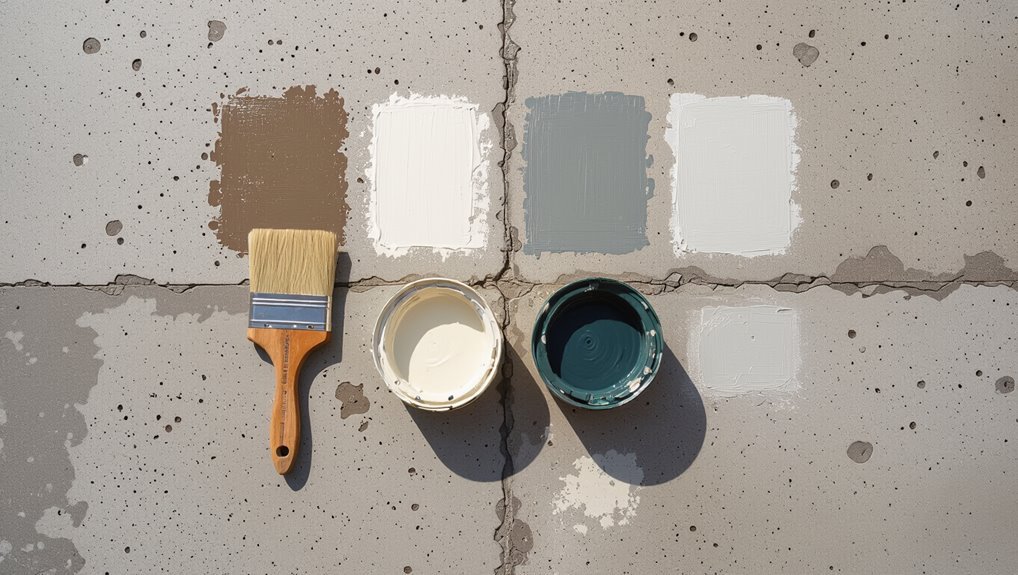
Before you scrub anything, you need to identify the paint type on your concrete—because the right remover depends on whether it’s latex, oil-based, enamel, or epoxy.
Look at the paint’s appearance and paint properties: latex usually looks matte and flakes; oil-based and enamel feel harder and may leave a slick film; epoxy often forms a thick, glassy coating.
Check the concrete texture too—porous patches grab water-based paint fast, while smoother areas resist penetration.
If you can, read the label from leftover paint, or compare sheen and hardness with nearby surfaces.
Then choose your chemistry carefully so you don’t damage the slab.
Test Your Paint Stain Removal in a Small Area
Before you use any cleaner or remover, spot test it with clean water in a hidden area.
Watch what happens—if the paint lightens or the concrete stays intact after a few minutes, you can continue.
If you see discoloration or damage, stop and try a different method.
Spot Test With Clean Water
Start by rinsing the area with clean water and dabbing it dry with a clean cloth—then check how the paint responds in that small, out-of-the-way spot.
Use good water quality so you don’t grind grime into the pores. Watch for color bleeding, smearing, or fading after a few gentle passes.
If the paint loosens, you can continue your planned cleaning method without rushing. If nothing changes or the stain spreads, stop and reconsider your approach.
You’re testing for effective stain prevention before you treat more of the concrete.
Check Result Before Full Cleaning
After your clean-water spot check, examine the results closely before you tackle the whole concrete surface.
You should test any remover on a hidden corner or spare slab for a full stain cycle—apply, agitate gently, then rinse.
Look for three things: color lift, surface dulling, and any spreading of the stain.
If the spot lightens without haze, you can proceed. If you see discoloration or worsening, stop and switch products, adjusting your concrete surface preparation and approach.
This careful check supports paint stain prevention by preventing repeated missteps and wasted time.
Remove Fresh Paint From Concrete With Soap and Water
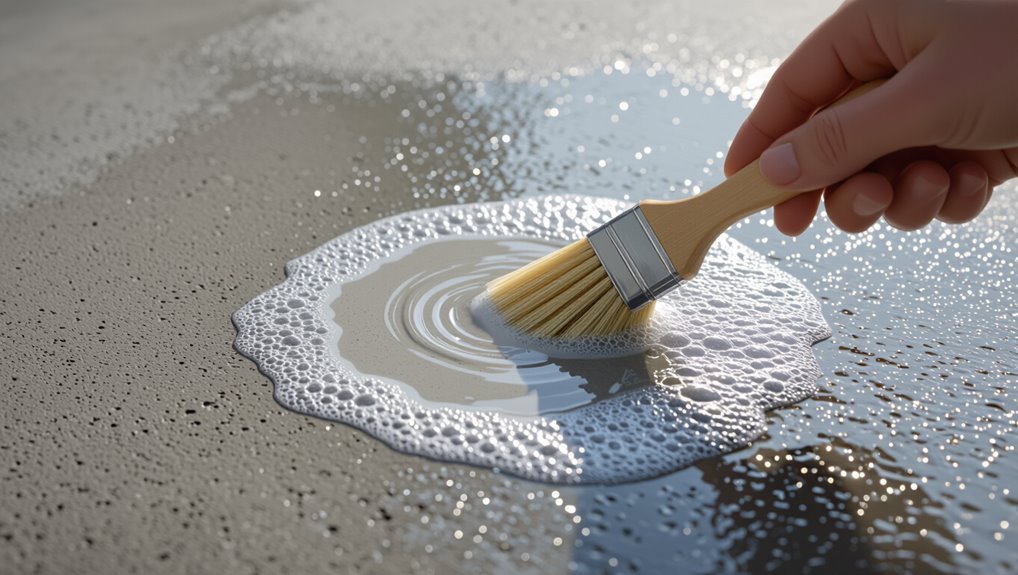
If the paint just landed on your concrete, you can usually lift it with soap and water before it cures.
Scrub the area right away using a sponge or stiff brush, keeping to warm water temperature. Apply dish soap directly, then work in small circles and rinse often.
For tougher smears, switch to soap alternatives like grease-cutting detergent or a splash of ammonia-free degreaser. Change the water if it turns colored, and repeat until no paint transfers.
Let the spot dry, then check your result before any stronger treatment.
Use Scraping Tools on Concrete Without Gouging It
Choose a safe scraping tool—like a plastic scraper or nylon brush—so you don’t damage the concrete surface.
Keep your pressure light and work in short passes, adjusting as needed to avoid gouges.
If the paint doesn’t lift, pause and switch to a gentler method instead of forcing it.
Choose Safe Scraping Tools
Start with scraping tools that won’t tear up the concrete surface; instead of digging in with a metal edge, use a plastic putty knife, a razor scraper with a fresh blade, or a wood chisel to lift paint gently.
Choose safe materials that flex slightly and reduce digging. Keep blades clean and sharp so you cut paint instead of chewing the surface.
If paint won’t lift, switch to alternative methods: try nylon bristle brushes with warm soapy water, or a mild solvent applied sparingly, then re-scrape.
Work in small sections and stop when the concrete shows any scuffing.
Control Pressure To Prevent Gouges
Keeping pressure under control prevents gouges while you lift paint from concrete. Use scraping tools on an angle, and apply light, steady pressure rather than pushing hard.
Practice on a hidden spot first so you can feel when the paint loosens. Use pressure regulation by checking your wrist and moving the tool in short strokes, letting the edge do the work.
If the scraper bites or leaves tracks, stop and back off immediately—tight contact causes gouging prevention failures. Work gradually, switching to finer edges as needed, and vacuum debris often to maintain control.
Lift Dried Latex Paint Off Concrete Safely
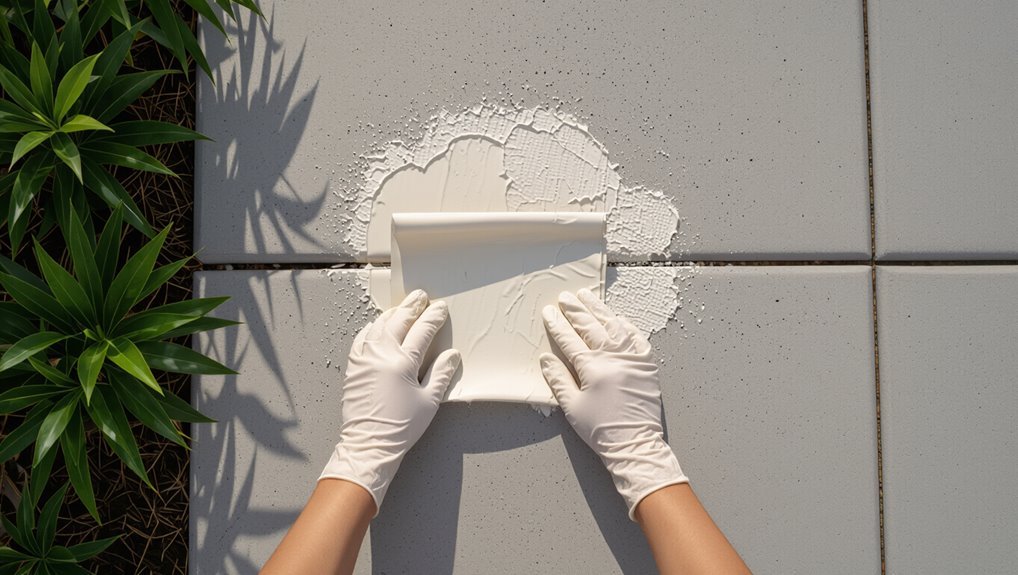
Before you touch the stain, test a small, hidden spot and sweep away loose debris so you don’t grind paint deeper into the pores.
For dried latex, use safe paint removal techniques that protect concrete care. Warm the area with a hair dryer or heat gun on low from a distance, then scrape gently with a plastic putty knife.
If paint resists, dampen it with warm soapy water and let it soak 10–15 minutes before scraping again. Wipe with clean water, blot dry, and repeat until you lift all flakes without gouging.
Dissolve Acrylic Paint on Concrete With the Right Solvent
Once you’ve removed what you can from dried latex, you can switch to dissolving acrylic paint to tackle what’s left in the concrete pores.
Choose your solvent selection carefully: use isopropyl alcohol or a dedicated acrylic paint remover, and test on a hidden spot first to confirm paint compatibility.
Dampen a rag, blot the stain, then let the solvent dwell briefly before scrubbing. Repeat as needed, keeping the concrete from drying out.
For best results, follow:
- Identify finish type and age
- Apply solvent, don’t flood
- Rinse and neutralize residue
Remove Oil-Based Paint From Concrete With Mineral Spirits
Choose the proper mineral spirits meant for paint cleanup, then apply a generous amount and let it soak so the oil-based paint loosens.
Scrub the spot with a stiff brush, and rinse thoroughly with clean water to remove leftover residue.
Repeat as needed until the stain stops lifting.
Choose Proper Mineral Spirits
Selecting the right mineral spirits makes removing oil-based paint from concrete much more effective. Focus on mineral spirits selection by matching the stain’s oil content and using a petroleum-based product, not a citrus cleaner.
Check the label for “paint thinning” or “oil-based stain removal,” since that’s what dissolves binder oils. Keep solvent safety front and center: work outdoors, ventilate well, and avoid flames.
- Choose “low-odor” or “odorless” mineral spirits for indoor edge cases.
- Use a product labeled for oil/paint cleanup.
- Verify compatibility with concrete and sealers first.
Apply And Let Soak
Apply the mineral spirits directly to the stained area so the solvent can break down the paint’s oily binder. Work it in until the surface looks uniformly damp, then pause. Give the concrete enough soaking time for mineral spirits to penetrate and support stain absorption, without letting it dry out. Use this checklist to track progress:
| Step | What to watch |
|---|---|
| 1 | Even dampness |
| 2 | No drying |
| 3 | Darkening edges |
| 4 | Binder loosening |
Scrub And Rinse Thoroughly
Scrub the stained concrete with a stiff-bristle brush while the mineral spirits are still damp, using firm, overlapping strokes to work the loosened paint binder out of the pores.
Use strong scrubbing techniques, pressing as you move in tight circles, then back toward the stain edges. Add a little water only after the paint looks lifted.
Then follow these rinse methods:
- Hose with cool water, sweeping debris away.
- Repeat mineral spirits spot-cleaning if color remains.
- Final rinse and blot dry with clean rags.
Break Down Spray Paint Overspray on Concrete Carefully
Before you touch the stain, treat spray paint overspray like a surface issue and work deliberately—start by blotting up any wet paint.
Then dry-brush loose residue so you don’t grind it deeper into the pores.
Next, use paint removal techniques that match the overspray: apply a gel paint stripper or a solvent-soaked cloth to soften film, not soak the concrete.
Let it dwell briefly, then scrape gently with a plastic putty knife.
Finish with concrete surface preparation by wiping away residue and repeating as needed until color stops transferring.
Rinse, Then Neutralize Concrete After Cleaning
Once the overspray film loosens, rinse the concrete thoroughly with clean water to flush out softened paint and leftover stripper.
Use solid rinse techniques: start at the highest point, work downward, and keep water moving so residue doesn’t redeposit.
Then you must neutralize any chemical cleaner you used; otherwise, staining can reappear or the surface can stay slick.
- Apply a concrete-safe neutralizing agent per label directions.
- Scrub lightly to help neutralizing agents reach pores.
- Rinse again with clean water, then let the slab dry fully.
Use Acetone for Stubborn Paint Spots on Concrete
Before you use acetone, test it in an inconspicuous spot to make sure it won’t damage the concrete.
If it’s safe, apply acetone directly to the paint spot and let it loosen the stain.
Then rinse thoroughly and scrub the area until the paint lifts.
Test Acetone Inconspicuous Area
Acetone can work wonders on stubborn paint spots, but you should test it first—choose a small, hidden spot on the concrete, apply a little acetone to a clean cloth, and rub gently.
Watch closely for discoloration, dulling, or etching. If you see damage, stop and consider acetone alternatives instead.
Use safety precautions every time: ventilate the area, keep acetone off skin and eyes, and avoid sparks.
Then verify results before treating the stain.
- Wait 10 minutes.
- Check the surface in daylight.
- Rinse and dry if affected.
Apply Acetone To Paint
Grab a clean cloth, dip it lightly in acetone, and press it directly onto the paint spot. Let it sit briefly, then lift the cloth and check progress.
Repeat acetone application as needed, using fresh sections of the cloth each time to prevent spreading. Keep your movements controlled so you don’t smear paint deeper into the pores.
For stubborn areas, dab instead of rubbing, because focused paint removal techniques work better on concrete texture.
Once the paint softens and transfers, you’ll see clearer concrete. Stop if the surface dulls or changes color.
Rinse And Scrub Concrete
Rinse the concrete thoroughly with clean water to flush away loosened paint and acetone residue, then scrub the area using a stiff nylon brush and a concrete-friendly cleaner.
You’ll get better concrete cleaning results when you work in small sections, pressing firmly to lift remaining pigment. If spots persist, repeat acetone carefully, then rinse again until the water runs clear.
For best outcomes, follow this order:
- Wet the surface evenly.
- Brush with cleaner for 2–3 minutes.
- Rinse, dry, and check for residue.
Afterward, protect the slab with paint prevention measures to avoid future stains.
Try Paint Stripper for Deep-Set Stains in Concrete
If the paint has soaked into the pores of your concrete, a paint stripper can break that bond where simpler cleaners won’t. Choose from paint stripper options, then use effective application: wear gloves, ventilate, and test a hidden spot. Brush a thick, even layer, keep it wet for the label’s dwell time, then scrape off softened paint. Rinse thoroughly and repeat only if needed.
| Step | Action | Goal |
|---|---|---|
| 1 | Apply gel | Penetrate pores |
| 2 | Wait dwell | Lift bond |
| 3 | Scrape | Remove paint |
| 4 | Rinse | Restore surface |
Use Muriatic Acid Only for the Right Concrete Condition
Use muriatic acid only when the concrete is bare, stain-free of other contaminants, and you’re confident the paint is chemically stubborn.
Before you pour anything, do a concrete condition assessment: confirm no sealers, no heavy rust, and no loose surface that can spall.
Practice muriatic acid safety—ventilate, wear goggles, gloves, and long sleeves, and keep water and baking soda ready for neutralizing drips.
Then follow these steps:
- Mist water first so acid won’t penetrate unevenly.
- Apply diluted acid briefly, rinse thoroughly.
- Repeat only if color remains.
Remove Epoxy Paint From Concrete With Heat or Chemicals
You can remove epoxy paint from concrete by using heat to soften it, then scraping up the loosened coating.
If you prefer chemicals, choose an epoxy solvent that breaks down the paint so it releases more easily.
Either way, you’ll want to scrape remaining residue thoroughly and rinse the area clean to finish the job.
Heat Softens Epoxy Paint
Heat can soften epoxy paint and make it easier to lift from concrete, but it also demands control to avoid damaging the slab or driving fumes.
You can use heat application carefully: warm small sections, watch the paint turn tacky, then scrape immediately while it’s pliable. Keep ventilation strong and wear heat-resistant gloves.
To improve results, follow this sequence:
- Pre-clean dust so heat transfers evenly.
- Apply steady, low heat—don’t scorch.
- Scrape, then repeat for stubborn edges.
This method supports epoxy removal without switching to chemical solvents.
Chemical Solvent Breaks Epoxy
Even with careful warming, some epoxy coatings cling tight, so a solvent can help break the bond. Choose safe chemical options designed for epoxy, and follow the label exactly.
Apply the solvent with a brush or pad, working it into the paint film and letting it dwell until it softens or turns gummy. Use epoxy removal techniques by lifting softened sections with a plastic scraper while the solvent still wets the surface.
Rinse lightly only to stop action, not to fully strip. Wear gloves, goggles, and guarantee ventilation; don’t mix chemicals or use near flames.
Scrape And Rinse Residue
Scrape and rinse residue once the epoxy has softened with heat or solvent. Use firm pressure and safe tools to avoid gouging the slab.
Apply effective scraping techniques first: lift loosened flakes, then work from edges toward the center. After you remove the bulk, switch to rinsing methods to flush remaining film.
Follow this sequence:
- Chill or heat briefly, then test with a putty knife.
- Collect debris immediately with a shop vac.
- Rinse with hot water, then neutralize if you used chemicals.
Allow it to dry fully before evaluating.
Treat Rust-Tinted Paint and Pigment Bleed on Concrete
Before you chase the stain, identify what’s happening: rust-tinted paint and pigment bleed usually means metal oxidation or soluble dyes migrated into the concrete pores.
Start by dry-brushing loose residue and rinsing thoroughly. If you see rust, use paint removal products formulated for iron/metal stains, then let the cleaner dwell per label instructions.
Dry-brush loose residue, rinse thoroughly, then treat rust with iron/metal stain remover—dwell exactly per label instructions.
For pigment bleed, pre-wet the area and blot with clean water, repeating until runoff lightens. Apply an oxygen-based cleaner to lift dyes without spreading them.
After treatment, rinse, neutralize if required, and dry completely before rechecking.
Practice stain prevention techniques for next time.
Handle Colored Concrete Sealers After Stain Removal
Once you’ve removed the rust-tinted paint or pigment bleed, treat the concrete as a clean, ready-to-finish surface before you re-seal.
Dry the area fully, then inspect for remaining sheen differences that can ruin color matching. Choose a colored sealer only after you confirm the stain spot has matched the surrounding tone.
Follow these steps for reliable sealer application:
- Sweep and vacuum residue from the pores.
- Test a small patch of the sealer and evaluate after curing.
- Apply two thin coats, keeping a consistent roller pattern.
Protect Landscaping and Nearby Surfaces During Cleaning
Protecting landscaping and nearby surfaces keeps your cleanup from turning into a bigger mess.
Before you start, move planters, hoses, and mulch away from the concrete. Wet surrounding soil lightly, then cover beds and grass with plastic sheeting for strong landscape protection. Tape edges tightly and keep solutions contained so they don’t run.
For siding, pavers, windows, and outdoor furniture, use surface shielding: painter’s tape plus drop cloths or rigid boards.
Avoid overspraying cleaners; apply with a controlled brush or sponge. When you rinse, direct water back onto the concrete area only.
Prevent Paint Spreads With Masking and Containment
To keep paint from drifting into clean concrete and cracking your cleanup efforts, mask the surrounding areas tightly and contain every drop you work with.
Use strong masking techniques: lay painter’s tape on dry edges, press the seams flat, and overlap plastic sheeting so overspray can’t sneak underneath.
Lay painter’s tape on dry edges, press seams flat, and overlap plastic so overspray can’t slip underneath clean concrete.
Then apply containment strategies by setting a drop cloth tray under the work zone and sealing gaps with caulk or putty.
Keep tools positioned above the contained area, and wipe spills instantly on the contained surface.
- Tape edges firmly
- Cover nearby concrete fully
- Catch drips with trays
Control Fumes With Ventilation and a Proper Respirator
Ventilate your work area thoroughly by opening doors and windows and using fans to push fumes out.
Wear a proper respirator with the right cartridges for paint vapors so you don’t inhale harmful chemicals.
If you start feeling dizzy or get throat or eye irritation, stop right away and improve airflow before continuing.
Ventilate Work Area Thoroughly
Good ventilation makes paint cleanup safer and more manageable. Before you work, open doors and windows and use fans to boost air circulation.
Follow these ventilation tips to cut lingering fumes:
- Position fans to push air out, not across your breathing zone.
- Take short breaks in fresh air if odors intensify.
- Keep solvents and wet rags covered so vapors stay low.
If you’re in a garage, run exhaust fans and keep airflow steady throughout scraping and rinsing.
You’ll reduce eye and throat irritation while you remove stains from concrete.
Wear Proper Respirator Protection
Even with solid ventilation, you still need a properly fitted respirator when you scrape, sand, or remove paint from concrete, especially if you use solvents or chemical strippers.
Choose respirator types that match the hazards: dust/mist filters for sanding, and appropriate cartridge or vapor protection if fumes are present.
Follow safety guidelines every time—check seals with a quick fit test, wear it before you start, and keep it on during cleanup.
If you smell chemicals, your mask isn’t working. Replace filters promptly, and never reuse disposable respirators.
Dispose of Solvents and Chemicals Responsibly
Before you clean up, treat leftover paint solvents and chemical cleaners as hazardous waste, not regular trash or down-the-drain liquid.
Practice eco friendly disposal by checking product labels and local rules. You’ll protect yourself and keep chemicals out of waterways with solvent safety.
Check labels and local rules for eco-friendly disposal—keep solvents out of waterways and protect yourself with safe handling.
Do the following:
1) Pour leftovers into a sealed, labeled container.
2) Contact your local hazardous waste facility for drop-off instructions.
3) Store rags, brushes, and stained absorbents in a covered metal can until you dispose of them properly.
Avoid Common Mistakes That Can Etch Concrete
To keep concrete from getting etched, you need to stop a few common mistakes before they start: don’t use strong acids or acidic cleaners, don’t scrub aggressively with abrasive pads, and don’t let harsh chemicals sit on the surface longer than the label allows.
Always test any cleaner in a hidden spot to prevent concrete etching before you work the whole area.
When you remove paint, use gentle pressure and clean water rinses, not sanding that changes the surface texture.
For future paint application, prep properly and avoid overexposure to primers, strippers, and overspray that can react and dull the finish.
Treat Cracks and Pitted Spots Where Paint Traps
1. Inspect the concrete for hairline cracks and pitted spots where paint collects. Mark every trap, then grind lightly to remove loose edges and prep the surface.
If a crack holds paint, do crack repair with a concrete filler, not caulk, and follow the cure time. For pits, use a patching compound or epoxy filler to level the surface.
Once cured, sand smooth and vacuum dust, since good surface preparation prevents leftover pigment from re-darkening.
Apply a stain-killing primer directly into the treated areas before your final cleaning passes.
Reseal Concrete to Restore the Finish After Cleaning
Once you’ve cleaned out the paint and let the concrete cure fully, you should reseal it to restore the finish and keep pigments from reappearing. Choose resealing methods that match your concrete finishes: penetrating sealers for natural look, film-forming sealers for added sheen. Sweep off dust, then test a small area for darkening or streaking. Apply evenly with a sprayer or roller, keeping a wet edge, and follow dry times.
| Goal | Choose | Result |
|---|---|---|
| Hide pores | Penetrating | Natural feel |
| Add protection | Film-forming | Brighter sheen |
| Prevent re-stains | Coatings | Cleaner future |
Call a Pro When Paint Stains Won’t Lift Safely
If your paint stain won’t lift after cleaning and you can’t tell whether it’s sealed, etched, or deeply embedded, call a pro before you keep scrubbing or adding stronger chemicals.
You’ll avoid damaging the concrete surface and risking fumes. Ask about professional services that use safe, targeted paint removal techniques instead of guesswork.
- Test small areas for residue vs. true bonding before treating.
- Use moisture and pH checks to confirm whether concrete is etched.
- Request sealed-system containment if solvents are involved.
A trained contractor also matches tools to paint type, so you get clean results faster without unnecessary wear.
Keep Concrete Stain-Free During Future Painting Jobs
After you’ve handled stubborn paint stains safely, you can save yourself the headache next time by planning for cleaner results before you ever start rolling.
Apply preventive measures: cover sidewalks and curb edges with plastic sheeting and tape, then protect cracks with masking compound.
Apply preventive measures: cover sidewalks and curb edges with plastic sheeting and tape, then protect cracks with masking compound.
Keep drips off by using a drip tray and loading your roller lightly.
Use painting techniques that reduce splatter—cut in with a brush, roll in smooth passes, and stop before the roller reaches the concrete.
If paint touches down, wipe immediately with a damp rag.
Frequently Asked Questions
How Long Should I Wait Before Cleaning After Painting Concrete?
Wait until the concrete paint fully cures. Check the label for drying times—often 24 hours to dry, up to 7 days to cure. Then use safe cleaning methods like mild detergent and water, avoiding solvents that can damage fresh paint.
Will Pressure Washing Help, or Can It Spread Paint Deeper?
Pressure washing can help, but it can also drive paint deeper—about 80% of stains persist after rough scrubbing. Use gentle cleaning techniques first: test solvent for your paint types, then scrub and rinse; avoid high pressure until paint loosens.
Can I Remove Paint Stains Without Damaging Concrete Sealer or Coating?
Yes. Use gentle paint removal techniques first: test solvents in a hidden spot, scrape lightly, then rinse thoroughly. For concrete sealer safety, avoid harsh acids/strippers and pressure blasting—use manufacturer-approved cleaners to prevent coating damage.
What Should I Do if Paint Remover Accidentally Hits My Skin or Eyes?
When fumes bite back, act fast: If paint remover hits your skin, rinse with cool water 15 minutes and watch for skin irritation. If it splashes your eyes, flush 20 minutes immediately for eye safety, remove contacts, and call poison control.
How Do I Tell if a Paint Stain Is Actually Rust or Real Paint?
You can tell using paint identification techniques: check stain color differences, look for flaking or film residue, and observe texture. Rust stains often look orange-brown and spread from metal, while paint stays uniform and peels or smears.
Conclusion
As you work, treat your concrete like a blank canvas again—every scrape, soak, and rinse is a small act of repair. Match your paint type, lift what you can safely, and don’t force it when it fights back. When cracks and pits hold on, seal them like closing wounds. If the stain still won’t budge, call a pro before damage spreads. And next time, protect your surface so paint stays only where you want it.
