
How to Remove Dry Paint From Vinyl Siding Without Damage
You can remove dry paint from vinyl siding without damage by testing a hidden spot first, then washing the area with warm soapy water and scrubbing gently with a soft-bristle brush to loosen flakes. Use a plastic scraper at a low angle and rewet stubborn spots rather than forcing them. For persistent paint try a vinyl-safe solvent (isopropyl or citrus-based), rinse and neutralize per label, and protect plants and windows; follow safe techniques and keep an eye out for discoloration if you want more detailed steps.
What This Guide Helps You Do : And What to Try First
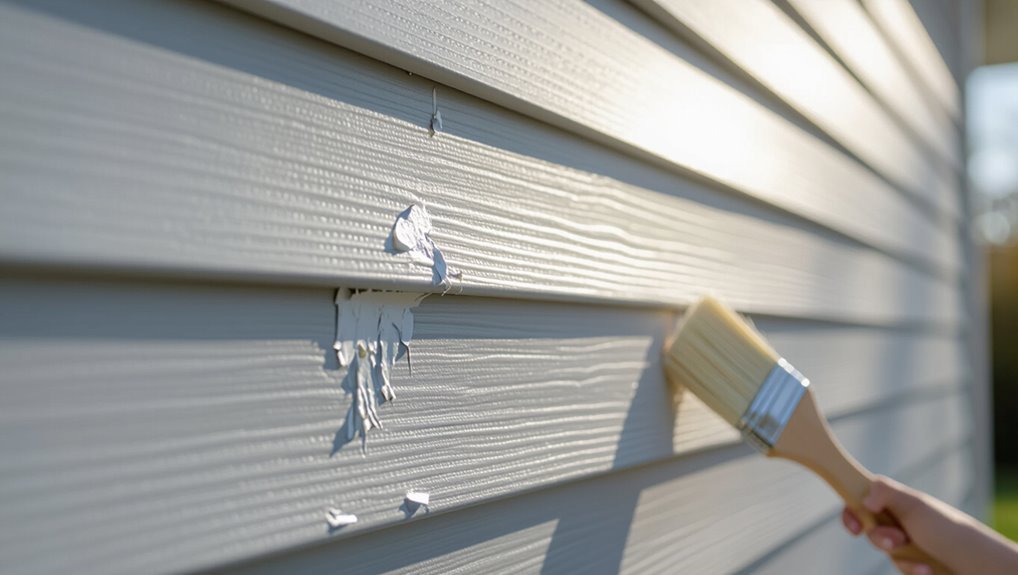
Before you start scrubbing, this guide helps you identify safe, effective ways to remove dry paint from vinyl siding and tells you which mild methods to try first so you don’t damage the surface.
You’ll learn simple paint removal techniques, how to test a small area, and which cleaners and tools are gentle.
Follow vinyl siding care practices to protect finish and color.
Identify the Type of Paint on Your Vinyl Siding
Wondering what kind of paint you’re dealing with? You’ll check visual cues: sheen, thickness, and flaking patterns.
Oil-based paints feel slick and yellow with age, while latex looks chalky and peels differently on vinyl siding.
Also note project history or contractor notes. Identifying paint types helps you choose safe removal methods that won’t warp or discolor your siding.
Test a Hidden Area Before You Start
Before you start, pick an inconspicuous spot like behind a downspout or near the eaves so any damage won’t show.
Apply your chosen remover or solvent to a small patch and let it sit the recommended time.
Check for color change, warping, or finish loss before treating visible areas.
Choose An Invisble Spot
Where should you test first? Pick hidden locations like behind downspouts, under trim, or behind shutters to evaluate cleaning effects.
You’ll check how solvents and scrubbing affect different vinyl textures and colorfastness. Mark the spot and proceed slowly, so you can compare results.
If damage appears, stop and choose a gentler method or consult a pro before treating visible areas.
Try A Small Patch
Start by testing a small, inconspicuous patch of siding—about the size of a business card—so you can see how your cleaner and scrubbing method affect color and texture.
Use a gentle patch technique: apply cleaner, wait, then gently rub with a soft cloth.
Check test results for fading, clouding, or softening before treating larger areas to avoid damage.
Tools and Supplies for Paint Removal
Before you start scraping, gather the essential tools you’ll need: a soft-bristle brush, plastic scraper, microfiber cloths, and a garden hose.
You’ll also want recommended supplies like a mild detergent, paint remover formulated for vinyl, rubbing alcohol, and protective gloves.
Having the right items on hand makes the removal quicker and reduces the risk of damaging the siding.
Essential Tools
A few well-chosen tools will make removing dry paint from vinyl siding faster, safer, and less likely to damage the surface.
You’ll want essential paint-safe scrapers, soft bristle brushes, a plastic putty knife, microfiber cloths, and a garden hose with adjustable nozzle.
Choose tools labeled for vinyl care to avoid abrasives, and keep gloves and eye protection handy while you work.
Recommended Supplies
Now that you’ve picked the right tools, gather a concise set of supplies that’ll make paint removal safe and effective:
soft-bristle brush, plastic scraper, microfiber cloths, hose or spray bottle, mild detergent, and targeted cleaning agents for different paint types.
Add rubbing alcohol or commercial vinyl-safe remover, nitrile gloves, safety goggles, and a drop cloth to protect landscaping and collect flakes.
Remove Paint From Vinyl Siding: Soap, Water, and a Soft Brush
Start by mixing warm water with a mild dish soap to create a gentle cleaning solution.
Wet the painted area, try different soap options if grease is present, and let it sit briefly.
Use a soft-bristled brush—nylon or natural—testing brush types on an inconspicuous spot.
Try a soft-bristled brush—nylon or natural—and test on an inconspicuous spot first.
Gently scrub along the siding’s grain, rinse thoroughly, and repeat until paint softens and lifts.
Use a Plastic Scraper and Rubber Spatula Without Scratching
Once gentle washing has loosened the paint, switch to a plastic scraper or rubber spatula to lift stubborn flakes without gouging vinyl.
Hold the tool at a low angle, work along the siding’s grain, and apply even pressure. Keep the edges clean and replace worn tools.
Pause if you meet resistance; rewet the area and resume to avoid scratching the surface.
Soften Paint With Heat: Safe Hair-Dryer Techniques
If a bit of paint’s stubborn, try softening it with a hair dryer on a low heat setting to avoid warping the vinyl.
Keep the dryer moving in short sweeps and hold it several inches away so no spot gets too hot.
Once the paint softens, scrape gently with your plastic scraper.
Use Low Heat Settings
Warmth can soften dry paint on vinyl siding, so use a hair dryer on a low setting and hold it several inches away while moving it steadily to avoid overheating the surface.
You’ll reduce paint adhesion gently; pick lower heat settings to protect vinyl. Visualize the process:
- Low heat, short bursts
- Test an inconspicuous spot first
- Stop if vinyl softens or warps
Keep Dryer Moving
Keep the hair dryer moving in steady, overlapping sweeps so no spot stays hot long enough to warp the vinyl; aim for a distance of several inches and glide the nozzle continuously while watching the paint soften.
Then pause to test with a plastic scraper. You’ll combine safe drying techniques with careful vinyl care, keeping heat low, monitoring progress, and avoiding concentrated exposure that could damage siding.
Solvents That Work on Vinyl : and Ones to Avoid
1 key rule when choosing a solvent is to match its strength to vinyl’s tolerance: mild cleaners and citrus- or alcohol-based removers usually work without harming siding, while harsh solvents like lacquer thinner, acetone, or toluene can soften or discolor the vinyl.
Choose solvent types with proven vinyl compatibility. Consider:
- Citrus-based cleaners
- Isopropyl alcohol
- Avoid acetone/toluene/lacquer thinner
Apply Solvents Safely to Vinyl Siding (Step-by-Step)
Start by picking a solvent that’s safe for vinyl and recommended in the previous section.
Test it on a hidden area to confirm it won’t discolor or warp the siding.
When you’re done, rinse thoroughly and neutralize any residue to protect the surface.
Choose Safe Solvents
Because vinyl siding can warp or discolor if you use the wrong cleaner, pick solvents that are effective yet gentle—like isopropyl alcohol, mineral spirits, or a commercial vinyl-safe graffiti remover—and test them first on an inconspicuous spot.
Use safe alternatives and eco-friendly options when possible.
Consider:
- Isopropyl alcohol for light spots
- Mineral spirits for stubborn paint
- Vinyl-safe commercial removers
Test On Hidden Area
Before you apply any solvent broadly, pick a hidden section—behind a downspout, inside a corner, or under a trim piece—and test a small dab to confirm it won’t soften, discolor, or dull the vinyl.
Use a simple testing method: apply, wait the manufacturer’s recommended time, then blot and inspect.
If the hidden area shows no harm, proceed cautiously and note results.
Rinse And Neutralize
Now that you’ve confirmed the solvent won’t harm the vinyl, rinse the treated area thoroughly to remove any chemical residue.
Use gentle pressure and plenty of water, follow safety precautions, and protect nearby plants. Neutralize if the product requires it.
- Flush with water
- Apply neutralizer per label
- Dispose runoff considering environmental considerations
Remove Larger Paint Patches With a Pressure Washer : Dos and Don’Ts
A pressure washer can blast away larger paint patches quickly, but you’ll need to use the right nozzle, pressure, and distance to avoid gouging or warping the vinyl.
Use low-pressure settings, a fan nozzle, and keep the wand at a 45–60° angle.
Follow pressure washer techniques and safety precautions: wear eye protection, test a hidden spot, and work outward from edges to prevent streaking or damage.
Removing Stubborn or Multiple Paint Layers (Stepwise Plan)
If the pressure washer and a scraper haven’t cleared the paint or you’re facing several baked-on layers, you’ll need a stepwise plan to remove them without harming the siding.
Tackle stubborn paint and multiple layers methodically:
- Soften with a vinyl-safe remover, wait per instructions.
- Gently scrape softened paint with a plastic blade.
- Rinse, repeat on remaining patches until clean.
Protect Windows, Plants, and Nearby Surfaces
Before you start scraping or applying chemicals, cover nearby windows, plants, and surfaces so paint and runoff can’t cause damage; use plastic sheeting and painter’s tape for glass and breathable fabric or cardboard for shrubs, and stake or weight coverings so wind won’t expose them. Use window coverings, plant protection, and surface shielding as part of area preparation.
| Item | Material | Secure |
|---|---|---|
| Windows | Plastic + tape | Tape |
| Plants | Fabric/cardboard | Stakes |
| Surfaces | Drop cloths | Weights |
Fix Discoloration or Vinyl Melting After Paint Removal
When paint removal leaves discoloration or soft, warped spots, you’ll want to assess whether the vinyl can be cleaned, recolored, or needs replacing; check texture and color under good light.
Consider these discoloration remedies and vinyl preservation steps:
Consider these simple vinyl care steps to restore color and prevent further discoloration.
- Clean with mild detergent and a soft brush.
- Test a vinyl-safe color restorer or touch-up kit.
- Replace panels if warping or softened areas persist.
When to Call a Pro or Consider Siding Replacement (Decision Checklist)
Although you can handle many paint-removal problems yourself, call a pro or plan panel replacement when damage goes beyond simple cleaning or touch-ups.
If siding condition shows warping, cracking, large melted areas, or structural issues, get an expert inspection.
Compare repair versus replacement via a clear cost analysis, consider warranty and timeline, and choose replacement when repairs won’t restore appearance or function reliably.
Preventing Future Paint Problems and Simple Maintenance Tips
If a professional repair or full siding replacement isn’t needed, you can still extend your siding’s life and prevent paint problems with a few simple habits and checks you can do yourself.
Use these paint prevention maintenance tips to keep siding clean and intact:
- Wash annually with mild detergent.
- Inspect seams, trim, and caulk for cracks.
- Trim plants, keep gutters clear, and fix leaks promptly.
Frequently Asked Questions
Will Paint Removal Void My Vinyl Siding Warranty?
It can, so you should check your paint warranty implications and follow siding maintenance tips; if you use approved methods and document work, you’ll likely avoid voiding warranty, but unauthorized chemicals or scraping might.
Can I Use Bleach to Remove Mold and Paint Simultaneously?
Like sprinkling a storm-washed canvas, you can use diluted bleach for mold removal but it won’t reliably strip paint—check paint compatibility first; you’ll avoid damage by testing a small area and rinsing thoroughly afterward.
How Long Should I Wait Before Repainting Vinyl Siding?
You should wait about 48–72 hours after vinyl siding preparation before repainting so paint application timing guarantees proper adhesion; if temperatures or humidity are high, wait longer until surfaces are fully dry and cure conditions are ideal.
Are There Eco-Friendly Commercial Products Effective on Vinyl Paint?
Like spotting a green frog on a gray stone, you’ll find eco friendly alternatives that work: you’ll try citrus-based strippers and biodegradable gels; data shows many match solvent power, and you’ll adapt paint removal techniques gently for vinyl.
Can Children or Pets Safely Be Around During Paint Removal?
Yes — you can, but you’ll need safety precautions and supervision guidelines: keep kids and pets well away during scraping or chemical use, ventilate, wear PPE, store products secure, and never leave work areas unattended until fully cleaned.
Conclusion
You’ve got the tools and know-how to tackle dry paint on vinyl without causing harm, so start gently and test first; a soft brush, soap, and patience usually do the trick. If discoloration or melting happens, address it quickly or call a pro. Think of prevention as your best paint shield—regular cleaning and careful painting keep siding happy. Stay cautious, work methodically, and you’ll protect your home’s finish like a seasoned pro.
