
How to Stop Paint From Peeling: Prevention and Repair Guide
Stop paint from peeling by finding the cause, fixing moisture or adhesion problems, and prepping properly before you repaint. Scrape loose flakes, sand feathered edges, clean and degrease, then use a compatible primer and quality paint. Repair any rot, plaster, or substrate damage and guarantee ventilation, gutters, and grading keep surfaces dry. Wear proper PPE and control dust during prep. Follow these steps and you’ll get a long-lasting finish—keep going to learn specific fixes and tips.
Quick: Stop Peeling Paint Today (Immediate Fixes)
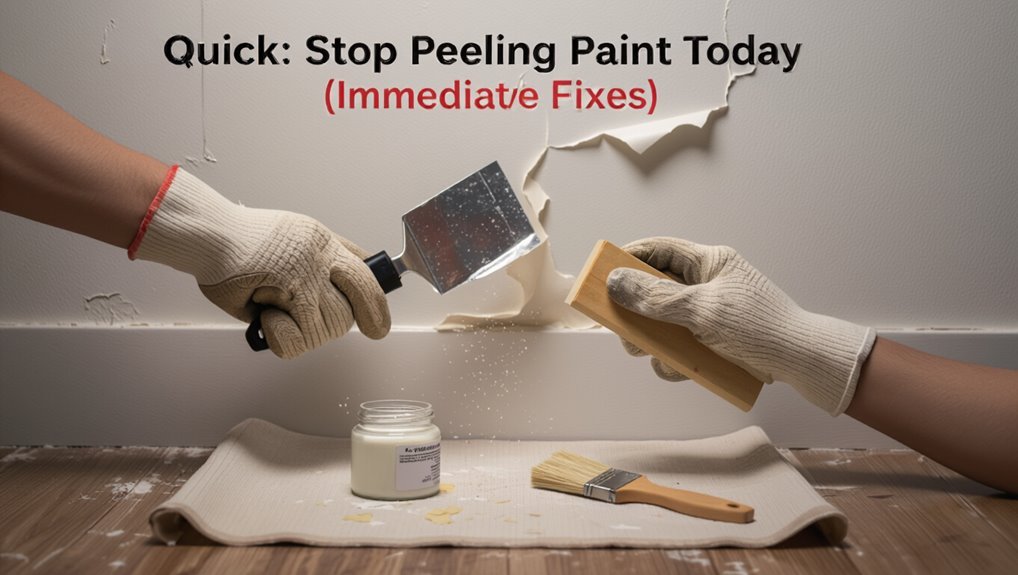
Act fast: if paint’s peeling right now, remove loose flakes with a putty knife or stiff brush, wipe the area clean, and apply a quick-drying primer designed for adhesion to seal exposed substrate.
Then sand feathered edges, spot-fill gaps, and repaint with compatible paint.
For quick fixes and emergency repairs, work in small sections, use proper ventilation, and check adhesion before finishing to prevent recurrence.
How to Tell Peeling Paint vs. Flaking, Blistering, or Chalking
Wondering whether you’re dealing with peeling paint or something else?
Check texture and edges: peeling paint lifts in sheets, flaking paint flakes off in small bits, blistering paint forms raised bubbles, and chalking paint leaves powdery residue.
Note location, pattern, and adhesion to spot paint differences.
That helps you assess paint damage and choose the right repair approach.
Why Your Paint Is Peeling: Moisture, Adhesion, Substrate
If your paint’s lifting, start by checking for moisture—leaks, rising damp, or poor ventilation can let water reach the coating and force it off.
You’ll also want to inspect adhesion: dirty, glossy, or improperly primed surfaces won’t bond well.
Finally, consider the substrate—materials like raw wood, untreated metal, or some plastics can cause premature failure unless they’re prepared and primed correctly.
Moisture Penetration Sources
Because moisture can come from many hidden places, tracking its sources is the first step to stopping paint from peeling.
You should inspect damp climates, hidden leaks and plumbing issues, watch for condensation buildup in bathrooms and kitchens, check roof damage and poor drainage around foundations, control basement humidity, and limit exterior exposure that lets water reach painted surfaces.
Poor Surface Adhesion
Once you’ve ruled out moisture as the cause, look at how well the paint actually stuck to the surface.
Poor adhesion often follows inadequate surface preparation or wrong primer. Do adhesion testing if unsure.
Check and fix these:
- Clean surface of dirt and grease
- Remove loose paint
- Sand glossy areas
- Apply appropriate primer
- Recoat only after proper curing and testing
Problematic Substrate Materials
When paint won’t stick no matter how well you prep and prime, the underlying material itself is often to blame; some substrates—like oil-based finishes, glossy plastics, dense hardwoods, or metal with contamination—resist bonding and cause peeling.
You should identify substrate types and inspect surface conditions, then choose primers or surface treatments suited to each material so paint can adhere and last.
How to Diagnose Moisture as the Root Cause
Start by looking for water stains, blistering, or discoloration near the peeling paint — those are clear clues that moisture’s involved.
Then use a moisture meter to measure the wall surface and compare readings across affected and unaffected areas.
If readings are consistently high where paint is failing, you’ve likely found the root cause.
Check For Water Stains
Wondering whether moisture is behind your peeling paint? Check for visible water damage and do a careful stain inspection to pinpoint sources.
Look for:
- brown or yellow discoloration
- bubbling or soft patches
- peeling near ceilings or windows
- mold or musty odor
- repeated stains after drying
If you find stains, address leaks before repainting to stop recurring peeling.
Measure Wall Surface Moisture
If you suspect stains signal ongoing moisture, you’ll want to measure the wall’s surface moisture to confirm the problem before repainting.
Use moisture meters on suspect areas and compare readings to unaffected spots. Combine numbers with visual wall inspections—peeling, blistering, or dampness.
If readings are high, stop and fix leaks, improve ventilation, or replace damaged drywall before proceeding with primer and paint.
How to Check for Poor Surface Prep and Bad Existing Coatings
Because peeling often traces back to bad prep or a compromised existing finish, you should inspect the surface carefully before repainting.
Use Surface Preparation steps and Coating Assessment to guide you:
- Adhesion Testing: scrape or tape for bond strength.
- Damage Inspection: look for cracks, blisters.
- Primer Evaluation: confirm proper priming.
- Moisture Check: rule out damp substrates.
- Finish Quality and Surface Treatment: note previous coatings.
Paint Types & Incompatible Products That Cause Peeling
Watch the paint history before you start a job, because mismatching systems—like applying oil over latex, using alkyd over waterborne finishes, or pairing incompatible primers—often leads to peeling.
If you slap a new coating onto an unsuitable base, it won’t adhere properly and will fail prematurely.
We’ll walk through how to identify and avoid these mismatches so your paint lasts.
Oil Over Latex
When you roll oil-based paint directly over an existing latex coat, the two formulations often won’t bond properly, and you’ll end up with blistering or peeling as the oil film dries and contracts.
You should address oil paint over latex by considering:
- latex compatibility and adhesion factors
- surface tension and paint layering
- drying times differences
- application techniques adjustments
- finish differences affecting bond
Alkyd On Waterborne
If you brush an alkyd (oil-modified) topcoat directly over a cured waterborne paint, it may not adhere well and can peel as the alkyd cures and shrinks.
You should scuff, degloss, and prime with a compatible bonding primer before applying alkyd finishes.
Respect waterborne benefits like flexibility and breathability; skipping prep risks adhesion failure and peeling, especially in high-humidity areas.
Incompatible Primers
One common cause of peeling is using the wrong primer—products formulated for a different paint chemistry won’t bond and can lead to delamination.
You should check primer types and avoid incompatible coatings. Consider these checks:
- Match solvent base to paint
- Confirm adhesion properties
- Check manufacturer compatibility
- Test on a small area
- Replace old primers if unsure
Tools & Materials for Peeling Paint Prevention and Repair
Start with a compact kit of high-quality tools and the right materials, because using proper supplies makes prevention and repair faster and longer-lasting.
You’ll need scrapers, sandpaper, wire brushes, a good primer, compatible topcoats, brushes and rollers matched to paint selection, sealants, and cleaners.
Prioritize surface preparation, consider environmental factors during paint application, and choose repair techniques that deliver long term solutions.
Safety First: Lead Paint, Dust Control, and PPE
Before you start scraping or sanding, test surfaces for lead paint so you know what precautions are required.
Contain dust by sealing the work area and using wet-sanding or a HEPA vacuum to minimize spread.
Always wear proper PPE—respirator, gloves, and eye protection—and follow disposal rules for hazardous waste.
Check For Lead Paint
Worried your peeling paint might contain lead? You should prioritize safety: know lead paint risks and use proper testing methods before work.
- Buy an EPA-approved test kit
- Hire a certified inspector
- Sample suspicious areas
- Keep kids and pets away
- Follow lab results and guidance
Act promptly if positive, and plan professional abatement or safe containment.
Control Dust Spread
If you suspect lead paint or are sanding old surfaces, control dust spread immediately to protect yourself and others: contain the work area with plastic sheeting, seal vents and doors, and use dust control techniques like wet sanding or HEPA-equipped vacuums.
Limit access, clean up with damp cloths, and perform filter installation on vacuums and air scrubbers to capture fine particles before disposal.
Wear Proper PPE
Once you’ve contained dust and sealed the area, put on proper personal protective equipment to keep lead particles and other hazards off your skin and out of your lungs.
Follow PPE guidelines and use appropriate safety equipment:
- Fit-tested NIOSH N95 or P100 respirator
- Disposable coveralls with hood
- Nitrile gloves, double if needed
- Eye protection or goggles
- Disposable shoe covers
Prevent Peeling Before You Repaint: Simple Steps
Start by evaluating the surface carefully so you know what caused the peeling and what needs fixing before you repaint.
Check paint quality and surface texture, address contamination, and consider environmental factors like humidity control and curing time.
Improve application technique, choose appropriate paint finish and color selection for durability, and prep with proper adhesion promoters so new coats bond and resist future peeling.
Fix Small Peeled Spots on Interior Walls : Step by Step
Tackle small peeled spots on interior walls by following a straightforward, step-by-step approach that gets you from loose paint to a smooth, paint-ready surface.
- Scrape loose paint, identify peeling causes.
- Sand edges smooth.
- Clean dust and degrease.
- Apply patching compound; sand when dry.
- Prime repaired area, then repaint using proper repair techniques.
Repair Large Interior Peeling Areas (Replaster If Needed)
If you spot large areas where paint and plaster are failing, first assess the underlying damage to see if there’s moisture, mold, or structural issues.
Remove all loose plaster down to a sound substrate, then clean and prime the area.
If the substrate is compromised, replaster, sand smooth, prime, and finish with matching paint.
Assess Underlying Damage
When you find large sections of interior paint peeling away, don’t just skim the surface—inspect what’s beneath to decide whether simple patching will do or if replastering is required; perform a moisture assessment and a substrate evaluation, then:
- Check for soft, crumbling plaster
- Look for mold or staining
- Note continued damp spots
- Tap to detect voids
- Measure depth of delamination
Remove Loose Plaster
Now that you’ve assessed the damage, remove any loose plaster so repairs will bond to a stable surface.
Use safe plaster removal techniques: score edges, chip away delaminated sections with a putty knife or chisel, and vacuum debris.
Inspect backing and lath for rot.
Choose appropriate plaster repair methods for remaining voids.
Keep the area clean and dry before proceeding to replaster and finish.
Replaster And Finish
Begin by prepping the cleaned area so new plaster will bond properly: dampen the surface slightly, tack up any exposed lath with galvanised staples or screws, and apply a bonding agent where recommended.
- Mix and apply basecoat using proper replaster techniques.
- Float smooth, consolidate seams.
- Allow curing time per product.
- Sand lightly before skimcoat.
- Choose finishing options: paintable skim, texture, or primer-sealer.
Remove and Repaint Peeling Exterior Siding
Strip off the loose paint and you’ll get a clear view of what needs repair before you repaint exterior siding. Scrape, sand, and clean damaged areas, checking siding materials and improving paint adhesion. Replace rotten boards, fill gaps, and mask trim. Work systematically from top down to avoid streaks and debris.
| Task | Purpose |
|---|---|
| Scrape | Remove loose paint |
| Sand | Smooth edges |
| Clean | Remove dust |
| Replace | Fix rot |
| Mask | Protect trim |
Best Primers and Paints to Prevent Peeling Paint
When you want durable, long-lasting exterior paint, start with the right primer and choose a topcoat formulated for your siding material. Primers that block stains and promote adhesion—like alkyd primers for weathered wood or high-quality bonding primers for glossy surfaces—cut the risk of peeling.
100% acrylic exterior paints typically offer the best flexible, UV-resistant finish for most claddings.
- Pick primer types for surface and stain control.
- Match 100% acrylic topcoats to siding.
- Consider best paint brands with weather warranties.
- Use bonding primers on difficult substrates.
- Choose mildew-resistant formulations for humid climates.
Preparing Surfaces: Drywall, Wood, Metal, and Masonry
Before you paint, clean each surface thoroughly—remove dust, grease, and loose material so the new coat can bond.
Fix holes and cracks with the right patching compound for drywall, wood filler for timber, and masonry repair products for brick or concrete.
Then apply the appropriate primer for the substrate and let it dry fully before painting.
Surface Cleaning And Debris Removal
Start by removing loose paint, dust, grease, and other contaminants so new coatings can bond properly; use a stiff brush or scraper for peeling areas, a solvent or trisodium phosphate solution for greasy spots, and a vacuum or tack cloth to clear fine dust from drywall, wood, metal, and masonry.
- Use proper cleaning tools for surface preparation
- Apply recommended cleaning solutions
- Perform contamination checks
- Prioritize dust removal
- Log debris management and surface inspection
Proper Priming And Patchwork
With loose paint and contaminants removed, move on to priming and patchwork to guarantee a smooth, stable surface that lets new paint adhere and look uniform.
You’ll choose priming techniques by substrate: drywall needs high-adhesion drywall primer, wood needs stain-blocking primer, metal needs rust-inhibitor, masonry needs masonry primer.
Use patchwork methods—fill, sand, seal—so repairs blend and prevent future peeling.
How to Control Moisture: Ventilation, Leaks, and Grading
If you want your paint to last, control the moisture that attacks it: ventilate damp areas, fix leaks promptly, and guarantee exterior grading directs water away from foundations.
Use Moisture control practices for Effective ventilation and Humidity management, with Leak detection and Grading solutions.
Improve Surface drainage, Wall insulation, and Air circulation:
- Install exhaust fans
- Repair flashing
- Regrade soil
- Slope gutters
- Seal penetrations
Choose the Right Paint System for Humid or High‑Traffic Areas
Pick a paint system designed for humidity and heavy wear so your finish stays intact longer; choose breathable primers and mildew-resistant topcoats for damp rooms, and durable, washable paints for high-traffic zones. Prioritize coatings that resist humidity effects and boost paint durability; prep and seal substrates, and pick semi‑gloss or satin for easy cleaning.
| Area | Recommended Finish |
|---|---|
| Bathroom | Mildew-resistant |
| Kitchen | Washable enamel |
| Hallway | Semi-gloss |
| Basement | Breathable primer |
| Exterior porch | Durable latex |
Best Timing and Weather Conditions to Reduce Peeling
Although timing isn’t glamorous, it makes a big difference in preventing paint from peeling: you should paint when temperatures are steady, humidity is low, and surfaces are fully dry.
Timing matters: paint only when temperatures are steady, humidity is low, and surfaces are completely dry.
Follow these quick timing tips to hit the ideal temperature and control humidity levels:
- Paint mid-morning after dew evaporates
- Avoid rainy fronts
- Aim for stable 50–85°F windows
- Skip high humidity days
- Allow full surface drying before recoating
Maintenance Habits That Keep Paint From Peeling Over Time
1 simple routine can keep paint looking fresh for years: inspect, clean, and touch up regularly. You should schedule regular inspections, seasonal cleanings, and prompt spot repairs to prevent moisture and dirt buildup. Stay proactive: clear gutters, trim foliage, and recoat high-wear areas before failure.
| Task | Frequency |
|---|---|
| Inspect seals | Quarterly |
| Wash surfaces | Seasonal |
| Touch up chips | As needed |
| Check drainage | Biannually |
Common Repair Mistakes That Cause Repeat Peeling : And How to Avoid Them
Routine upkeep prevents many peeling problems, but botched repairs can send you back to square one.
You must use correct repair techniques, avoid common oversights, and account for environmental factors.
Follow these steps:
- Use proper tools for sanding and scraping.
- Prioritize thorough surface preparation.
- Choose correct paint selection for substrate.
- Allow proper drying time.
- Avoid painting in poor weather.
When to Call a Pro: Signs a Job Needs Professional Help
If the peeling keeps coming back, the area is extensive, or underlying damage like rot or mold shows up, it’s time to call a pro—especially when fixes demand structural repairs, specialty tools, or matching complex finishes.
Get a professional assessment and contractor consultation so you can weigh repair scope, costs, and timelines.
Seek expert advice for a clear project evaluation and confident next steps.
Quick Troubleshooting: What to Try Next If Peeling Returns
When peeling comes back, don’t assume the first fix covered the real cause—inspect the area for hidden issues like trapped moisture, failed primer, or poor adhesion from incompatible paints.
Then address the specific problem before repainting.
- Test for moisture with a hygrometer.
- Check primer compatibility.
- Remove loose paint fully.
- Sand glossy surfaces for adhesion.
- Reevaluate ventilation and drainage.
Use these troubleshooting techniques to stop peeling paint quickly.
Checklist: Prep, Tools, and Steps for a Lasting Repaint
Before you repaint, make a concise plan that targets the exact causes you found during troubleshooting—moisture, primer failure, or adhesion problems—and gather the right tools and materials so the repair holds.
Inspect and clean surfaces, remove loose paint, sand to promote paint adhesion, repair substrate damage, apply compatible primer, and use quality paint.
Follow cure times and monitor humidity for lasting results.
Frequently Asked Questions
Can Humidity Controllers (Dehumidifiers) Damage Paint Over Time?
Yes — if overused or mismanaged, dehumidifiers can affect humidity effects and alter paint adhesion by drying surfaces too quickly or causing cycles of moisture change; you should monitor humidity and avoid extremes to protect finishes.
Will Wallpaper Removal Cause Peeling in Adjacent Painted Areas?
Yes — when you strip wallpaper you can pull adjacent paint if adhesive bonds or surface preparation was poor; use proper wallpaper techniques, gentle scoring, adhesive softeners and careful scraping to protect painted edges and avoid damage.
Can Plants or Landscaping Contribute to Exterior Paint Peeling?
Yes — plants and landscaping can cause exterior paint peeling: you should position plant placement away from walls, trim foliage, guarantee proper landscaping maintenance to prevent moisture, rubbing, and trapped debris that degrade paint over time.
Is It Safe to Use Heat Guns on Lead-Painted Surfaces?
Of course you can—if you enjoy poisoning yourself. You shouldn’t; heat gun techniques can vaporize lead paint. For lead paint safety, avoid high heat, use wet methods, HEPA cleanup, and hire certified abatement professionals.
Do Color or Sheen Changes Affect Peeling Recurrence?
Yes — if you change color or sheen, you’ll affect peeling recurrence; severe color fading or reduced sheen durability can expose underlying flaws, so you’ll need proper prep, compatible products, and maintenance to prevent renewed peeling.
Conclusion
You’ve learned the causes and fixes, so don’t let peeling paint come back. Think of your home like my neighbor’s old fence: he skipped prep, repainted, and it peeled within a season—costing him three jobs instead of one. Proper prep, moisture checks, and the right primer save time and money; studies show prep prevents most failures. Follow the checklist, avoid common mistakes, and call a pro when problems keep returning.
