
How to Wash Eggshell Painted Walls Without Damage
You can safely clean eggshell-painted walls by starting with a dry dusting, then wiping with a damp microfiber cloth and a mild soap solution (about 1 teaspoon per quart of warm water). Work top to bottom in gentle circular motions, avoid soaking the surface, and rinse with plain water before blotting dry. For spots, test a hidden area first and use a soft brush or vinyl eraser as needed. Keep going to learn stain-specific tips and touch-up tricks.
Who This Guide Is For: Eggshell Walls
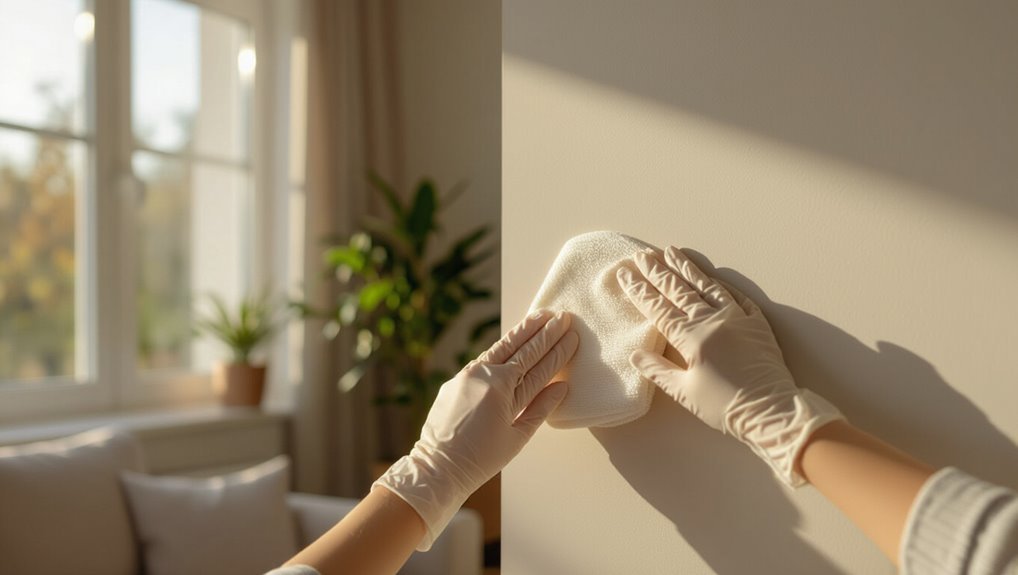
Anyone with interior paint labeled “eggshell” will find this guide useful.
Anyone with interior eggshell paint will appreciate this practical guide to gentle, effective cleaning and stain removal.
You’ll be someone caring for low-sheen finishes—common egg shell types like light and satin variations—and need practical cleaning techniques that respect delicate sheens.
This guide suits homeowners, renters, and DIYers who want to remove dirt or stains without scuffing paint.
You’ll learn safe, tested methods tailored to eggshell surfaces.
Quick Answer: Best Way to Wash Eggshell Walls
Start by dry-dusting the surface with a soft microfiber cloth or duster to remove loose dirt.
Then mix a mild detergent with warm water, wring your sponge until damp, and work top to bottom in gentle circular motions.
Rinse with clean water, blot dry, and spot-treat stains.
These cleaning techniques keep paint intact and support routine wall maintenance for lasting results.
Why Eggshell Finish Needs Gentler Cleaning
Because eggshell has a lower sheen, you’ll notice it shows wear more easily than semi-gloss surfaces.
Its thinner paint layer means aggressive scrubbing can remove pigment or expose primer.
Also, the subtle surface texture can get scuffed or flattened if you use harsh cleaners or abrasive pads.
Lower Sheen Vulnerability
While eggshell finishes still offer some durability, their lower sheen means they hide fewer surface imperfections and resist abrasion less than satin or semi-gloss.
Thin Paint Layer
An eggshell finish looks smooth but usually sits thinner than satin or semi-gloss, so you’ll need to clean with extra care to avoid wearing the film down.
You should use gentle cleaners, soft cloths, and minimal scrubbing to preserve eggshell durability.
Regular, careful paint maintenance prevents premature touch-ups and keeps color consistent without compromising the fragile film.
Surface Texture Sensitivity
If you run your hand over an eggshell-painted wall you’ll notice a subtle texture that picks up light and hides minor flaws.
But that same delicate finish traps dirt and shows abrasion more easily than glossier paints, so you’ll need to clean with softer tools and lighter pressure to avoid scuffing or thinning the surface.
You should choose gentle cleaning techniques that respect texture sensitivity and spot-test first.
Gather Supplies for Cleaning Eggshell Walls
Start by assembling a few basic, gentle supplies so you don’t damage the eggshell finish: a bucket of warm water, mild liquid dish soap, a soft microfiber cloth or sponge, a soft-bristle brush for textured areas, a clean towel for drying, and a step stool if you’ll reach high spots.
Gather cleaning tools suited to your wall materials, plus rubber gloves and a spray bottle for spot tests.
Choose Non‑Abrasive Sponge, Microfiber Cloth, Soft Brush
Pick soft microfiber cloths for wiping since they lift dirt without scratching the eggshell finish.
Use non‑abrasive sponges for tougher spots, but don’t scrub hard.
A soft brush can help in textured areas without damaging the paint.
Choose Soft Microfiber Cloths
A soft microfiber cloth gives you gentle, effective cleaning on eggshell-painted walls without scratching the finish.
Choose a high-quality, low-pile cloth to lift dirt and grease—microfiber benefits include superior trapping and reduced moisture.
Rinse and wring frequently, launder separately to avoid lint, and follow manufacturer cloth care.
Work in light strokes, replacing damp sections to prevent streaks or over-wetting the paint.
Use Non‑Abrasive Sponges
One soft, non‑abrasive sponge paired with a microfiber cloth and a soft-bristled brush gives you the tools to clean eggshell-painted walls without dulling the finish.
You should choose non abrasive materials to lift grime gently; wring sponges damp, not soaked.
If a sponge’s too rough, try sponge alternatives like cellulose pads or a soft nylon brush, testing each in an inconspicuous spot first.
Safe Cleaning Solutions for Eggshell Paint
When you clean eggshell-painted walls, choose gentle solutions that remove dirt without stripping the paint’s low-sheen finish.
Use mild dish soap or eco-friendly cleaners and test any commercial solutions in a hidden spot first.
Avoid bleach or harsh solvents that dull sheen.
- Mild dish soap and water
- pH-neutral cleaners
- Plant-based sprays
- Rinsing with clean water
Dilute Cleaners Correctly for Eggshell Walls
Measure your cleaner precisely—follow the label and use measuring tools so you don’t overconcentrate the solution.
Stick to mild detergent ratios (about a teaspoon per quart of water for light cleaning) to protect the eggshell finish.
Always test a small, hidden patch first to make sure the mix won’t soften or discolor the paint.
Measure Cleaning Solution Precisely
Accurately diluting your cleaner matters: egg‑shell paint is less forgiving than glossy finishes, so follow label ratios and use a measuring cup or graduated container to mix solutions.
You’ll measure cleaning ratios for different solution types, note concentration, and label containers so you don’t guess later.
- Use a clear measuring cup
- Record ratio on tape
- Stir gently, avoid froth
- Test small patch first
Use Mild Detergent Ratios
Now that you’ve mixed and labeled your cleaning solutions, pick a mild detergent ratio that’s gentle on eggshell finishes: aim for about 1 teaspoon of dish soap per quart (about 1 liter) of warm water for routine cleaning. Choose mild detergent types like castile or gentle dish soap; adjust by washing frequency.
| Calm | Trust | Relief |
|---|---|---|
| Soft | Safe | Clean |
| Gentle | Steady | Bright |
| Care | Ease | Restore |
Test Patch Before Washing
Before you scrub the whole wall, always do a small test patch in an inconspicuous spot—use your diluted cleaner on a roughly 2×2 inch area and let it dry to check for discoloration, sheen change, or paint lifting.
You’ll confirm your dilution, protect finish, and avoid surprises. Adjust dilution and cleaning frequency based on results.
- Note drying time
- Inspect under different light
- Try weaker mix first
- Record successful ratio
Set Up Your Cleaning Station
Gather your supplies and arrange them within arm’s reach so you can clean efficiently without stepping away from the wall.
Set a bucket with mild detergent solution, soft microfiber cloths, a sponge, and a gentle scrub brush.
Keep cleaning equipment organized on a small table or caddy.
Position a ladder if needed, and have a dry towel ready to blot for immediate wall protection.
Protect Floors, Trim, and Furniture First
Protect the floor, trim, and nearby furniture so cleaning won’t create bigger problems than the dirt you’re removing.
Lay down floor protection and tape paper or plastic along baseboards; use drop cloths for furniture covering.
Move small items away and cover larger pieces. Secure edges to prevent slipping and drips, and keep a dry towel handy to catch stray moisture.
Test an Inconspicuous Spot on Eggshell Paint
Before you start washing, pick an out-of-sight area like behind a door or inside a closet.
Test a small patch with your cleaning solution and a soft cloth to make sure the eggshell finish doesn’t soften or streak.
If the paint holds up, you can proceed with confidence; if not, try a milder cleaner or stop.
Choose An Out-Of-Sight Area
Want to avoid ruining your finish? Pick an out-of-sight area for test cleaning to protect wall preservation.
You’ll confirm gentleness without risking visible damage. Try spots behind furniture or near baseboards, and note results before wider washing.
- Behind a bookcase
- Inside a closet corner
- Behind a curtain
- Low baseboard edge
Perform A Small Test Patch
Once you’ve picked an out-of-sight spot, perform a small test patch to make sure your cleaning method won’t dull or remove the eggshell finish.
Dampen a soft cloth with your chosen cleaner, gently rub a 2×2 inch area, wait a few minutes, then inspect for color change, sheen loss, or softening of the paint.
Note test effectiveness, then observe drying and recheck before cleaning the rest.
If the Test Fails: What to Do Next
If the test shows the paint softens, smears, or lifts, don’t panic—you can salvage the finish with a few targeted steps.
Stop immediately, blot gently, and switch to milder cleaning techniques to limit further harm.
For damage prevention, try these actions:
- Rinse with plain water and blot dry
- Use a softer cloth or sponge
- Try a gentler soap solution
- Avoid scrubbing until paint cures
Read Paint Labels: Cleanability and Sheen
Labels tell you more than color—they tell you how well the finish will stand up to cleaning.
Check the label for cleanability ratings and recommended sheen; eggshell varies by formula. Note manufacturer guidance on paint durability and suggested cleaning frequency so you don’t overwork the finish.
Follow solvent or detergent recommendations, and test a small area first to confirm the label’s claims before wider washing.
Remove Dust and Cobwebs Safely
Start by removing loose dust and cobwebs with a feather duster to avoid scratching the eggshell finish.
If you need more thorough cleaning, use a vacuum with a soft brush attachment on low suction.
Work top to bottom so you don’t spread dust onto freshly cleaned areas.
Use Feather Duster
When you’re prepping eggshell-painted walls, grab a soft feather duster to gently remove dust and cobwebs without scratching the finish; its light touch lifts debris from corners and textured areas that a cloth might miss.
Use feather duster techniques and follow wall cleaning precautions for best results.
- Sweep slowly from top to bottom
- Tap outside to remove buildup
- Use gentle, broad strokes
- Avoid pressing into paint
Vacuum With Brush Attachment
Grab your vacuum with a brush attachment to lift dust and cobwebs from eggshell-painted walls without abrading the finish; the soft bristles loosen debris while the suction carries it away, saving you time and preventing smudges that wiping can cause.
Use soft or natural brush types, adjust suction low, and set a sensible vacuum frequency—every few weeks in high-traffic areas, less often elsewhere.
Step‑By‑Step: Wash General Grime and Fingerprints
1 simple cleaning routine will remove most fingerprints and everyday grime from eggshell-painted walls without damaging the finish.
You’ll mix mild soap and warm water, test a hidden spot, and gently wipe with a soft cloth, using circular motions. These cleaning techniques support regular wall maintenance and prevent buildup.
- Use microfibre cloths
- Mild dish soap
- Soft sponge, not abrasive
- Work top-to-bottom
Rinse and Dry Walls Without Streaks
Rinse the wall with clean water and wring your cloths until they’re damp, not dripping.
Use soft, clean cloths for the rinse to avoid leaving residue.
Finish by drying with a microfiber cloth, wiping in one direction to prevent streaks.
Use Clean, Soft Cloths
When you finish rinsing a section, work quickly with a clean, soft cloth to blot away moisture so water doesn’t leave streaks or mineral spots on eggshell paint.
You’ll want to follow careful cleaning techniques and choose proper cloth types to avoid abrasion or residue.
- Use lint-free cotton or soft towels
- Avoid rough or dyed fabrics
- Keep extra cloths on hand
- Replace soiled cloths immediately
Dry With Microfiber
You’ll want to dry each rinsed section immediately with a clean microfiber cloth to prevent streaks and water marks on eggshell paint.
Use light, overlapping strokes and change to a dry side frequently. Appreciate microfiber benefits: superior absorbency and gentle fibers that won’t scuff.
Adopt consistent drying techniques—work top to bottom, keep cloths clean, and avoid pressing hard to preserve the finish.
Control Scrubbing Pressure to Protect Sheen
Although a little elbow grease helps remove marks, press too hard and you’ll dull or scratch eggshell paint; keep your strokes firm but gentle and let the cleaning solution do most of the work.
You should practice scrubbing techniques for sheen preservation, testing an inconspicuous area first and adjusting pressure to avoid abrasion.
- Use light, circular motions
- Start with soft sponge
- Increase pressure minimally
- Rinse and inspect
Avoid Over‑Wetting and Paint Softening
Because eggshell finishes soften with too much moisture, don’t soak the wall—use a damp, not dripping, cloth and work in small sections so paint has time to dry between passes. You’ll avoid over wetting risks and visible paint softening effects by blotting stains, rinsing the cloth often, and testing an inconspicuous spot before continuing.
| Tip | Action |
|---|---|
| Damp cloth | Wring thoroughly |
| Small sections | 2–3 sq ft |
| Blotting | Don’t rub |
| Test spot | 30-minute check |
| Rinse often | Prevent buildup |
Manage Drips and Runs During Cleaning
Keep your water flow gentle so you don’t create drips that run down the wall.
If a drip forms, blot it immediately with a clean sponge or microfiber cloth instead of rubbing. That prevents streaks and stops moisture from softening the paint.
Control Water Flow
Controlling water flow is essential when cleaning eggshell-painted walls to prevent drips and runs that can leave streaks or damage the finish.
You should use a damp, not soaked, cloth, monitor water temperature to avoid weakening paint, and adjust washing frequency to prevent buildup without over-wetting. Slow, vertical strokes help control runoff.
- Use a well-wrung microfiber
- Work small sections
- Keep a dry towel below
- Rinse and re-wring often
Blot, Don’t Rub
When a drip or run appears, blot the spot gently with a well-wrung microfiber or cotton cloth instead of rubbing it, since rubbing can spread the moisture and lift or smudge eggshell paint.
You should press and lift repeatedly, working from edges inward to contain the drip.
Use tested blot techniques, avoid rubbing myths, and dry the area with a soft towel to prevent sheen changes.
Lift Scuff Marks Without Removing Paint
If scuff marks are marring your eggshell-painted walls, you can usually lift them without stripping the finish by using gentle, targeted methods that won’t harm the paint.
You’ll focus on scuff mark removal while prioritizing paint preservation: test cleaners in inconspicuous spots, use soft cloths, dab with mild detergent solutions, and avoid harsh scrubbing that dulls the finish.
- Test first
- Use mild soap
- Soft cloths only
- Light pressure
Use Erasers and Magic Sponges Safely on Eggshell Walls
A few targeted tools—white vinyl erasers and melamine “magic” sponges—can remove scuffs on eggshell walls without stripping paint, but you’ll need to use them gently and test first to avoid dulling the finish.
Use eraser methods with light, controlled strokes; try different sponge types on an inconspicuous spot.
Work damp, not soaked, and stop if sheen or paint lifts.
Remove Crayon, Pencil, and Marker Stains
Start by identifying whether the marks are crayon, pencil, or marker so you can pick the right cleaner.
For light pencil or crayon smudges, try a soft eraser or a damp microfiber with mild soap; for washable markers, use rubbing alcohol or a magic eraser cautiously.
For stubborn or permanent marker stains, test a solvent in an inconspicuous spot and work gently to avoid damaging the eggshell finish.
Identify Stain Type
Wondering whether that mark is crayon, pencil, or marker? You’ll use quick stain identification to choose safe cleaning techniques without harming eggshell paint.
Inspect color intensity, texture, smear behavior, and smell to classify the mark.
- Waxy, raised, vibrant color
- Dry gray graphite sheen
- Ink that runs or soaks
- Residue that rubs off slightly
Gentle Cleaning Methods
If the mark’s surface-level and you’ve already identified it, you can remove crayon, pencil, or most marker stains with gentle, nonabrasive methods that won’t strip eggshell paint.
Lightly rub a soft cloth with mild dish soap, diluted vinegar, or a magic eraser substitute.
Test first, work gently, and avoid overcleaning; gentle products and appropriate cleaning frequency prevent paint wear and discoloration.
Tough Stain Removal
When gentler methods don’t lift crayon, pencil, or marker, you’ll need targeted, slightly stronger techniques that remove the mark without damaging eggshell paint. Work from least to most aggressive and always test in an inconspicuous spot first.
Use mild soap, baking soda paste, melamine sponge, or rubbing alcohol sparingly. Prioritize tough stain removal with proper cleaning solutions and gentle pressure.
- Baking soda paste (rub gently)
- Melamine sponge (light strokes)
- Rubbing alcohol (dab, don’t soak)
- Commercial stain remover (test first)
Tackle Grease and Kitchen Splatters on Eggshell Paint
Because kitchen grease bonds to paint differently than everyday dust, you’ll need targeted techniques to remove splatters from eggshell finishes without dulling their subtle sheen. You should test a mild degreaser, use soft cloths, and rinse gently. Prioritize grease removal and kitchen safety—ventilate and wear gloves.
| Tip | Action |
|---|---|
| Test first | Spot-clean inconspicuous area |
| Degrease | Mild detergent solution |
| Wipe | Soft microfiber cloth |
| Rinse | Light water pass |
Deal With Water Stains and Mild Mold Spots
Grease and splatters are one thing, but water stains and mild mold need a gentler, more targeted approach to avoid damaging eggshell’s soft sheen.
You’ll blot stains, use a mild detergent or diluted vinegar for water stain removal, and treat spots gently to prevent spread while preserving finish and aiding mold prevention.
- Blot, don’t rub
- Test hidden area first
- Use soft sponge
- Dry thoroughly
Remove Nicotine or Heavy Smoke Residue Gently
1. You’ll remove smoke residue using gentle techniques: test a mild trisodium phosphate solution on a hidden spot, work top-to-bottom with soft cloths, and rinse promptly to avoid sheen changes.
| Step | Solution | Tool |
|---|---|---|
| Test | Mild TSP | Soft cloth |
| Clean | Diluted TSP | Sponge |
| Rinse | Warm water | Clean rag |
| Dry | Air | Microfiber |
Clean High‑Traffic Hallways and Stair Walls Efficiently
After you’ve handled smoke-stained areas, shift focus to hallways and stair walls, where frequent contact leaves scuffs, fingerprints, and smudges that build up fast.
After treating smoke stains, clean hallway and stair walls—high-contact areas prone to scuffs, fingerprints, and quick buildup.
You’ll use gentle cleaners, soft sponges, and targeted spot cleaning as high traffic solutions while maintaining stair safety by avoiding slippery residue.
- Use a microfiber cloth
- Test cleaner in a hidden spot
- Work top to bottom
- Rinse and dry immediately
Clean Children’s Rooms Without Harming Paint
Looking to clean your child’s room without dulling the eggshell finish? Use gentle cleaning techniques: soft microfiber, mild detergent, and lukewarm water.
Test a hidden spot first. Wipe scuffs lightly, rinse with clean water, and dry immediately to prevent streaks.
Keep hands-off toys and crayons managed to reduce frequent scrubbing.
These steps offer effective stain removal while prioritizing paint protection.
Spot‑Clean vs Full‑Wall Wash: Choose What to Do
You’ve got the basics for gentle cleaning, so now decide whether to spot-clean or wash the whole wall based on how widespread the marks are and how the paint looks.
Decide whether to spot-clean or wash the whole wall depending on mark spread and paint condition.
If spots are isolated, use spot cleaning techniques; if large areas show grime or sheen loss, try gentle wall washing methods.
- Test a small area first
- Use soft sponges
- Rinse thoroughly
- Work top to bottom
How Often to Wash Eggshell Painted Walls by Room
Think about how often you use each room: high-traffic areas like hallways and entryways will need washing every 1–3 months.
Medium-use rooms such as living rooms or kitchens every 3–6 months, and low-use spaces like guest rooms or formal dining rooms once or twice a year.
Prioritize spot-cleaning when you see marks and schedule full washes based on the room’s traffic level.
This keeps eggshell finishes looking fresh without over-washing.
High-Traffic Areas
Because traffic and activities vary by room, how often you wash eggshell-painted walls should too; high-use areas like kitchens, hallways, and kids’ rooms usually need more frequent cleaning than bedrooms or formal living spaces.
You’ll focus on high traffic maintenance and wall protection to prevent wear while cleaning smartly.
- Wipe spills immediately
- Monthly light cleans
- Spot-treat scuffs
- Use gentle cleaners
Medium-Use Rooms
When rooms see moderate activity—like guest bedrooms, home offices, or formal dining areas—cleaning eggshell-painted walls every 3–6 months usually keeps them looking fresh; spot-clean stains as they appear and do a light wash seasonally to remove dust and fingerprints.
Use gentle soap, soft cloths, and circular motions. These painting tips focus on simple wall maintenance to preserve finish without overworking surfaces.
Low-Use Spaces
If medium-use rooms need light seasonal washes, low-use spaces like guest closets, storage rooms, and formal parlors require even less attention—usually only an annual check and spot-cleaning as needed.
You’ll inspect annually, address scuffs, and avoid over-washing to preserve eggshell finish. Focused wall maintenance saves time and paint.
- Annual inspection routine
- Targeted spot-cleaning
- Gentle cleaners only
- Avoid abrasive tools
Seasonal Deep Clean for Eggshell Walls
As seasons change, plan a thorough deep clean for your eggshell walls to remove accumulated grime, scuffs, and unseen oils that dull the finish; you’ll need time, gentle cleaners, and the right tools to restore their subtle sheen without damaging the paint.
Create a seasonal checklist, set a practical cleaning schedule, test solutions in small areas, work top-to-bottom, and rinse sparingly to avoid streaks.
Prep Walls for Touch‑Ups After Cleaning
After cleaning, walk the walls and inspect for chips, scratches, or softened areas that need attention.
Gently wipe any remaining residue with a damp cloth so touch‑ups will bond properly.
Gather matching paint, a small brush or roller, and any filler or sandpaper you’ll need before you start.
Inspect For Paint Damage
Before you touch up anything, walk the room and scan the eggshell-painted surfaces for chips, peeling, or dull patches that cleaning may have revealed.
Note paint condition and any changes in wall texture so you can prioritize repairs. Then mark areas and gather supplies.
- Pinpoint chips and flaking
- Check seams and corners
- Feel for uneven texture
- Photograph problem spots
Clean Surface Gently
Wipe down the wall with a soft, damp microfiber cloth to remove dust and loose grime, using gentle, circular motions so you don’t abrade the eggshell finish. You’ll use gentle techniques and note cleaning frequency—lightly wipe stains, avoid scrubbing, and let areas dry before evaluating for touch‑ups.
| Calm | Care | Confidence |
|---|---|---|
| Soft | Slow | Steady |
| Clean | Kind | Ready |
Prepare Touch‑Up Materials
Once the wall’s dry and you’ve assessed any scuffs or chips, gather the supplies you’ll need for quick, precise touch‑ups: matching paint (or a small sample from the same batch), a small angled brush or foam applicator, a clean cloth, fine‑grit sandpaper, painter’s tape, and a disposable tray or plate for mixing.
Follow these touch up tips and confirm paint matching.
- Test paint on scrap cardboard first
- Sand edges lightly before applying
- Use thin coats, feather edges
- Wipe away excess with cloth
Pick Touch‑Up Paint to Match Eggshell Finish
When you’re matching touch-up paint to an eggshell finish, choose a product labeled “eggshell” or with a sheen percentage close to your existing wall (typically 10–25% gloss), so the repaired spot blends without obvious shine differences.
Check the paint finish label and swatch for color matching, buy from the same brand or have tint adjusted, and test a small area before applying broadly.
Blend Touch‑Up Spots So They’re Invisible
Although the repair area will stand out if you rush, you can make touch‑ups disappear by feathering the edges, matching texture, and blending paint in thin, overlapping strokes that mimic the surrounding finish.
Use precise blending techniques and practice invisible touch ups so your wall looks seamless.
Tips:
- Light pressure with a small brush
- Dab excess paint off
- Match sheen, not just color
- Blend outward gently
Repair Minor Paint Damage Caused by Cleaning
If cleaning leaves small chips, you’ll want to patch them quickly with a bit of spackle or filler.
Sand any rough or raised areas smooth so the repair sits flush with the surrounding eggshell finish.
Finally, touch up scuffed or discolored spots with matching paint, feathering the edges to blend.
Patch Small Paint Chips
Fix small chips right away to keep them from worsening and to restore the smooth, uniform look of your eggshell-painted walls.
Gently clean, sand edges, apply primer if bare, then use precise patching techniques and careful paint matching to blend repairs. You’ll avoid noticeable spots and preserve finish.
- Clean area before repair
- Feather sand chip edges
- Use small brush for touch-up
- Match sheen and color precisely
Smooth Rough Or Raised Areas
After touching up chips, you might notice areas that feel rough or raised where cleaning lifted or abraded the eggshell finish. These small imperfections are easy to smooth without repainting the whole wall.
Lightly sand with fine-grit paper, blend texture variations, then wipe dust.
Match sheen by feathering primer or thin paint only where needed.
Adjust future cleaning techniques to prevent recurrence.
Repaint Scuffed Or Discolored Spots
1. Repaint scuffed or discolored spots promptly to keep your eggshell finish uniform. Use scuff mark solutions, clean and dry the area, then apply primer if needed.
Match paint and use gentle touch up techniques to blend edges. Sand lightly between coats.
- Clean targeted area
- Prime if bare
- Feather paint outward
- Inspect under good light
Handle Stubborn Stains That Resist Safe Cleaning
When a stain won’t budge with gentle soap and a soft cloth, treat it carefully to avoid damaging the eggshell finish: test a mild detergent or a dedicated stain removal product on an inconspicuous patch, working from the edge inward.
Use a soft sponge, minimal water, and blot rather than rub. Rinse, dry, and repeat once if needed; avoid abrasive cleaning products.
When to Call Pros or Repaint Altogether
If stains, bubbling, or widespread discoloration won’t come out with gentle cleaning, it’s time to contemplate calling a professional to assess damage and cleaning options.
You should hire pros for mold, severe peeling, or when textured or delicate finishes need special care.
If patches and repeated touch-ups don’t restore an even look, repainting the whole wall or room is usually the most efficient fix.
When To Hire Professionals
Because some stains and damage go beyond what a sponge and mild detergent can fix, you’ll want to call a pro when the finish is peeling, the surface is uneven from prior repairs, or water stains have compromised the paint film — situations that need specialized cleaning methods, priming, or full repainting to restore the eggshell finish properly.
- Request professional cleaning for stubborn stains
- Ask about paint restoration techniques
- Get estimates for spot repairs vs full repaint
- Verify contractor experience with eggshell finishes
Signs You Should Repaint
1 clear sign you should repaint is widespread discoloration or fading that regular cleaning can’t fix—if the color looks uneven across rooms or sunlight has washed out the finish, repainting restores uniform color and protects the surface. You should also watch for peeling, stains, or persistent odors; consider pros for prep or complex repainting techniques and ask about color selection.
| Sign | Severity | Action |
|---|---|---|
| Fading | High | Repaint |
| Peeling | High | Pro |
| Stains | Medium | Clean/Repaint |
| Odor | Low | Inspect/Repaint |
Clean Textured Eggshell Walls vs Smooth Walls
When you’re tackling eggshell-painted walls, textured surfaces trap more dirt and resist smooth wiping.
When cleaning eggshell-painted walls, remember textured surfaces trap more dirt and won’t wipe as smoothly.
So you’ll need different tools and techniques than for flat, smooth walls. You should adjust pressure, cleaning solution strength, and tools based on texture to avoid damage.
- Use soft-bristled brush for Textured Walls
- Use microfiber cloths for Smooth Walls
- Test cleaner in hidden spot
- Rinse gently and dry
Clean Painted Trim and Baseboards Safely
After you’ve handled the walls, shift your attention to trim and baseboards—these collect scuffs, dust, and grime more visibly and need gentler care to keep paint intact.
Use mild detergent and warm water, a soft cloth or sponge, and gentle circular motions.
Test a hidden spot first, avoid abrasives, dry thoroughly, and apply touch-up paint as needed to preserve cleaning techniques and paint longevity.
Protect Cleaned Walls From Future Marks
Because prevention is easier than repeated spot-cleaning, take simple steps now to keep your freshly washed walls looking clean longer.
Use preventive measures and consider protective coatings in high-traffic areas to reduce scuffs. Keep furniture slightly away, use washable wall-safe paints, and place mats or bumpers where needed.
- Move furniture slightly off walls
- Apply touch-up paint or coating
- Use bumpers on chairs
- Place washable mats
Teach Household Members Safe Wall‑Cleaning Habits
Get everyone on the same page by showing simple, safe cleaning steps and explaining why they matter.
Demonstrate gentle wiping, spot‑testing, and using soft cloths so everyone adopts safe cleaning habits.
Post a short wall care routine checklist near supplies, assign tasks, and remind family to avoid abrasive tools or excess water.
Regular, consistent care prevents damage and keeps eggshell finish looking fresh.
Eco‑Friendly Cleaners Safe for Eggshell Paint
Now that everyone knows gentle wiping, spot‑testing, and avoiding abrasives, you can choose cleaners that’re kind to both your eggshell paint and the planet.
Use products with eco friendly ingredients and follow sustainable cleaning habits to avoid dulling finish.
- Mild plant‑based liquid soap diluted
- pH‑neutral wall cleaner
- Enzyme stain remover (paint‑safe)
- Reusable microfiber and soft sponges
Use Vinegar, Baking Soda, and Household Items Correctly
When used correctly, common household ingredients like white vinegar and baking soda can lift dirt and neutralize odors without harming eggshell paint, but you need to follow proper dilutions and spot-test first.
Mix 1 cup vinegar to 1 gallon warm water for general cleaning. Sprinkle baking soda on stubborn spots, gently scrub with a soft cloth, then rinse.
Vinegar benefits include deodorizing.
Spot Damage Clues After Cleaning and How to Prevent Them
How can you tell if cleaning has left invisible damage on your eggshell-painted walls? You’ll spot subtle sheen changes, softening, or raised texture if cleaning techniques were too harsh.
Look for subtle sheen shifts, softened or raised texture—inspect under angled light and re-test gently.
Do spot identification immediately after drying and use gentler methods next time to prevent recurrence.
- Check for sheen shift under angled light
- Feel for soft or rough patches
- Smell for detergent residue
- Re-test with mild cleaner
Photograph and Document Walls Before & After
Why not take photos before you clean so you can prove the wall’s original condition afterward?
You should photograph each wall section, note dates, lighting, and any marks. Keep before photos organized by room and file name.
After cleaning, take after photos from the same angles and lighting.
Store images and notes for reference if touch-ups or disputes arise.
Estimate Time and Cost for a Full‑Room Wash
Now that you’ve documented the walls, plan how long and how much a full‑room wash will take and cost.
Use time estimation and simple cost analysis to set realistic expectations. Estimate labor per wall, supplies, and drying intervals, then total time and budget so you won’t be surprised.
Estimate labor by wall, include supplies and drying time — then total hours and budget so surprises don’t happen.
- Measure wall area and note stains
- List needed cleaners and tools
- Calculate labor hours × rate
- Add contingency for repairs
Prioritize Rooms When Time Is Limited
When time’s tight, prioritize rooms that get the most traffic and show the most wear so you’ll get the biggest visual payoff for the effort.
Focus on kitchens, entryways, and family rooms first, then bathrooms. Use quick spot-cleans and a simple room prioritization checklist to guide you.
Block short slots in your cleaning schedule for these high-impact areas and tackle one room at a time.
Maintain Guest‑Ready Walls Between Deep Cleans
Keep a simple routine so your eggshell-painted walls stay guest-ready between deep cleans. You’ll meet guest expectations and protect wall aesthetics by quick spot cleaning, gentle dusting, and immediate stain treatment.
Small actions prevent buildup and preserve finish.
- Wipe smudges with diluted mild soap
- Dust with microfiber cloth
- Treat stains promptly with soft sponge
- Rotate decor to hide wear
Adapt Techniques for Rental Move‑Out Inspections
Because landlords and inspectors look for scuffs, fingerprints, and patchy touch-ups, you’ll want to focus your eggshell-wall cleaning on visible trouble spots and documented repair areas before move‑out.
Check rental agreements and follow inspection checklists to prioritize cleaning, photograph progress, and use gentle cleaners with a soft sponge.
Tackle baseboards, door frames, and high-traffic zones so inspections find minimal issues.
Troubleshoot Unexpected Results After Washing Eggshell Walls
Although you followed the steps carefully, you may still see streaks, dull spots, or paint lift after washing eggshell walls — and you’ll want to diagnose the cause before doing more.
Check for unexpected discoloration causes and apply streaking prevention tips as you troubleshoot.
- Test a small area for solvent reaction
- Assess water temperature and soap residue
- Try gentler pressure and sponge type
- Consider touch-up or repainting options
Frequently Asked Questions
Can I Use a Steam Cleaner on Eggshell Painted Walls?
Yes, you can, but cautiously: steam cleaner benefits include deep sanitizing and grime removal, yet steam cleaning techniques must use low heat, gentle passes, and test a hidden spot first so you don’t soften or dull the eggshell finish.
Will Pressure Washing Exterior Eggshell Paint Damage It?
Yes — pressure washing can damage eggshell paint if you use too high pressure; you should use gentle pressure washing techniques, keep nozzle farther away, test a small area, and consider eggshell paint durability before proceeding.
Are Oil-Based Paints Cleaned Differently Than Water‑Based Eggshells?
Yes — you’ll clean oil based vs water based paints differently; cleaning solutions comparison shows oil‑based tolerates solvent cleaners and mild detergents, while water‑based needs gentle soap, soft cloths, and avoids harsh solvents to prevent damage.
Can Wallpaper Over Eggshell Paint Be Safely Cleaned?
Yes — you can, but don’t soak it; you’ll avoid peeling by using gentle cleaning techniques. You’ll test a hidden area first, use mild detergent and a soft sponge, and respect wallpaper adhesion to prevent damage.
Do Antibacterial Sprays or Bleach Wipes Harm Eggshell Finish?
Yes—you’ll avoid using bleach wipes or harsh antibacterial sprays on eggshell finishes because they can dull or strip the sheen; instead, use mild antibacterial solutions with a soft cloth, testing first, or consider gentler cleaning alternatives for antibacterial effectiveness.
Conclusion
You’ve treated your eggshell walls tenderly, tackling tough marks with targeted tools and techniques while taking care to conserve the soft sheen. Keep a simple supply set, spot‑clean sooner rather than later, and rotate rooms so guest areas get priority. For rentals, document condition and use gentle methods to avoid disputes. Troubleshoot patiently: test, tweak, and try again. With steady, sensible steps, you’ll safeguard surfaces and sustain spotless, softly sheened spaces.
