
30 Living Room Design Mistakes to Avoid at All Costs
You’re wasting space, light, and comfort when common living room mistakes sneak in: avoid a sofa that’s too big, don’t shove furniture against walls, and keep circulation clear so pathways feel natural. Layer lighting instead of relying on one overhead fixture, test couches for comfort before you buy, and resist excess tables that clutter. Define a clear entry zone, personalize with meaningful pieces, and choose art that supports the room’s mood—keep going to uncover the rest.
Avoid a Sofa That’s Too Big for the Room
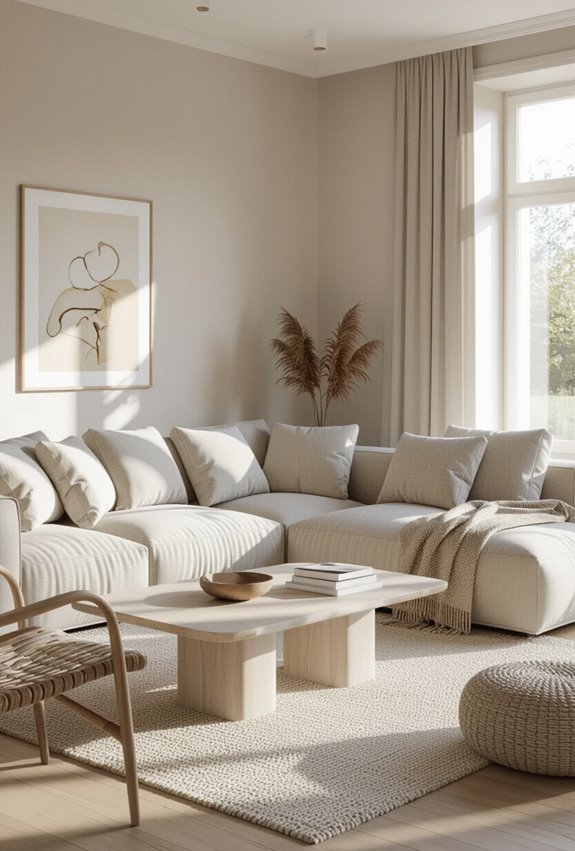
If you cram an oversized sofa into a small living room, it’ll dominate the space, block sightlines, and make traffic flow awkward.
You should do scale testing before buying: measure clearances, map circulation, and compare proportions.
Choose a sofa that preserves visual balance with other furniture, keeps pathways open, and lets light and conversation move freely so the room feels intentional, not crowded.
Don’t Rely on One Overhead Light

Don’t bank on a single ceiling fixture to light your living room; it’ll leave pockets of glare and shadow and make the space feel flat. You should use layered lighting: combine task fixtures for reading, ambient alternatives like wall sconces or floor lamps, and consider dimmer installation to control mood and brightness.
This mix creates balance, reduces glare, and highlights focal points.
Don’t Ignore Traffic Flow When Arranging Seating

When you arrange seating, think of how people actually move through the room—leave clear paths between entry points and key destinations like the sofa, TV, or fireplace.
You should position seating clusters to invite conversation without blocking flow, angling chairs and leaving gaps for movement.
Test routes by walking the space; adjust until pathways feel natural and unobstructed for everyone.
Avoid Mismatched Scale Between Coffee Table and Sofa
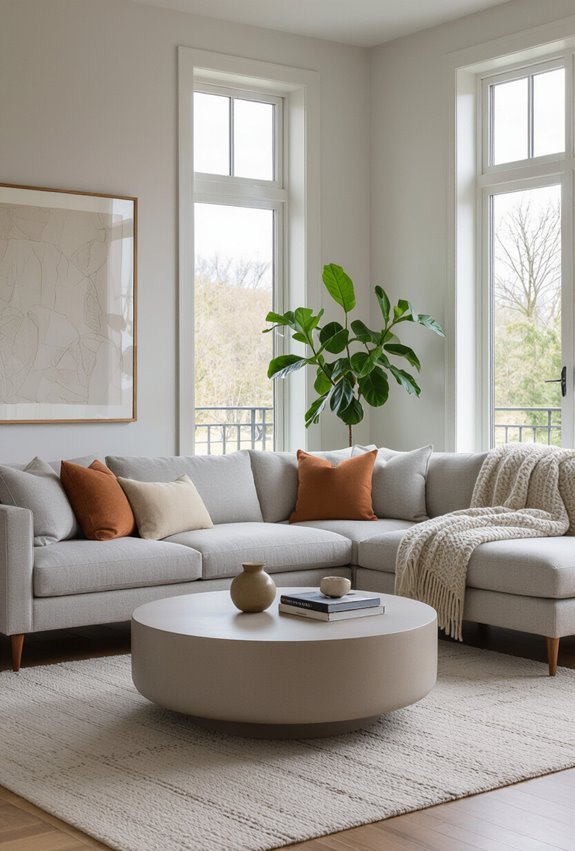
Good traffic flow matters, but so does the relationship between your sofa and coffee table — mismatched scale can disrupt both function and visual balance. If your table’s too large or tiny, you’ll lose proportional balance and hinder usability.
Choose a coffee table height near the sofa seat and width that complements seating span to avoid a jarring scale mismatch and keep the layout cohesive.
Don’t Use Rugs That Are Too Small for the Seating Area
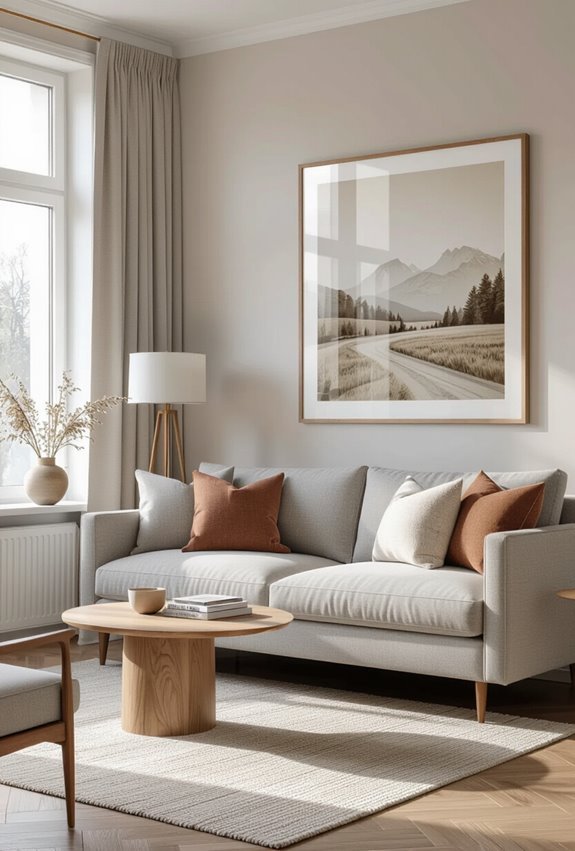
If your rug’s too small, it’ll make the seating feel disjointed and shrink the room visually. Choose rug placement so front legs of sofas and chairs rest on the rug, unifying the group.
Size enhances flow and proportion; don’t leave awkward gaps. Also use texture contrast to add depth and anchor the seating without overpowering patterns or cluttering sightlines.
Avoid Overcrowding With Too Many Accent Chairs
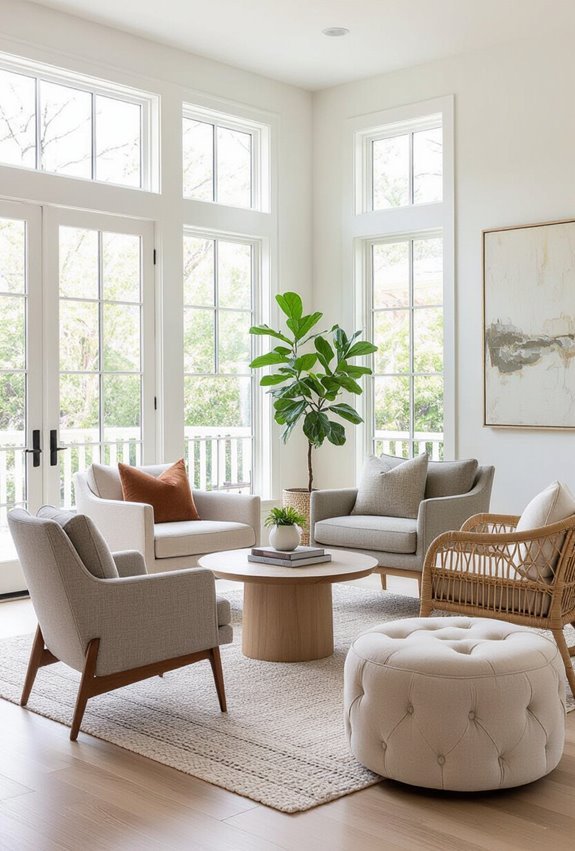
Just as the right rug ties seating together, the number and placement of accent chairs should support conversation—not compete for space.
You’ll achieve scale balance by pairing one or two accent chairs with a sofa, keeping pathways clear and sightlines open. Limit chair variety to complementary styles and sizes so the room feels intentional, airy, and easy to navigate.
Avoid Hanging Artwork Too High or Too Low

When you hang artwork too high or too low, the whole room can feel off-kilter because your eye never lands where it should; aim for the artwork’s center to sit at about 57–60 inches from the floor so pieces read naturally with the rest of the room.
You’ll achieve proper height and eye level, use consistent gallery spacing, and create a weighted balance that feels intentional and calm.
Don’t Choose Paint Colors Without Testing in Daylight
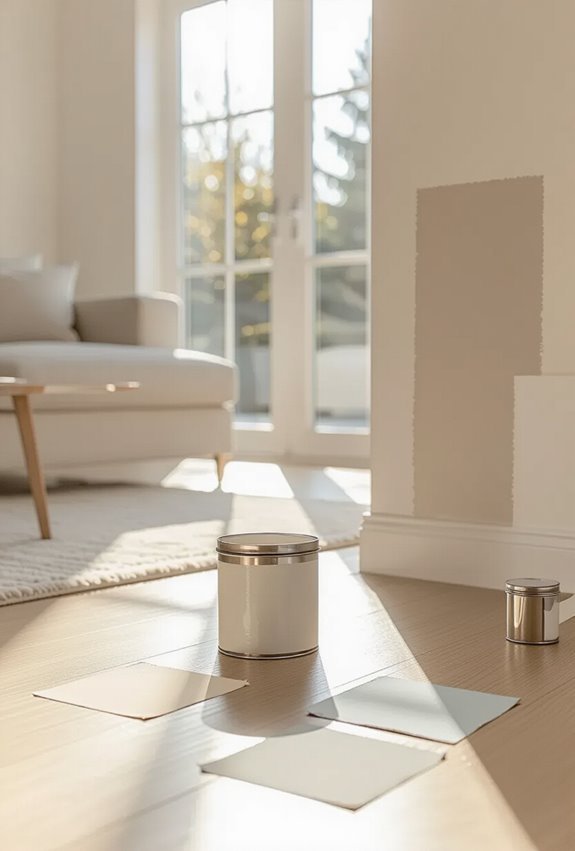
Patterns and paint both shape how a room feels, so after you’ve pared back prints you’ll want to be just as deliberate with color. Don’t pick a hue from a chip and call it done—test sample swatches on different walls and observe them in daylight.
Look for natural undertones that shift with sun and shade so your final choice reads true in real life.
Avoid Cheap-Looking Window Treatments

When you skimp on window treatments, the room instantly reads unfinished—flimsy blinds, mismatched rods, or curtains that don’t hang right scream low-budget.
You’ll avoid that by choosing quality over cheap budget curtains, skipping faux pleats fabrics that collapse, and ditching clip on valances that look tacky.
Seek properly sized panels and avoid obvious tension rods solutions for a polished, cohesive living room.
Don’t Ignore Scale When Choosing Light Fixtures
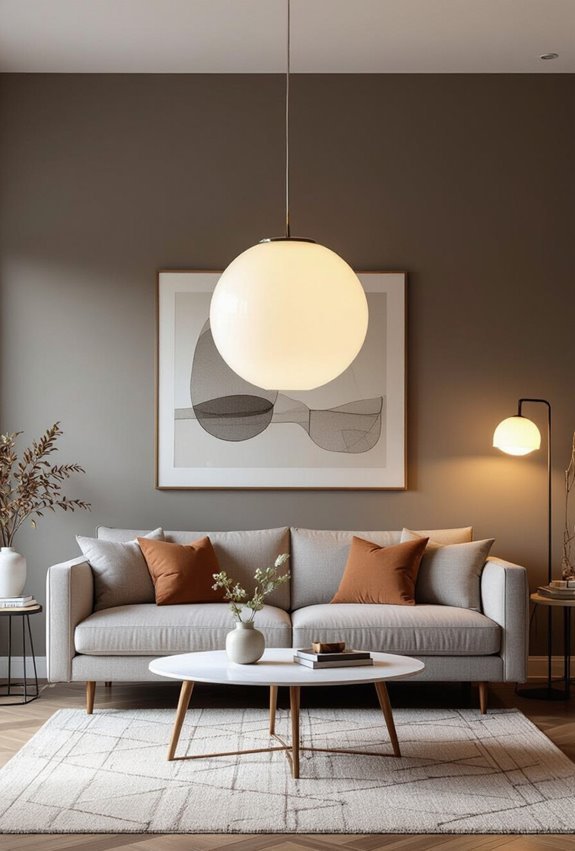
Just as properly hung curtains anchor a room, the right light fixtures give it proportion and presence—you want fixtures that fit the space, not fight it. Measure ceilings and seating areas so fixture scale complements furniture. Choose bulbs for appropriate bulb warmth to set mood. Don’t hang oversized chandeliers in low rooms or tiny pendants in large seating zones; balance matters.
Don’t Let Cables and Electronics Run Wild
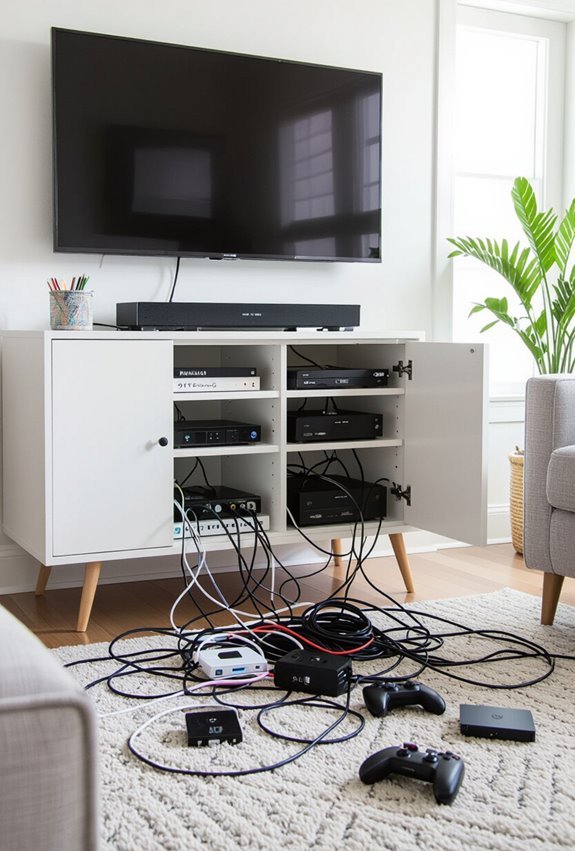
Keep cords and gadgets corralled so your living room looks tidy and functions smoothly.
Tuck power strips behind consoles, use cable sleeves and clips, and label chargers for quick identification.
Prioritize cord management and device organization to prevent tripping hazards and visual clutter.
Mount routers discreetly, stash streaming boxes in closed cabinets with ventilation, and schedule routine checks to keep everything neat and accessible.
Avoid Overdecorating Shelves and Mantels
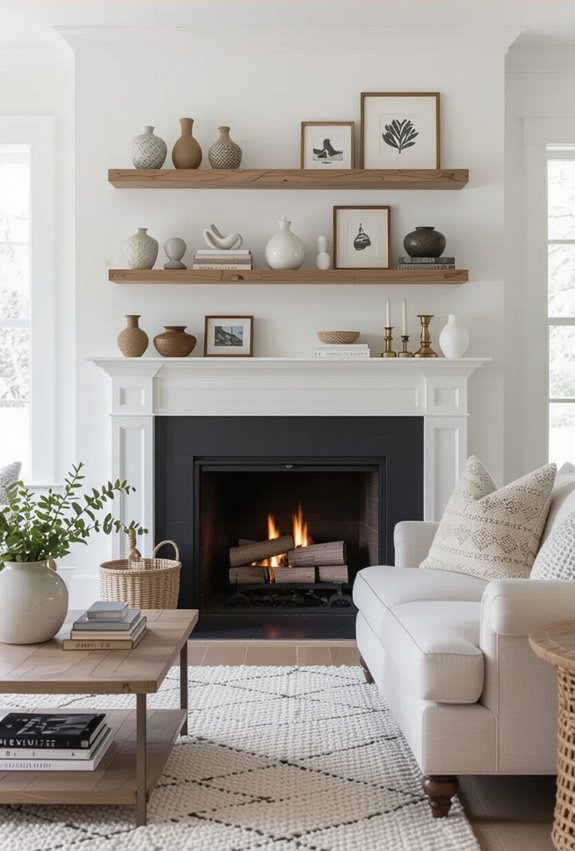
While layered displays can look intentional, you’ll overwhelm a room when every shelf and mantel becomes a catchall. You should curate—choose a few meaningful pieces, vary heights, and leave breathing room to avoid cluttered vignettes.
Rotate items seasonally and group in odd numbers to prevent mantel imbalance. Less is stronger: streamlined displays highlight special objects and keep the living room calm and cohesive.
Don’t Neglect Seating Variety for Different Uses

Good color and material choices set a cohesive stage, but your seating plan determines how the room actually gets used.
Mix versatile pieces so guests, readers, and TV watchers all have options: a sofa for lounging, flexible seating like poufs and ottomans for casual spots, and task specific chairs for focused activities.
That variety prevents one-size-fits-all discomfort and improves flow.
Avoid Poorly Placed Television and Media Setup

If you place your TV without thinking about sightlines, glare, and room flow, you’ll end up with strained necks, blocked walkways, and a screen that never feels comfortable to watch.
Position the set to minimize TV glare, mount or tilt when needed, and plan seating so everyone sees comfortably.
Consider speaker placement for balanced sound without disrupting traffic or décor.
Don’t Overlook Proportion in Built‑In Shelving

Scale matters: built‑in shelving should fit the room, not overpower it or disappear into the wall. You’ll measure ceiling height, furniture proportions, and wall width so shelf scale complements seating and circulation.
Aim for visual balance by mixing open shelves with closed storage, spacing verticals evenly, and keeping top and bottom masses weighted. Proper proportion makes the shelving feel intentional, not accidental.
Avoid Ignoring Natural Light and Window Views

When you plan furniture and lighting, prioritize natural light and window views so the room breathes and feels connected to the outdoors. Arrange seating to maximize views and keep sightlines clear.
Use sheer curtains, adjustable blinds, and layered lighting for glare control and evening ambiance. Avoid blocking windows with bulky pieces; let daylight define focal points and circulation paths.
Avoid Forgetting a Clear Entry Zone Into the Living Room
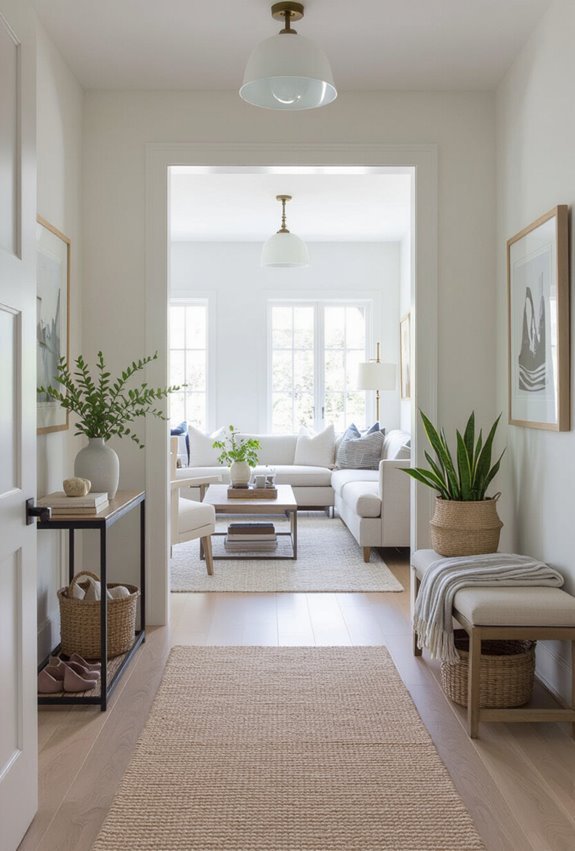
By framing a clear entry zone, you make arrival intuitive and keep traffic from cutting through conversation areas.
Define an entry passage with a rug, console, or narrow bench to signal purpose.
Keep pathways unobstructed, balance furniture distances, and use threshold styling—lighting or a contrasting floor treatment—to guide movement.
This prevents awkward circulation and preserves seating comfort.
Don’t Neglect Personal Touches That Make It Feel Lived‑In

A clear entry sets the stage, but you also want the room to feel like someone actually lives there. Add personal touches—family heirlooms, framed photos, and travel mementos—to create warmth and stories. Rotate displays so pieces don’t overpower the space.
Keep surfaces purposeful: a meaningful vase, a favorite throw, a small stack of books. Those choices make the room inviting and authentic.
Avoid Choosing Art That Clashes With the Room’s Mood

When you pick artwork, make sure it supports the room’s mood instead of fighting it; loud, frenetic pieces can sour a calm, cozy living room while muted abstracts can dampen an energetic, colorful space.
You should choose pieces that maintain color harmony and thematic consistency with furnishings and lighting. Trust your instincts, scale art appropriately, and avoid pieces that interrupt the desired atmosphere.
2. Clashing Color Schemes
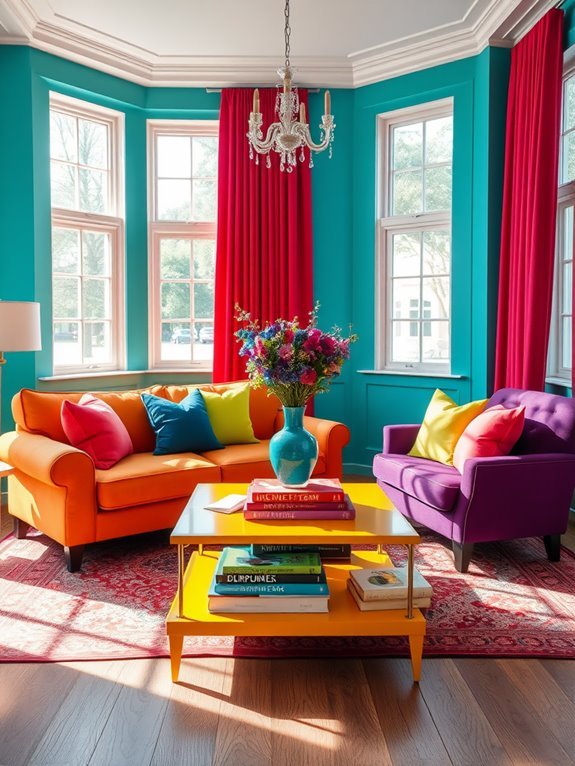
Choosing the right colors for your living room can make or break the space, and clashing color schemes are a common pitfall.
Instead of haphazardly mixing shades, refer to the color wheel for guidance. Aim for complementary hues that enhance each other, creating a harmonious environment.
Avoid bold, jarring contrasts that can overwhelm the senses and detract from your living room’s overall appeal.
5. Ignoring Scale and Proportion
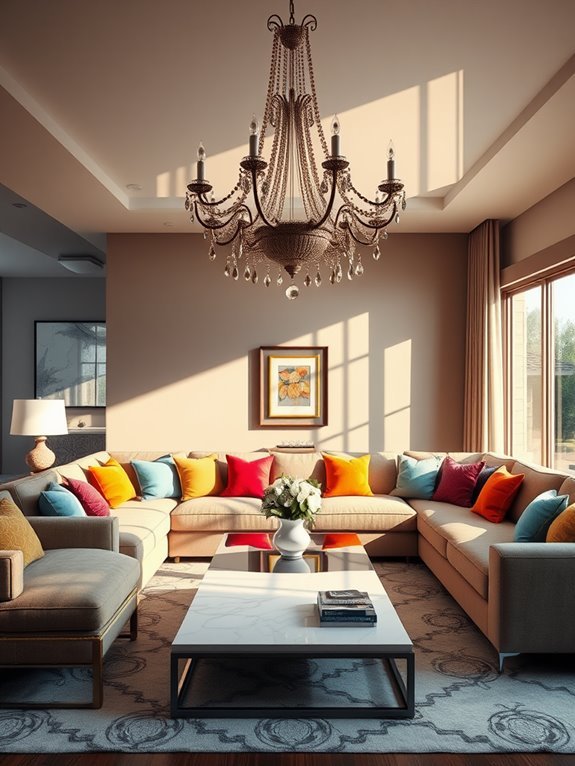
While it’s tempting to fill your living room with eye-catching furniture and decor, ignoring scale and proportion can lead to a chaotic and unbalanced space.
Scale misconceptions often make oversized pieces look awkward, while proportion pitfalls can create visual imbalance.
Always consider your room’s dimensions and the size of each item to guarantee harmony and flow in your living area.
6. Outdated Furniture Styles
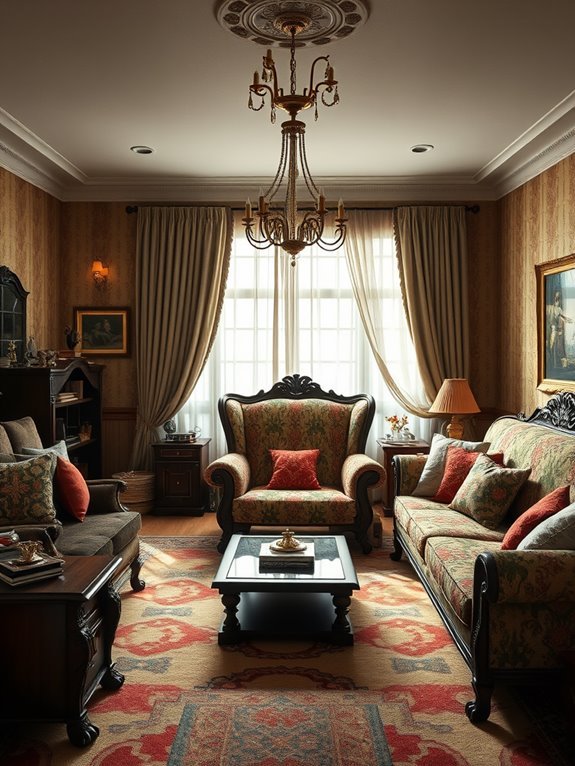
Choosing furniture that fits your space isn’t just about size; it’s also important to steer clear of outdated styles that can drag down the overall aesthetic.
Consider avoiding these:
- Heavy, dark wood pieces
- Overly ornate designs
- Shabby chic elements
- Vintage revival trends that feel tired
- Traditional sofas without modern classics influence
Opt for fresh designs that energize your living room instead!
9. Dark and Dismal Lighting
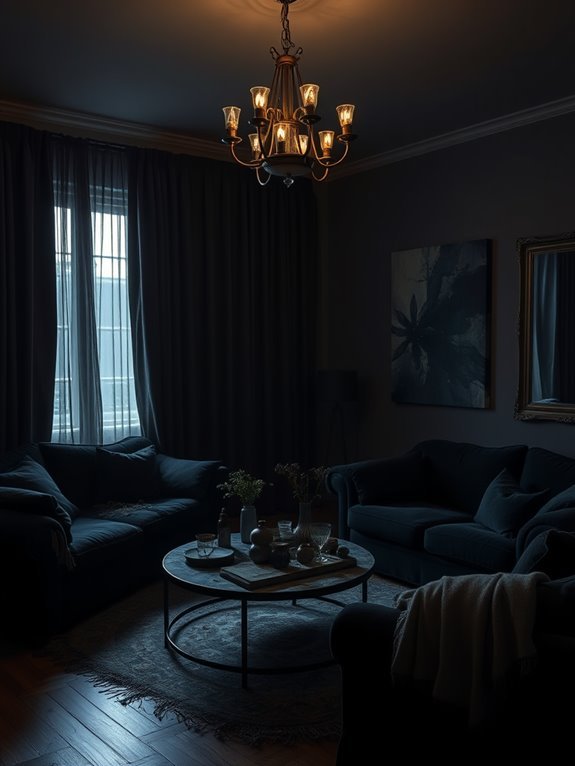
While dim lighting might seem cozy, it can quickly turn your living room into a dark and dismal space.
You need to prioritize ambient light for effective mood enhancement. Instead of relying solely on low-wattage bulbs, consider layering your lighting with lamps and overhead fixtures.
This approach creates a warm atmosphere and keeps your space inviting, rather than depressing and unwelcoming.
15. Poorly Chosen Rugs
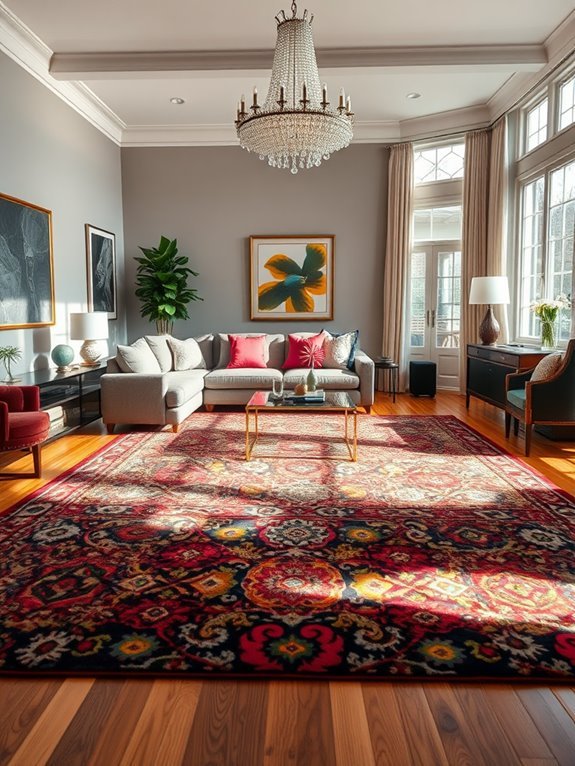
Rugs can define a living room’s style and comfort, but poorly chosen ones can detract from the overall design.
Selecting the wrong rug size can make your space feel cramped or unbalanced, while inappropriate rug material can clash with your furniture.
Always consider how the rug complements your decor, ensuring it enhances rather than overwhelms your living area’s aesthetic appeal.
Conclusion
To sum it up, if you’re aiming to impress, why not go all out with these living room disasters? After all, who wouldn’t want a room that screams chaos and confusion? Clashing colors and excessive patterns are sure to leave your guests wondering if they accidentally wandered into a circus. So, embrace the misguided charm of mismatched decor and poorly chosen rugs. Remember, a living room should reflect your unique taste—especially if that taste is a recipe for disaster!
