
30 Small Restaurant Design Ideas for Creating a Cozy Ambiance
You can make a small restaurant feel warm and intimate by layering warm, dimmable lighting with pendants to define booths and pathways, adding candle clusters or safe flameless options, and choosing sunset-hued paints with a single matte accent wall. Use durable, tactile materials like reclaimed wood and boucle seating, smart banquettes to save space, rotating local art, and seasonal scents. Keep circulation clear and service stations efficient — keep going and you’ll pick up practical tweaks and styling tips.
Warm Layered Lighting With Dimmers
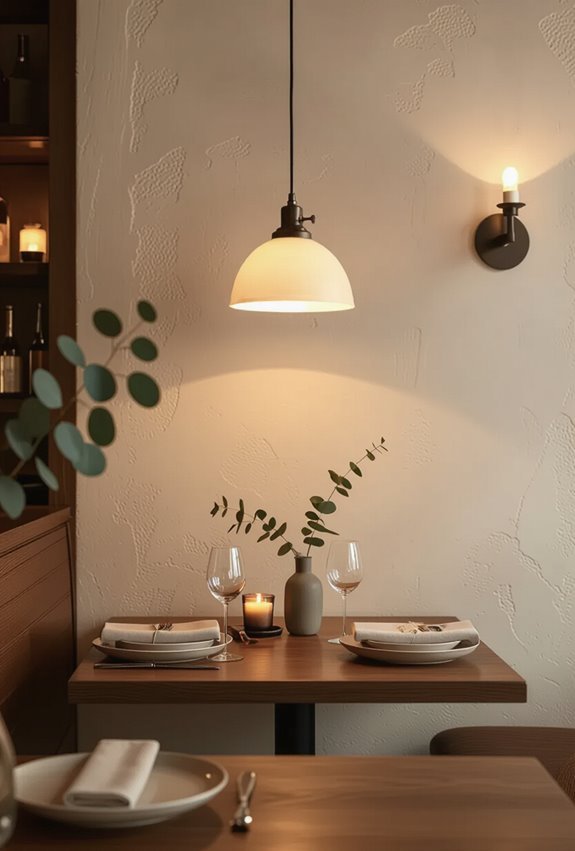
Often, you’ll want layered, warm lighting to make a small restaurant feel intimate and inviting.
You’ll combine layered tasklighting with soft ambient fixtures, using dimmer zoning to adjust mood per service.
Choose low voltage options with incandescent mimicry to retain warmth without heat.
Place fixtures to avoid glare, preserve sightlines, and let staff and guests control illumination for comfort and efficiency.
Use Pendant Lights to Define Small Zones
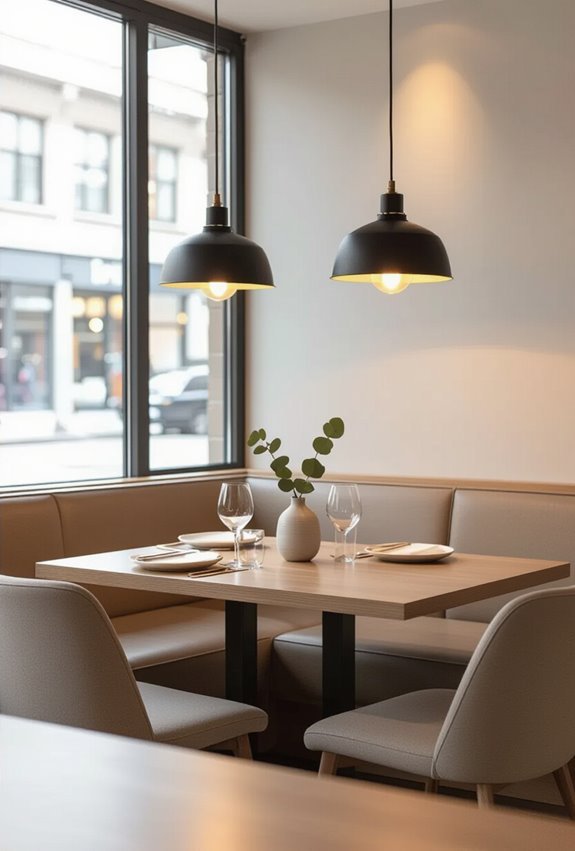
Usually, pendant lights help you carve a small restaurant into distinct zones without building walls.
You can hang layered pendants at varied heights to mark booths, bar seating, and pathways, giving each area its own mood.
Use zoned luminaires on separate circuits so you control brightness per spot, highlight textures, and guide traffic while keeping the space intimate and flexible.
Add Candlelight and Safe Flameless Candles
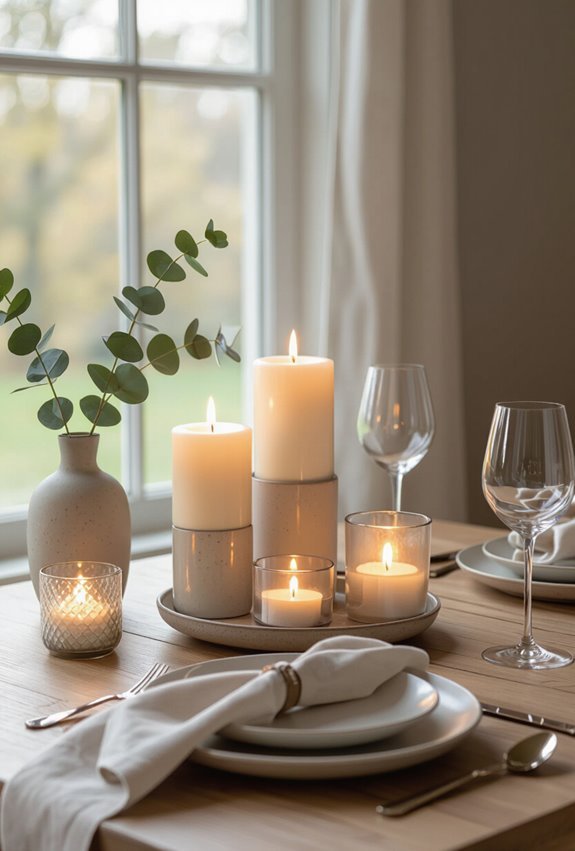
You can instantly warm a small restaurant by adding candlelight or safe flameless candles to tables, shelves, and nooks. Place clusters of tea candles in glass votives for subtle flicker, or arrange battery-operated options for safety.
Create varied candle displays at different heights to add depth without clutter, and train staff on safe placement and regular checks to maintain cozy, worry-free ambiance.
Bring Texture With Wood and Woven Finishes

Texture-rich elements like reclaimed-wood paneling and handwoven pendants add tactile contrast and visual interest without overwhelming a small dining room.
Use reclaimed timber for wall accents, tabletops, or shelving to warm the space.
Pair with woven pendants to cast soft, layered light.
Keep finishes matte and tones cohesive so texture becomes a focal point rather than cluttering sightlines.
Install Banquettes to Maximize Seating Comfort

To build on the cozy, tactile feel created by wood and woven finishes, install banquettes to boost seating comfort and efficiency in a small restaurant.
You’ll choose upholstered banquettes for plush support, durable fabrics, and easy maintenance. Position banquette lighting to create intimate pockets, highlight textures, and keep aisles clear. Built-ins save space and reinforce a warm, inviting layout.
Use Mirrors to Expand Visual Space

Mirrors instantly make a small dining room feel larger by reflecting light and sightlines, so place them opposite windows or along narrow walls to open up space without structural changes.
You can mount angled mirrors to bounce daylight into darker corners and install mirrored shelving to display glassware, creating depth and sparkle.
Keep frames minimal and align reflections with focal points to avoid visual clutter.
Keep Circulation Clear With a Compact Layout

By arranging tables, stations, and service paths with intention, you’ll keep staff and guests moving smoothly even in a compact space.
Define clear aisle width standards for comfort and safety, cluster service zones to reduce crossing paths, and use furniture that’s easy to shift.
That preserves staff flow, minimizes bottlenecks, and sustains a cozy, efficient dining experience without wasted space.
Design a Welcoming Compact Host Station

Often a host station is the first and last impression guests get, so design it to be compact, efficient, and welcoming.
Position a compact podium near the entrance, sized for reservation book, POS, and a small tip jar.
Create a cozy hostess alcove with warm lighting, clear sightlines to seating, and a stool.
Keep clutter hidden and workflows simple to greet guests smoothly.
Use Local Art to Add Personality

Someone will notice the vibe first—make it yours with local art that tells community stories and sparks conversation.
You’ll support community artists by featuring their pieces on walls, chalkboards, or shelving, creating a sense of ownership.
Use rotating exhibits to keep the space fresh, invite patrons back, and spotlight different styles.
Promote artists and sales with clear labels and social posts.
Incorporate Plants for Softness and Air Quality
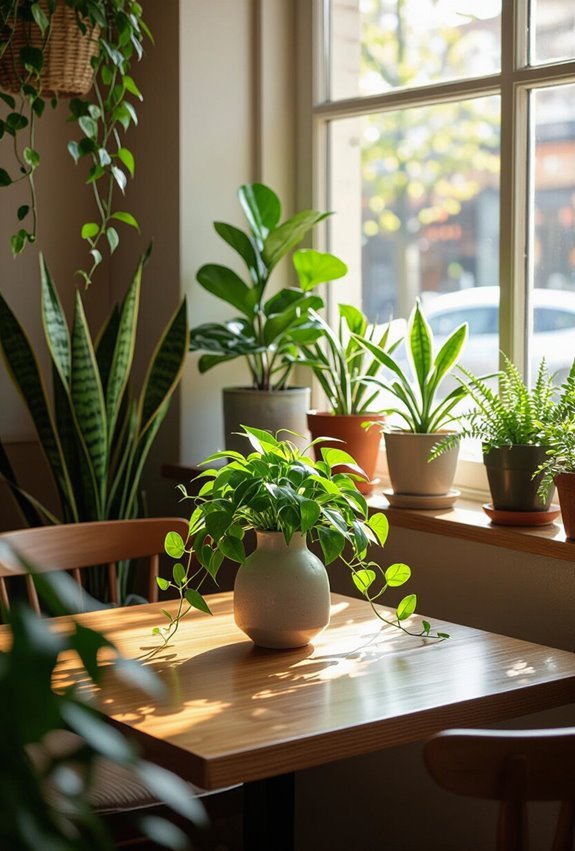
Regularly adding plants softens hard surfaces and improves air quality, so pick varieties that thrive indoors and fit your light and maintenance limits.
You can place air purifying ferns near restrooms or kitchens, use trailing pothos arrangements on shelves and high ledges, and group mixed pots to create visual softness.
Rotate care tasks, label watering needs, and keep walkways clear for staff and guests.
Layer Rugs to Define Dining Areas

Textures and rugs help you zone a small dining room without adding walls: layer a large, durable base rug to anchor the room, then add smaller patterned or textured rugs under tables to mark individual seating areas and guide traffic.
You’ll combine layered runners and patterned carpets to create visual paths, soften footsteps, and define cozy zones while keeping cleaning and circulation simple.
Use Shelving for Décor and Practical Storage

After layering rugs to define zones, bring shelving into play to add height, personality, and extra storage without stealing floor space. Install floating shelves to display plants, small art, and functional items, keeping visuals light.
Combine open shelving with hidden storage cabinets or baskets below so you can stash supplies and clutter out of sight while maintaining a cozy, organized vibe for guests.
Add Tactile Menus and Handwritten Specials

When guests can feel the weight of a menu or read a chalkboard scrawl, they connect more with your food and atmosphere—so use tactile menus and handwritten specials to make your offerings feel personal and fresh.
Offer menus with embossed covers and thick paper; swap Chalkboard specials daily to highlight seasonality.
Handwritten notes and simple type keep choices clear, warm, and memorable for diners.
Build a Comfortable Background Playlist
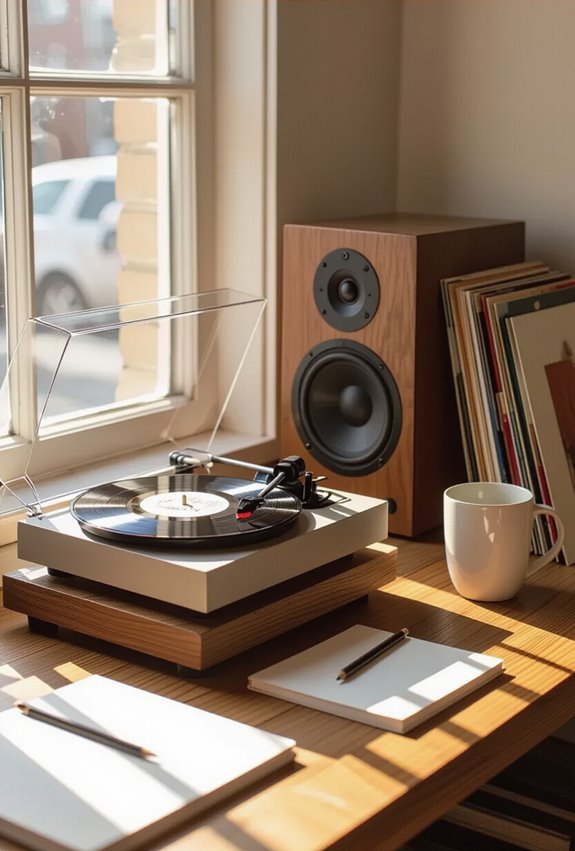
Soften the room’s noise, then curate music that complements that calm: a well-chosen playlist keeps energy balanced, encourages conversation, and reinforces your restaurant’s vibe without overpowering it.
You’ll practice mood matching—select tracks that suit time of day and clientele—and use volume sequencing to rise gently during busier hours, then taper for late service, keeping guests comfortable and engaged.
Optimize Natural Light During Daytime
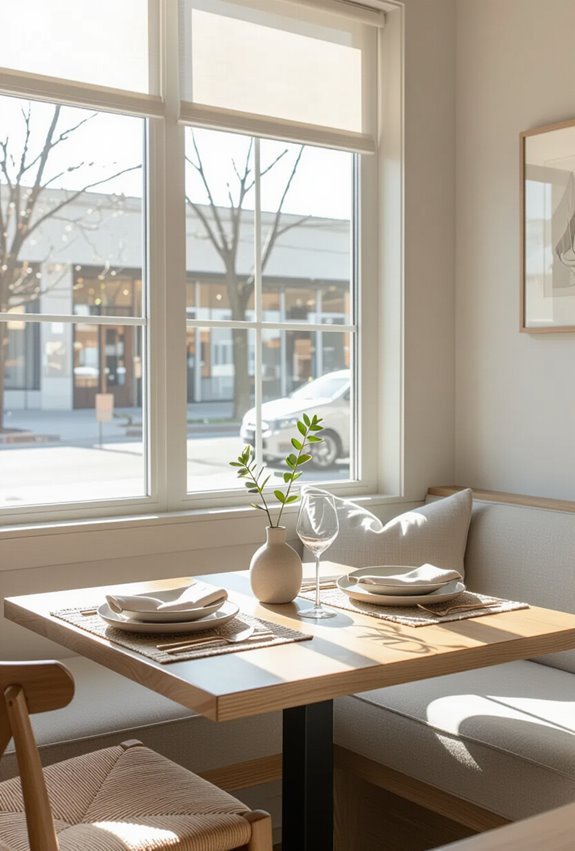
Daylight can transform a small restaurant, so plan seating and fixtures to maximize window exposure and bring light deep into the space.
You’ll optimize glazing choices for thermal comfort and clarity, use light-colored finishes and mirrors to bounce brightness, and arrange tables to avoid glare.
Integrate daylight sensors to dim supplemental systems only when needed, saving energy and maintaining a welcoming daytime atmosphere.
Select Warm, Low-Glare Fixtures for Evening
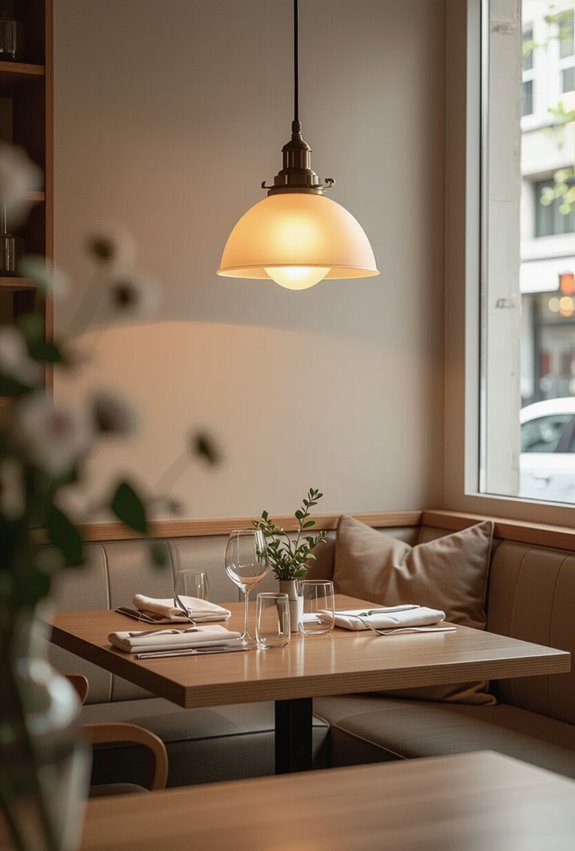
Evenings call for warm, low-glare fixtures that make your small restaurant feel intimate without causing eye strain; choose lamps with color temperatures around 2700–3000K and high-quality diffusers to keep light soft and even.
You’ll favor soft amber tones, dimmable circuits, and layered sources—pendants, wall sconces, and table lamps—that prioritize glare reduction and preserve sightlines while enhancing mood and table comfort.
Prioritize Durable Materials for High Traffic
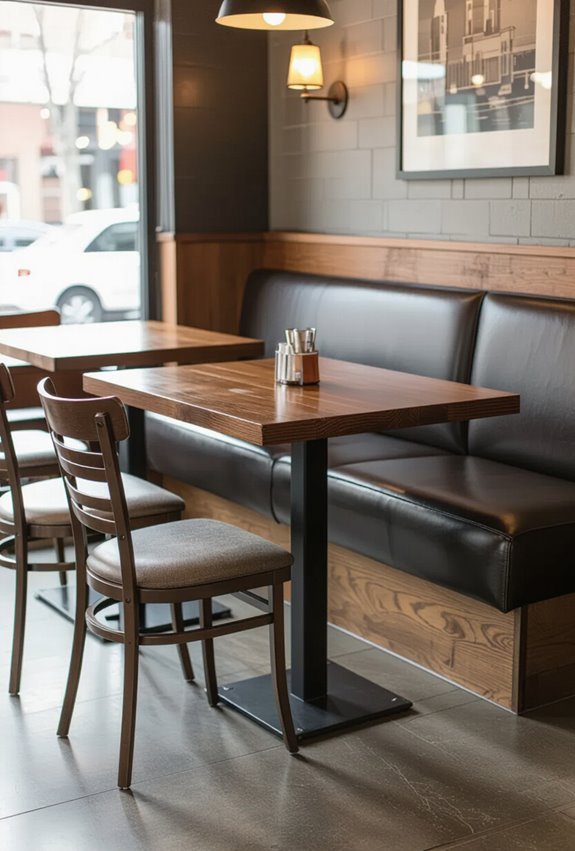
Floors and tabletops take the most abuse in a busy restaurant, so you should choose materials that stand up to spills, scuffs, and constant movement.
Select commercial-grade vinyl, sealed concrete, and tables with scratch resistant finishes.
Pick seating upholstered in high traffic fabrics that clean easily and resist staining.
Durable choices cut maintenance, reduce replacement costs, and keep your cozy vibe intact.
Create a Cozy Storefront Entrance

A welcoming storefront sets the tone for your whole restaurant, so design an entrance that invites people in and feels like an extension of your interior.
Use warm lighting, seasonal plants, and clear welcome signage to communicate personality.
Add compact porch seating if space allows, with durable cushions and small tables.
Keep pathways unobstructed, signage readable, and decor cohesive to draw guests inside.
Design an Inviting Bar or Countertop Nook

Set up a bar or countertop nook that draws people in by balancing comfort, function, and personality—choose stools sized to your counter height, layer lighting for task and mood, and keep service flow clear so guests and staff move easily.
Add a marble ledge for elegance, mix compact cocktail prep gear, provide cozy backrests, display a small selection of spirits, and keep clutter hidden for intimate service.
Plan Seasonal Tweaks to Keep Coziness Fresh
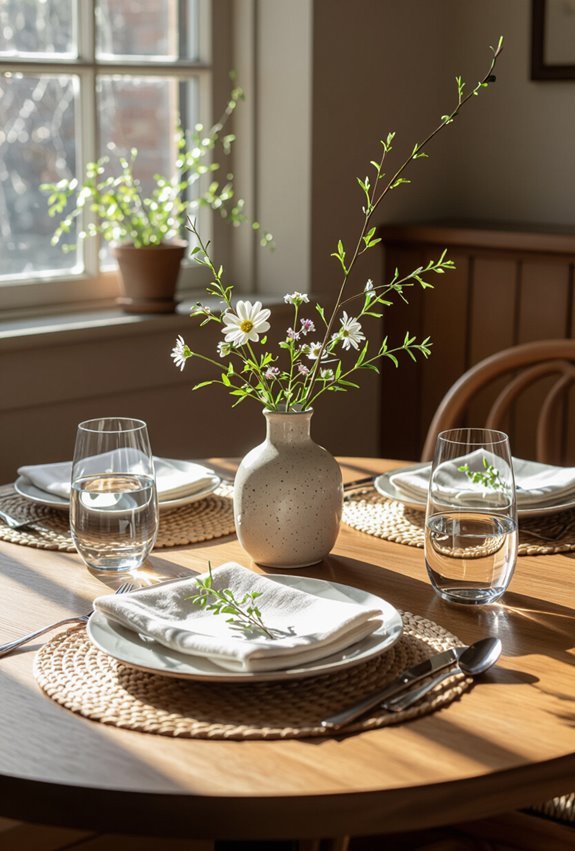
When seasons shift, tweak small elements so your space feels fresh without overhauling the whole design: swap pillows and table linens for seasonal colors and textures, rotate centerpiece greenery between hardy evergreens and light florals, adjust lighting warmth and intensity to match daylight changes, and introduce a few seasonal menu or scent cues that reinforce the mood.
You’ll plan seasonal palettes, timed menu rotations, subtle signage, and scent.
Install a Pergola or Canopy

When you want to enhance your outdoor dining experience, installing a pergola or canopy can provide both shade and style.
Pergolas made from materials like wood, metal, or even vinyl can create a stunning focal point while offering protection from the sun.
On the other hand, various canopy styles—from retractable options to colorful fabric designs—can add a playful touch to your space.
Choose the right combination that complements your restaurant’s theme, ensuring comfort for your guests.
With the right pergola or canopy, you’ll transform your outdoor area into an inviting retreat that keeps diners coming back for more.
Design a Seasonal Menu
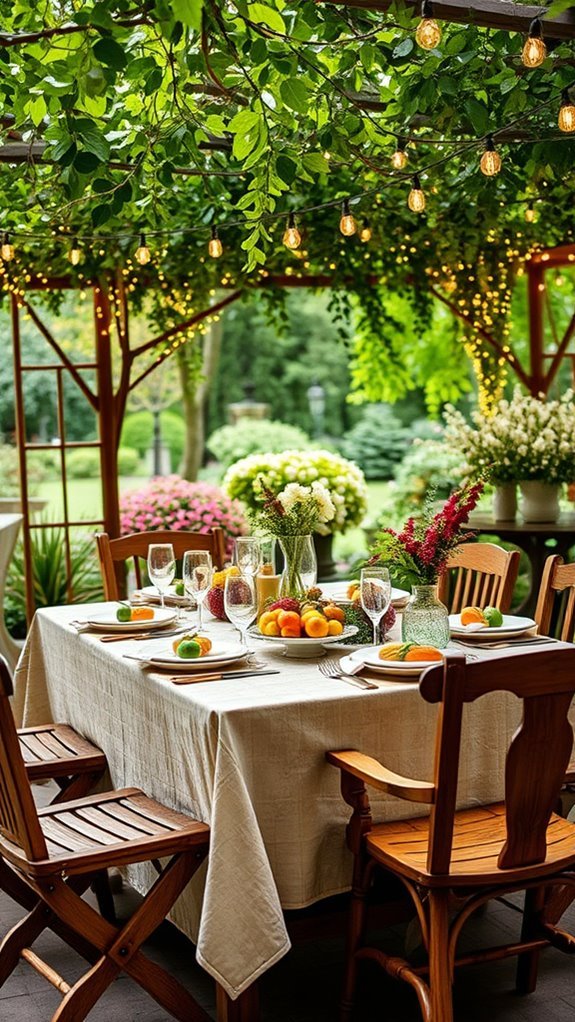
When you design a seasonal menu, you not only celebrate the flavors of each season but also create a dynamic dining experience that keeps guests coming back.
By rotating your menu with seasonal ingredients, you’ll entice patrons to explore new dishes while enjoying fresh, local produce.
Consider these tips:
- Highlight local farms: Collaborate with nearby producers to feature their seasonal offerings.
- Embrace seasonal flavors: Use spices and herbs that reflect the time of year.
- Adapt signature dishes: Give classics a seasonal twist to keep them exciting.
This approach not only enhances your menu but also supports sustainable practices.
Implement Privacy Screens

Creating a cozy atmosphere in your outdoor dining area goes beyond just the furniture and decor; it’s also about how you manage the space.
Implementing privacy screens can greatly enhance your guests’ experience while adding style.
Consider these options:
- Wooden slats: Natural materials blend well with your surroundings.
- Trellis with climbing plants: A decorative option that offers beauty and privacy.
- Fabric curtains: Versatile and easy to change, offering various colors and patterns.
Install a Sound System

When you want to enhance the ambiance of your outdoor dining area, installing a sound system can make all the difference. Good sound quality sets the mood, so consider these tips for effective speaker placement:
- Position speakers strategically to guarantee even sound distribution throughout the area.
- Choose weather-resistant speakers to withstand outdoor elements, ensuring longevity and performance.
- Use a wireless system for easy setup and flexibility in design, allowing you to rearrange your space as needed.
With the right sound system in place, your guests will enjoy a delightful dining experience that keeps them coming back for more.
Design a Chill-Out Zone

While you focus on enhancing your outdoor dining experience, designing a chill-out zone can provide customers with a perfect retreat to relax between meals.
This space should evoke a chill-out ambiance and align with your outdoor aesthetics. Here are some ideas to create that inviting atmosphere:
- Cozy seating: Use hammocks, bean bags, or lounge chairs for comfort.
- Natural elements: Incorporate plants, water features, or natural wood to enhance tranquility.
- Soft lighting: Use string lights or lanterns to create a warm, inviting glow.
Conclusion
Incorporating these simple design ideas can transform your outdoor dining area into a welcoming oasis where guests linger like summer sunshine. By blending natural elements with cozy seating and ambient lighting, you create an atmosphere that invites conversation and connection. Don’t forget to add greenery, sustainable touches, and even a playful space for kids. With a little creativity, your restaurant can become a favorite retreat for diners seeking delightful experiences under the open sky.
