
How Can You Maximize Comfort and Space in a Small Living Room? 20 Creative Ideas
You’ll maximize comfort and space by prioritizing traffic flow, slim multifunctional furniture, vertical storage, and layered lighting. Float seating to open pathways and anchor groups with a correctly sized rug or statement focal point. Swap bulky pieces for low-profile sofas, nesting tables, and hidden-storage ottomans. Mount shelves, use tall narrow units, and choose clear or leggy furniture to keep sightlines open. Edit accessories, add mirrors and sconces, and start with affordable fixes—keep going to learn actionable layouts and product picks.
Use a Clear Focal Point to Anchor the Room
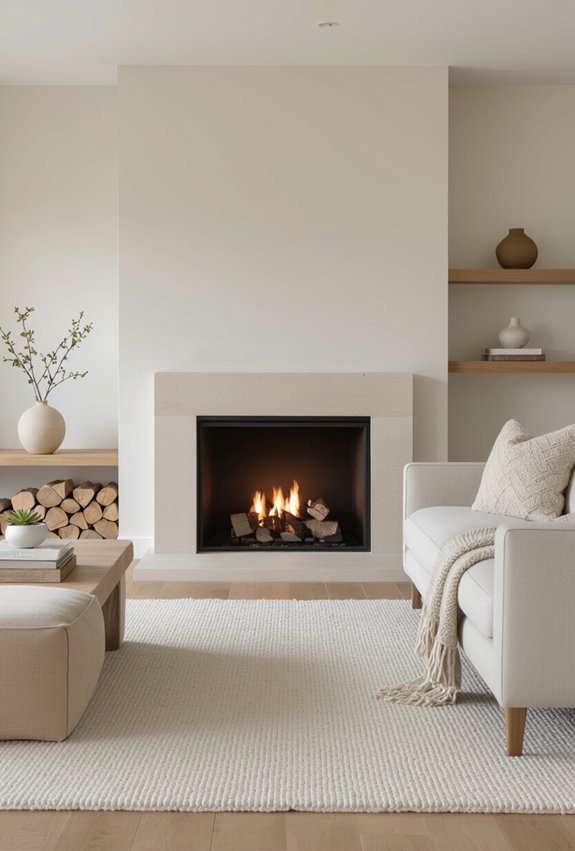
When you enter a small living room, let a clear focal point grab attention so the space feels intentional and organized.
You’ll choose a strong centerpiece selection—a statement art piece, mantel, or bold rug—and arrange seating and lighting to reinforce visual hierarchy. Keep accessories minimal, vary scale deliberately, and align sightlines so the room reads cohesive and uncluttered.
Choose a Slim-Profile Sofa for More Floor Space
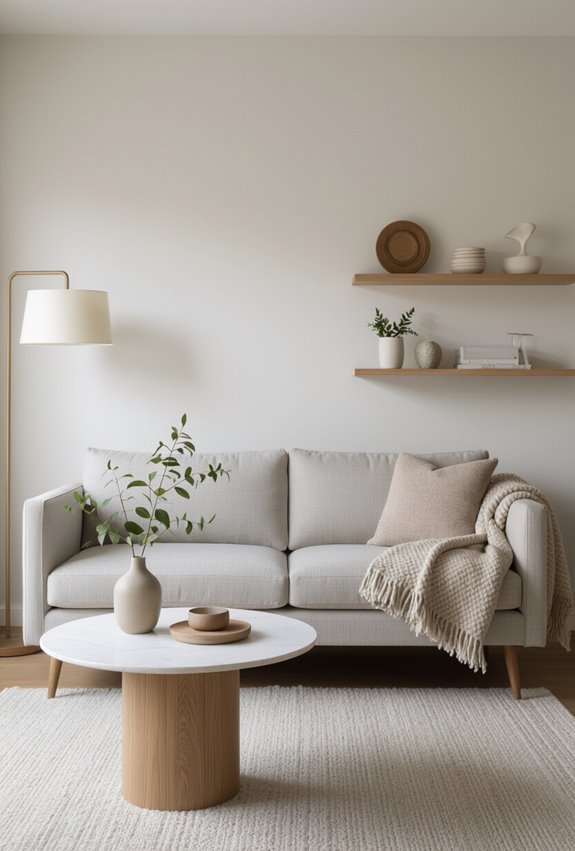
Opt for a slim-profile sofa to reclaim valuable floor space without sacrificing seating comfort.
Choose a low profile sectional or a narrow two-seater with tapered legs to create an airy look and easier circulation.
Keep proportions balanced with a small coffee table and light upholstery to maintain openness.
You’ll get comfortable seating that visually expands the room without overwhelming it.
Mount Shelves Up High to Free Floor Area

If nesting tables clear floor space at ground level, mounting shelves up high lets you reclaim vertical real estate without crowding the room. You’ll create high shelves that keep books, plants, and decorative bins off the floor, opening circulation.
Arrange items as vertical galleries to draw the eye upward, balancing storage and style while preserving living-space footprint and making cleanup easier.
Install Wall-Mounted Media to Save a Console

Mounting your TV and media components on the wall frees up the floor space a bulky console would take, giving small living rooms a cleaner, more open feel.
You’ll hide cables with recessed connections, mount floating speakers for sleek audio, and use a slim wall shelf for a streaming box. This keeps sightlines clear and walking space unobstructed.
Favor Light, Neutral Wall Colors to Open the Room

When you paint walls in pale, neutral tones—soft whites, warm beiges, or muted greys—you’ll immediately make the room feel airier and more open because light bounces farther and corners recede.
Choose soft taupe or pale greige to create a soothing backdrop that unifies furnishings, reflects natural light, and lets your décor stand out without crowding. Keep trim bright for contrast.
Add an Accent Wall to Create Depth Without Clutter
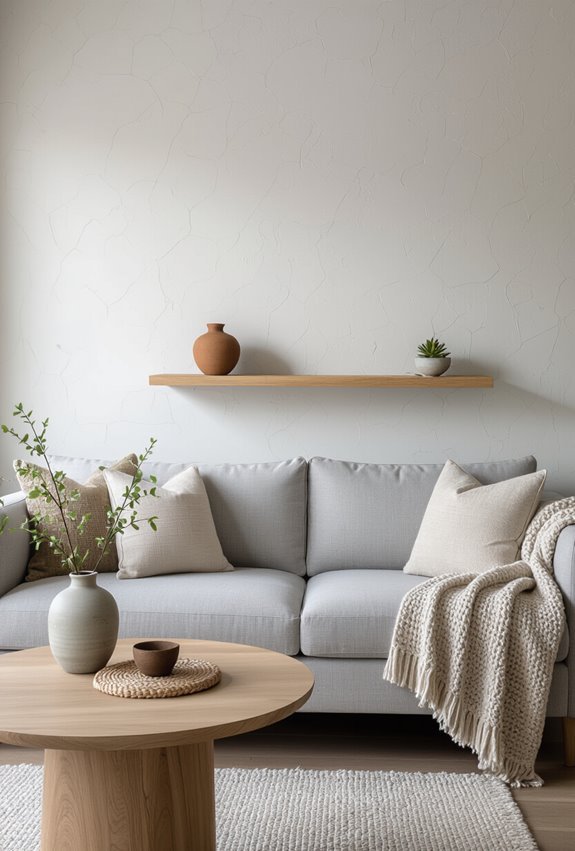
After you’ve opened the space with light, neutral walls, introduce a single accent wall to add depth without crowding the room.
Choose textured paint or subtle vertical paneling on one wall to create interest and height. Keep color contrast moderate, anchor the wall with a slim sofa or floating shelves, and avoid heavy décor so the room stays airy and functional.
Keep Trim and Moldings Minimal for a Cleaner Look

Because trim and moldings frame a room, keeping them minimal makes a small living room feel cleaner and more spacious.
Choose minimalist trim and seamless moldings with delicate profiles to reduce visual clutter. Paint casings the same color as walls, use subtle casings around doors and windows, and keep baseboards low.
That restrained approach emphasizes space and lets furniture and texture stand out.
Use Wall Sconces to Free Up Table Surfaces
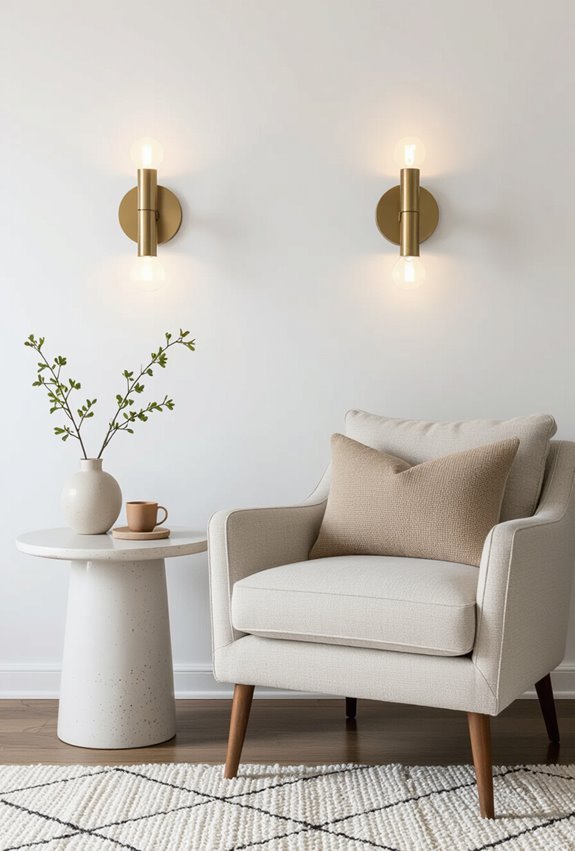
Free up valuable tabletop space by swapping table lamps for wall sconces that tuck lighting into the vertical plane.
Choose fixtures with upward lighting to broaden perceived height and create soft ambient glow.
Mount at reading height beside seating, and pick models with integrated outlets or USB ports so you can charge devices without cluttering surfaces—freeing tables for décor or daily use.
Choose Low-Pile Rugs to Avoid Visual Heaviness
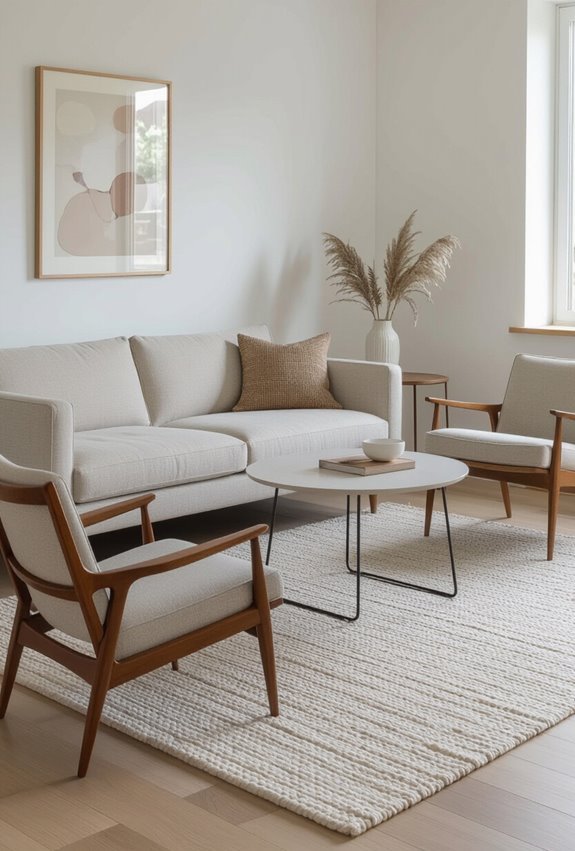
Dimming lights can make a room feel more spacious at night, but the floor still plays a big role in how open the space reads. Choose a low, short pile rug so it won’t visually weigh the room down.
Opt for a modest pattern scale—small or subtle motifs keep visual clutter low and maintain continuous sightlines, making the space feel airier.
Anchor the Layout With a Correctly Sized Rug

Anchor your seating area with a rug that’s scaled to the room and furniture so everything feels intentionally placed rather than floating.
Pick rug proportions that allow front legs of sofas and chairs to sit on the rug, creating cohesion.
Choose pattern balance—small-scale prints in tight spaces, larger motifs in open areas—so the rug anchors the layout without overwhelming it.
Use Vertical Patterns and Stripes to Raise the Ceiling
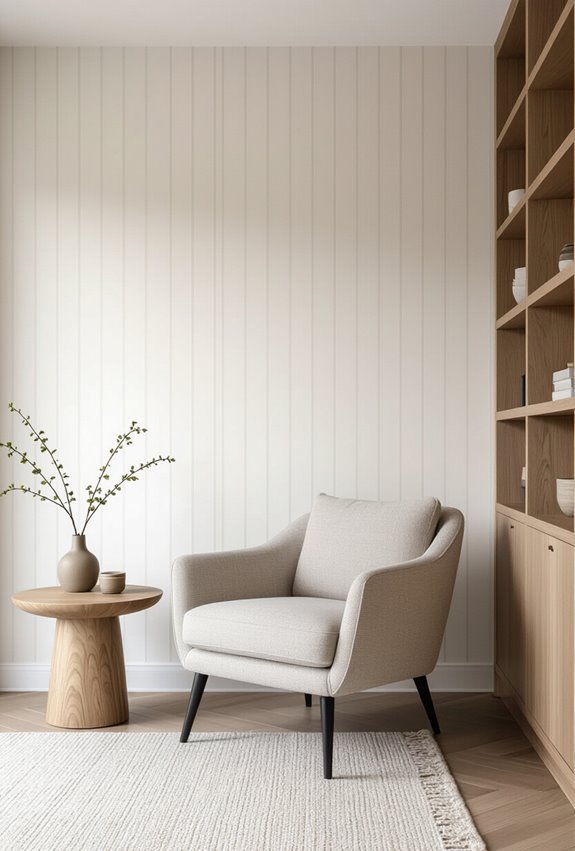
When you run vertical stripes or elongated patterns up walls and tall furnishings, they draw the eye upward and make ceilings feel higher without any renovation.
Use vertical wallpaper on an accent wall and choose striped curtains that extend from ceiling to floor to amplify height.
Pair with slim, tall shelving and narrow lighting fixtures so vertical emphasis stays crisp and uncluttered.
Limit Small Accessories; Edit for Negative Space
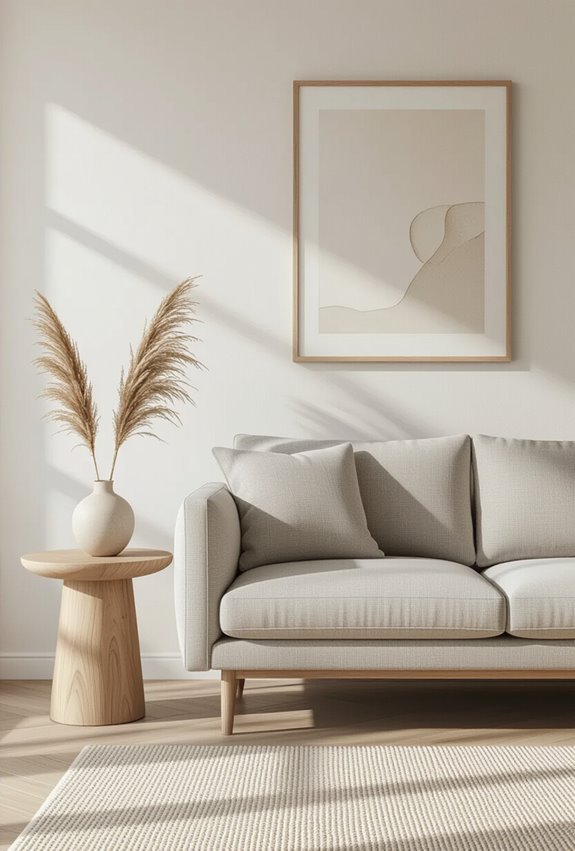
After you’ve stretched the eye upward with vertical lines, resist filling every surface—small accessories can quickly make a compact living room feel cluttered.
You should edit clutter ruthlessly: keep a few meaningful pieces, banish duplicates, and store extras.
Embrace emptiness by leaving breathing room around furniture and art; negative space lets the room feel larger, calmer, and more intentional.
Add Plants for Scale and a Lighter Atmosphere

Adding plants brings instant scale and freshness to a small living room, so pick varieties that match your light and layout to avoid clutter.
You’ll use air purifying pots for cleaner air and low-maintenance greens.
Arrange taller specimens beside low furniture and balance with scale contrast planters to create depth.
Rotate plants for even light and prune to keep proportions tidy and airy.
Integrate See-Through Storage Like Baskets and Trays

Want a quick way to keep a small living room feeling open and organized? Use woven baskets for concealed clutter under consoles and open shelves, and place acrylic trays on coffee tables to corral remotes, coasters, and magazines.
See-through materials reduce visual weight, maintain sightlines, and let you access items fast. Mix sizes for balance and tuck baskets near seating for easy reach.
Create Zones With Furniture Instead of Walls

Define clear areas with furniture to make a small living room feel larger and more functional without building walls. Use a sofa or bookshelf as faux partitioning to separate seating from a workspace or reading nook.
Combine rug zoning with strategic lighting and compact pieces so each zone reads distinct yet flows together, keeping circulation open and your layout adaptable.
Use Sliding or Pocket Doors to Reclaim Floor Space

If a slim console-turned-desk keeps walking space tight, swapping out swinging doors can instantly free up floor area and sightlines.
Choose sliding hardware or true pocket doors with reinforced pocket framing so doors glide smoothly and hide fully.
You’ll gain usable floor, improve traffic flow, and create cleaner sightlines without bulky swings.
Install quality tracks and minimal trim for a sleek, space-smart finish.
Build Custom Built-Ins for Fitted Storage
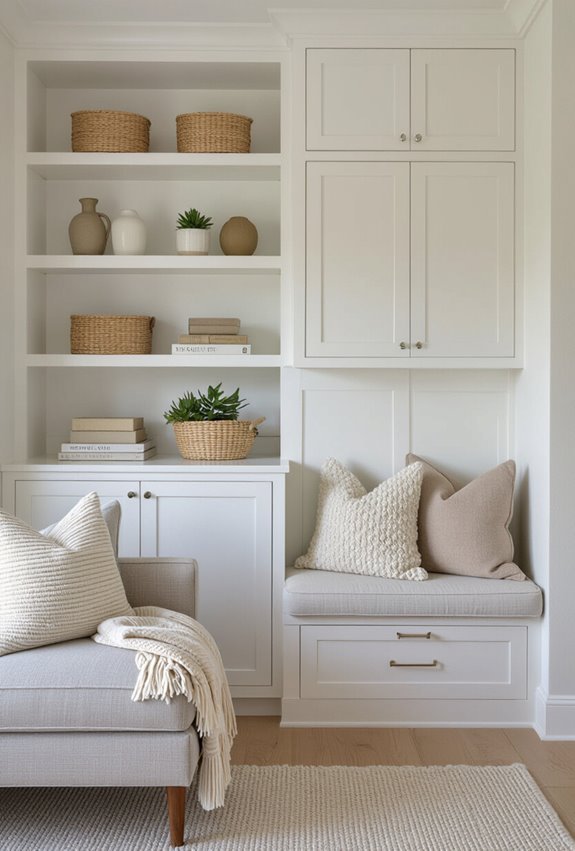
Mounting the TV smartly frees wall real estate you can use for custom built-ins that fit your room perfectly.
You can add built in seating with storage beneath, flanked by custom millwork cabinetry tailored to your dimensions.
Integrate open shelves for books and concealed cabinets for clutter.
This approach keeps circulation clear, maximizes every inch, and creates a cohesive, efficient living area.
Choose Transparent or Reflective Finishes for Furniture

Using transparent or reflective furniture lets you keep a small living room feeling open and airy while still adding function—clear acrylic chairs, glass coffee tables, and mirrored cabinets reduce visual clutter by letting light and sightlines pass through or bounce around the space.
Pair glass lighting with mirrored accents to amplify brightness, maintain sightlines, and keep pieces visually lightweight so your room feels larger without sacrificing utility.
ht and expand the room visually.
Conclusion
Creating a cozy yet spacious living room is like crafting a perfect recipe: it takes the right ingredients and a dash of creativity. Just as a pinch of salt can enhance flavors, adding light colors, multi-functional furniture, and personal touches can transform your space. Remember, a small room can feel as inviting as a warm hug; it’s all about how you arrange your elements. Embrace these ideas, and you’ll create a welcoming retreat that feels just right.
