
What Is the Difference Between Stain and Paint? Full Comparison
You’ll choose stain when you want to natural, low‑maintenance finish that soaks into wood, highlights grain, lets the surface breathe, and needs periodic reapplication; pick paint when you want opaque, uniform color, easier color matching, and complete surface coverage that can hide flaws but may peel and need tougher repairs. Stain’s durability and low upkeep suit decks and furniture, while paint fits trim and cabinets; keep going to learn more about pros, cons, and techniques.
Quick Answer: Choose Stain or Paint
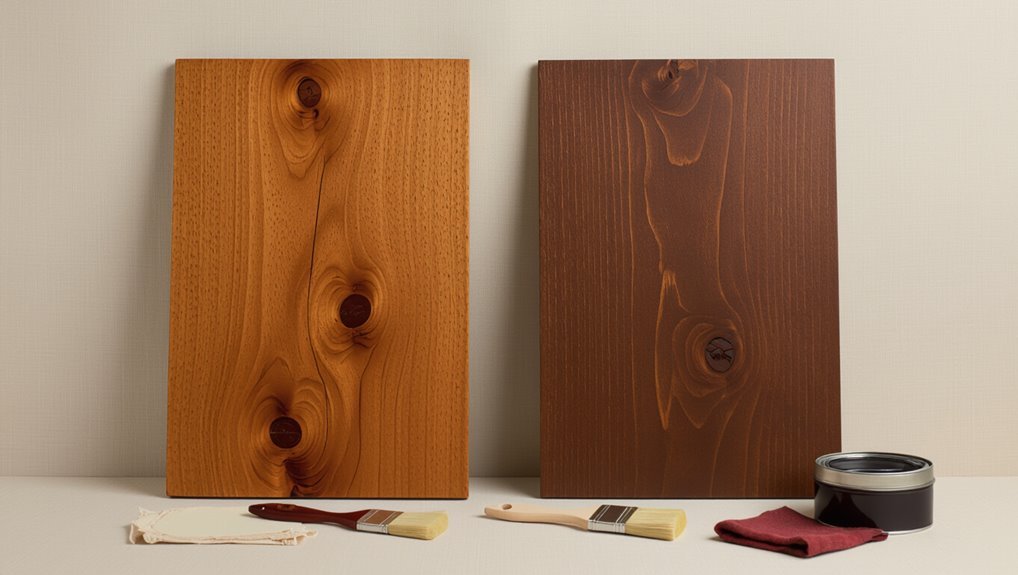
Wondering whether to stain or paint? You’ll pick stain when wood grain matters and low maintenance appeals—stain benefits include easier touch-ups and breathable protection.
Choose paint if you want bold color, but know paint disadvantages: peeling, harder repairs, and trapped moisture.
Weigh longevity versus look, but favor stain for natural, durable results and paint for dramatic, temporary changes.
Decision Framework: Pick by Project and Goals
Think about the type of project you’re tackling—furniture, siding, or decking—and pick the finish that matches those needs.
Consider how much protection and maintenance you want, since paint usually gives higher durability while stain lets the material show through.
Use those two factors to guide whether you choose stain or paint.
Project Type Match
Which finish fits your project: stain or paint? Choose by project compatibility and desired look—stain highlights grain; paint hides imperfections.
Consider finish longevity needs and maintenance when matching materials to locations.
- Exterior decks: stain for UV tolerance.
- Interior trim: paint for uniform color.
- Furniture: stain for natural warmth.
- Cabinets: paint for color control.
Desired Durability Level
When you pick between stain and paint, base the choice on how much wear and exposure the surface will face and how often you’re willing to maintain it.
If you need lasting protection with minimal upkeep, choose stain for superior stain longevity on exterior wood.
If you want color change and easier repairs, pick paint for paint flexibility despite more frequent maintenance.
How Stain Works: Penetration and Wood Interaction
Although stains sit on the surface, they work primarily by penetrating wood fibers and bonding with them, so you get color that follows the grain rather than forming a uniform film.
You’ll notice:
- Surface preparation controls wood absorption and stain application.
- Color enhancement comes from grain visibility and pigment choice.
- Moisture interaction affects finish longevity.
- Some stains add a light protective layer without hiding texture.
How Paint Works: Film Formation and Coverage
When you paint, the binders and pigments form a continuous film that sticks to the surface as the solvents evaporate.
That film provides protection and determines how well the color hides the substrate.
You’ll want to contemplate both coverage (how much area a coat covers) and opacity (how well it masks what’s underneath).
Film Formation Process
Because paint has to transform from a liquid into a continuous solid layer, film formation is the key step that determines coverage, durability, and appearance.
You’ll control film attributes and achieve desired results by choosing binders, solvents, and application techniques.
Consider these stages:
- Wetting and flow
- Coalescence
- Drying and curing
- Final leveling and film consolidation
Coverage And Opacity
Opacity determines how much of the underlying surface shows through a paint film, and coverage is the practical measure of how much area a given amount of paint will hide.
You’ll choose coverage types and opacity levels based on visual impact, color transparency, surface texture, light reflection, finish longevity, application techniques, aesthetic choices, and project requirements to meet durability and look.
Visible Finish: Grain, Sheen, and Coverage Differences
How do stain and paint change what you actually see on wood?
You’ll notice grain enhancement with stain, revealing texture and subtle color depth; paint often masks grain, offering uniform coverage.
Compare sheen levels—both can be matte to glossy—and weigh finish longevity: stains penetrate for durability, paints sit on surface for thicker protection.
- Stain: highlights grain enhancement
- Paint: conceals grain
- Sheen levels vary by product
- Finish longevity depends on prep and type
Color Options and Colorfastness for Stain vs Paint
After looking at how stains and paints change texture and sheen, you’ll want to compare their color choices and how well those colors hold up.
You’ll find paint offers wider color vibrancy and precise tints, while stains highlight wood tone with translucent hues.
For exterior use, check fade resistance: high-quality pigments in paint resist UV longer, but some stains include UV inhibitors too.
Durability: Stain vs Paint Over Time
When you compare stain and paint, think about how each protects the surface over the long term and what kind of wear they’ll resist.
You’ll also want to contemplate how easy repairs and maintenance will be—stains often need periodic reapplication, while paint can chip and require spot-priming and repainting.
Knowing those trade-offs helps you choose the finish that fits your schedule and the surface’s exposure.
Long-Term Surface Protection
Because they penetrate and bond with the wood rather than sitting on top of it, stains generally let the grain breathe and resist peeling, while paints create a sacrificial surface layer that blocks moisture but can crack or flake over time.
- You gain long term benefits from stain’s surface longevity.
- Paint offers barrier protection.
- UV affects both differently.
- Choose based on exposure and aesthetic goals.
Maintenance And Repairability
Although both stain and paint protect wood, they demand very different upkeep and repair approaches over time.
You’ll follow different maintenance frequency schedules: stains need reapplication less often but require proactive long term care to prevent UV damage.
Paint chips more, so touch up techniques and repair methods are common.
Use simple restoration tips for spots; full refinishing boosts finish longevity.
Weather Resistance for Exterior Wood
If you leave exterior wood unprotected, sun, rain and temperature swings will quickly break down its surface; choosing the right finish—stain or paint—determines how well it resists moisture, UV rays and mildew.
- Assess surface preparation to maximize weather protection.
- Pick finishes balancing UV resistance and moisture retention.
- Follow application techniques for finish longevity.
- Weigh environmental impact against aesthetic appeal.
Moisture Control and Breathability Differences
When you choose between stain and paint for exterior wood, consider how each manages moisture and lets the substrate breathe:
stains penetrate and bond with the wood, allowing vapor to pass through and reducing trapped moisture, while paint forms a surface film that blocks water but can also trap moisture if the coating cracks or isn’t maintained.
You’ll weigh moisture barriers, breathability factors, wood preservation, and finish longevity.
Maintenance: Touching Up, Sanding, and Reapplication
Moisture behavior affects how you’ll maintain a finish, so it’s helpful to compare touch-ups, sanding, and full reapplications for stain versus paint.
- You’ll use different touch up techniques; stains blend, paints layer.
- Sanding methods vary by finish hardness and surface preparation needs.
- Reapplication strategies depend on maintenance frequency and product compatibility.
- Follow repair tips and long term care to extend life without unnecessary stripping.
Preparation: Sanding, Cleaning, and Priming Tips
Because proper preparation determines how well a finish adheres and lasts, you should sand, clean, and—when needed—prime carefully before applying stain or paint.
Use appropriate sanding techniques to smooth grain without over-sanding.
Apply cleaning solutions to remove dust, oils, and mildew.
Choose priming methods suited to substrate and finish to promote adhesion.
Good surface preparation prevents peeling and uneven color.
Application Tools and Techniques for Stain and Paint
Grab the right tools and you’ll make the job faster and the finish neater: brushes, rollers, sprayers, rags, and pads each suit different surfaces and products.
- Choose brush types for grain, managing stain absorption and finish uniformity.
- Use roller techniques to control paint thickness and texture effects.
- Prioritize surface preparation to improve application speed.
- Match tools to material for consistent results.
Dry Time and Curing: When Pieces Are Usable
You’ll notice a finish can feel dry to the touch long before it’s fully cured, so don’t assume surface dry equals ready-to-use.
Full cure can take days to weeks depending on whether you used stain or paint, product chemistry, and environmental factors.
Humidity, low temperatures, thick coats, and poor ventilation are common things that slow drying and extend curing time.
Surface Dry vs. Tack-Free
When a finish feels dry to the touch but still comes away if you press it, it’s reached a tack-free state—not full cure—and you shouldn’t handle or stress the piece yet.
Proper surface preparation and controlled drying conditions help. Consider:
- Wait until tack-free before light handling.
- Avoid stacking or pressure.
- Keep temperature and humidity stable.
- Test an inconspicuous area first.
Full Cure Timeline
Although a finish may feel dry and even tack-free, it can take days to weeks to reach full cure. Handle pieces only after the manufacturer’s recommended cure time.
You’ll monitor the cure process by checking hardness and odor reduction. Expect different materials to finish at varying rates; curing factors like temperature, humidity, and film thickness determine when surfaces are truly usable and durable.
Factors That Slow Drying
Knowing the full cure timeline helps, but several common factors can still slow drying and delay when you can safely use a piece.
- Humidity levels and poor air circulation hinder drying conditions.
- Temperature fluctuations and other environmental factors affect cure speed.
- Surface material absorbs differently, altering dry time.
- Thick application thickness and specific product formulation prolong tackiness and full cure.
Hiding Imperfections vs Highlighting Grain
If you want to mask knots, scratches, or uneven color, paint will hide those flaws by creating an opaque layer; stain, by contrast, soaks into the wood and emphasizes the grain, which can make imperfections stand out more. You’ll choose paint for imperfection concealment, stain for grain enhancement and character.
| Feel | Choice | Result |
|---|---|---|
| Calm | Paint | Smooth |
| Warm | Stain | Natural |
| Bold | Paint | Uniform |
| Honest | Stain | Revealing |
Indoor Use Cases: Furniture, Trim, and Floors
Choosing between paint and stain affects more than appearance—it shapes how you use each piece indoors.
Choosing paint or stain changes more than look—it guides how each piece functions and fits your home.
Pick based on furniture styles, trim materials, and floor types. Consider finish techniques, maintenance routines, aesthetic preferences, application areas, and longevity factors.
- Stain highlights grain for rustic furniture styles.
- Paint suits varied trim materials.
- Durable finishes protect floor types.
- Easy maintenance routines extend longevity.
Outdoor Use Cases: Decks, Siding, and Fences
When you’re planning outdoor projects like decks, siding, or fences, think about exposure, wood type, and required upkeep—these determine whether stain or paint will perform better.
For decks, prioritize deck maintenance and wood protection; penetrating stain eases upkeep.
For siding, choose finishes that boost siding longevity and color retention.
For fences, balance fence aesthetics with durability against heavy weather exposure.
Cost Comparison: Upfront and Lifetime Expenses
Because upfront prices only tell part of the story, you should weigh both initial costs and lifetime expenses when deciding between stain and paint.
You’ll compare upfront costs, lifetime expenses, and maintenance in a clear price comparison to inform budget considerations.
- Stain: lower upfront costs, less frequent recoats.
- Paint: higher upfront costs, longer full-refresh cycles.
- Labor impacts totals.
- Material quality matters.
Environmental and Health Considerations (VOC, Cleanup)
If you’re concerned about indoor air quality and environmental impact, VOC levels and cleanup methods should shape your choice between stain and paint.
You should weigh VOC emissions and odor levels, follow safety precautions, and check environmental regulations.
Consider cleanup methods and disposal options to limit health impacts and long-term effects; choose low-VOC products and proper ventilation to protect people and ecosystems.
Common Mistakes to Avoid With Stain and Paint
Although choosing between stain and paint might seem straightforward, many DIYers make avoidable errors that cost time and money.
- Skip proper stain application and get uneven color.
- Ignore paint preparation; poor cleaning causes peeling.
- Use wrong tools, which wastes product and time.
- Rush drying between coats, leading to adhesion failures and blotches.
When to Combine Finishes or Switch Mid-Project
When you realize a single finish won’t meet both durability and appearance needs, it’s smart to combine or shift finishes mid-project rather than forcing one solution.
You can layer stain with a clear protective coat, paint accents over sealed areas, or switch to a tougher finish after testing.
Plan finishing techniques for smooth project shifts, protect edges, and test adhesion before committing to changes.
Frequently Asked Questions
Can I Stain or Paint Over Previously Stained or Painted Wood Without Stripping?
Yes — you can often stain or paint over previously stained or painted wood without stripping, but you’ll need to check stain compatibility and guarantee paint adhesion by cleaning, sanding, and using primers or bonding agents for reliable, lasting results.
How Do Stain and Paint Affect Wood Repair Products Like Filler or Epoxy?
Good news: you’ll tame imperfections by choosing compatible fillers or epoxy—paint can mask but may hide grain, while stain depends on product compatibility for color retention; always test adhesion and finish before committing to the whole project.
Will Staining or Painting Change Wood’s Fire Resistance or Ignition Point?
Staining or painting won’t substantially raise wood’s ignition point; you’ll slightly improve heat resistance and fire safety with flame-retardant coatings, but typical stains or paints mainly slow flame spread rather than prevent ignition.
Can Pets or Children Safely Contact Freshly Stained or Painted Surfaces?
Not immediately — you’ll want to wait until finishes “settling.” For pet safety and child safety, keep them away until coatings fully cure (not just dry), ventilate, use low-VOC products, and follow manufacturer reentry times.
Do Stains or Paints Interfere With Glue Bonding for Future Repairs?
Yes — coatings can reduce glue adhesion. If paint forms a nonporous layer it lowers bonding strength; thin oil- or water‑based stains usually allow better glue adhesion. Sanding or deglossing restores bonding strength for repairs.
Conclusion
Think of stain as a warm handshake that lets the wood speak, and paint as a bold coat that gives it a new voice. You’ll choose the handshake when you want grain and honesty to show through; pick the coat when you need full coverage or dramatic color. Like a wise traveler, match your finish to the journey—weather, use, and upkeep—and you’ll arrive with a surface that looks and lasts the way you aimed.
