
What Is the Best Ceiling Paint Color for Every Room Style
You’ll pick a ceiling color by matching the room’s purpose, natural light, and style: bright whites lift and reflect light for small or modern spaces; soft neutrals and pale blues calm bedrooms, nurseries, and home offices; warm creams or pale greens suit traditional and farmhouse rooms; deep, rich tones add drama in large bedrooms or living rooms. Choose matte or satin by moisture and traffic, test samples at different times, and try a unified wall-ceiling look for coziness if you want more guidance.
How to Use This Guide (Quick Decision Path)

Not sure where to start? Use this quick decision path: identify room purpose, pick a paint finish suited to traffic and moisture, then match ceiling color to your mood goals using color psychology.
If you want calm, choose soft neutrals; for energy, try warmer tones.
Follow the checklist: function, finish, psychology, sample, and confirm under real light before committing.
How Ceiling Color Affects Light, Mood, and Height
Once you’ve narrowed purpose, finish, and psychology, think about how ceiling color will actually change a room’s light, mood, and perceived height.
Choose pale, reflective tones to boost light perception and make ceilings feel higher. Deeper or warmer hues reduce perceived height but add intimacy and mood enhancement.
Use contrast wisely to define space without overpowering natural or artificial light.
3 Quick Rules to Pick a Ceiling Color
Pick three simple rules and you’ll make faster, more confident ceiling color choices.
First, match mood: use color psychology to support the room’s purpose—calm hues for bedrooms, energizing tones for kitchens.
Match the room’s mood: choose calming ceiling hues for bedrooms and energizing tones for kitchens.
Second, consider light: lighter ceilings reflect and open spaces; darker ones cozy up large rooms.
Third, respect ceiling textures—smooth or textured finishes affect sheen and perceived color depth.
When to Use Classic White: And Which White
When you want a safe, timeless choice that brightens and visually raises a room, go with classic white—but choose the right tone for your light and trim.
You’ll pick from cool, neutral, or warm classic white tones based on natural light and adjacent finishes.
In choosing whites, match ceiling sheen to ceiling defects—flat hides flaws, satin adds subtle reflectance.
When to Paint the Ceiling the Same Color as Walls

If you liked the clean lift of a classic white ceiling, you might also consider painting the ceiling the same color as the walls to create a more unified, cocooning effect.
You’ll use this when you want strong color harmony, emphasize architectural details, or smooth room flows between connected spaces.
It works best in rooms with good lighting and a deliberate, intimate design plan.
How a Lighter Ceiling Makes Small Rooms Feel Bigger
Because light colors reflect more light, painting your ceiling a shade or two lighter than the walls instantly opens up a small room, making it feel taller and more airy.
You’ll use light color psychology to brighten corners and reduce shadows, improving ceiling height perception.
Keep trim and fixtures pale, and let natural light bounce; the space will read larger without structural changes.
When a Dark Ceiling Adds Intimacy: Without Feeling Boxed In
Though a dark ceiling can sound counterintuitive, it can actually make a room feel cozy and intentional rather than cramped when you balance contrast, lighting, and scale.
You’ll create a cozy atmosphere by pairing deep tones with warm lighting, reflective accents, and lighter walls.
Use color psychology to choose hues that lower perceived height without closing the space, and keep furnishings scaled appropriately.
Best Ceiling Colors for Modern, Minimalist Spaces
For modern, minimalist spaces you’ll usually want ceilings that read clean and unobtrusive. Crisp whites bounce light and keep the room feeling airy, while soft matte grays add subtle depth without drawing attention.
Choose based on how much contrast you want with your walls and how much texture or warmth the room needs.
Crisp White Ceilings
A crisp white ceiling instantly brightens a room and reinforces a clean, minimalist aesthetic, so choose a high-quality flat or matte white to minimize glare and hide imperfections.
You’ll use smooth ceiling texture to enhance uniform light reflection; white expands perceived space and promotes calm via color psychology.
Pair with simple trim and uncluttered fixtures to maintain modern clarity and focus.
Soft Matte Grays
Soft matte grays bring subtle depth to modern, minimalist spaces and keep ceilings feeling calm without the starkness of pure white. You’ll create a soft matte finish that enhances lines, reflects muted light, and promotes a calming ambiance. Choose cooler grays for contrast or warmer tones for comfort; both keep the room uncluttered and serene.
| Tone | Effect | Use |
|---|---|---|
| Cool | Crisp contrast | Kitchens |
| Warm | Cozy depth | Bedrooms |
| Mid | Neutral balance | Living rooms |
Best Ceiling Colors for Traditional and Formal Rooms
For traditional and formal rooms, you’ll often choose crisp white ceilings to keep lines clean and light reflecting.
Pairing those with soft ivory on crown molding and ornaments adds warmth and a subtle, classic contrast.
This combo highlights architectural details without overpowering the room’s refined feel.
Crisp White Ceilings
Crisp white ceilings bring clarity and formality to traditional rooms, making crown moldings and chandelier details pop while keeping the overall palette restrained.
You’ll use crisp white to enhance ceiling texture and preserve color harmony with rich wall hues.
Choose a durable, low-sheen white to reflect light and highlight architectural details without competing with antiques or patterned fabrics.
Soft Ivory Ornaments
While you might reach for stark white in many rooms, soft ivory brings a gentler elegance to traditional and formal spaces by warming the ceiling without dulling architectural details.
You’ll use soft ivory warmth to lift heavy moldings and pair it with rich wall colors or muted pastels. This choice creates subtle elegance, adds depth, and keeps the room feeling refined without competing with ornamentation.
Best Ceiling Colors for Farmhouse and Cottage Kitchens
Pick a soft, warm white or a pale, muted blue to keep a farmhouse or cottage kitchen feeling cozy and airy. You’ll amplify farmhouse charm and cottage coziness with matte or eggshell ceilings, subtle trims, and soft contrast to beams. Choose durable, washable paints for cooking zones.
| Finish | Tone | Best Use |
|---|---|---|
| Matte | Warm white | Low glare |
| Eggshell | Pale blue | Light reflection |
| Satin | Soft gray | Trim contrast |
Best Ceiling Colors for Bold, Eclectic Bedrooms
If you want a bedroom that feels dramatic and personal, try painting the ceiling in deep jewel tones like emerald, sapphire, or amethyst to add warmth and richness overhead.
You can also use patterned ceiling accents—stencils, metallics, or geometric murals—to create visual interest and tie together eclectic decor.
These bold choices make the ceiling a focal point and let you express an adventurous style without changing the whole room.
Deep Jewel Tones
Rich, saturated jewel tones—think emerald, sapphire, and amethyst—turn ceilings into a dramatic, cozy focal point that suits bold, eclectic bedrooms.
You’ll use deep jewel palettes to anchor layered textiles and vintage furniture, creating intimacy and contrast.
Choose glossy or matte finishes among luxurious ceiling options to reflect light subtly, emphasize height, and make the room feel curated without overwhelming other design elements.
Patterned Ceiling Accents
When you want a ceiling that sings instead of just sitting quietly above you, patterned accents—stencils, geometric murals, or hand-painted motifs—bring instant personality to an eclectic bedroom.
You’ll mix textured finishes with crisp color combinations to balance drama and calm. Choose a focal pattern above the bed, repeat tones in textiles, and keep surrounding walls neutral so the ceiling reads as intentional, not busy.
Best Ceiling Colors for Home Offices and Studies
Because your home office should boost focus and feel comfortable for long stretches, choose ceiling colors that balance brightness with calm.
Because your home office must support focus and comfort, pick ceiling colors that balance brightness with calm.
You’ll want productivity colors and calming hues to reduce eye strain and aid concentration.
Consider these options:
- Soft white for light reflection.
- Pale blue to steady focus.
- Warm greige for warmth.
- Muted green for restful alertness.
Best Ceiling Colors for Nurseries and Kids’ Rooms
Ceilings in nurseries and kids’ rooms set the mood from above, so pick colors that feel soothing, playful, and safe for little eyes. Use soft pastels for calm, muted sky blues to aid sleep, or warm creams for cozy naps; incorporate color psychology and playful patterns to spark curiosity without overstimulation.
| Soft Pastel | Sky Blue | Warm Cream |
|---|---|---|
| Calm | Sleep aid | Cozy |
| Subtle fun | Soothing | Neutral |
Best Ceiling Colors for Bathrooms and Moisture-Prone Spaces
In bathrooms and other moisture-prone spaces, you’ll want paint finishes that resist dampness and wipe clean easily.
Choose light-reflective ceiling hues to boost brightness in small, steamy rooms.
Also consider mold-inhibiting paint additives for extra protection against mildew.
Moisture-Resistant Paint Finishes
When bathrooms and other damp spaces demand durability, choose moisture-resistant paint finishes that stand up to humidity and frequent cleaning. You’ll extend paint longevity and prevent peeling or mildew.
Pick semi-gloss or satin for easy wipe-downs, and guarantee proper ventilation.
Consider these priorities:
- Semi-gloss durability
- Satin balance
- Mold-inhibiting formulas
- Easy-clean surfaces
Light Reflective Ceiling Hues
Although moisture and limited lighting can make a bathroom feel smaller, choosing a light-reflective ceiling hue brightens the room, reduces shadows, and helps surfaces dry faster.
You’ll pick soft whites, pale cool tones, or warm neutrals to bounce light off reflective surfaces, visually expanding space.
Use color psychology to calm or energize—stay subtle to keep maintenance easy and the mood consistent.
Mold-Inhibiting Paint Additives
Bright, reflective ceiling hues help with light and drying, but you’ll also want paint that fights moisture at the source—mold-inhibiting additives boost a paint’s resistance to mildew and fungal growth in bathrooms and other damp spots.
You should choose additives that improve mold resistance and paint longevity.
- Choose EPA-approved biocides
- Verify compatibility with finish
- Follow mixing instructions
- Reapply as recommended
Best Ceiling Colors for High-Ceiling Living Rooms and Foyers
If you’ve got soaring ceilings in your living room or foyer, choosing the right ceiling color can make the space feel intentional rather than cavernous; go lighter to lift and open, or use a richer tone to create warmth and scale.
You can pair muted pastels with crisp trim for subtle drama or try high contrast combinations—deep, warm ceilings anchor tall rooms while pale tones amplify light and air.
When to Paint an Accent Ceiling (And How)
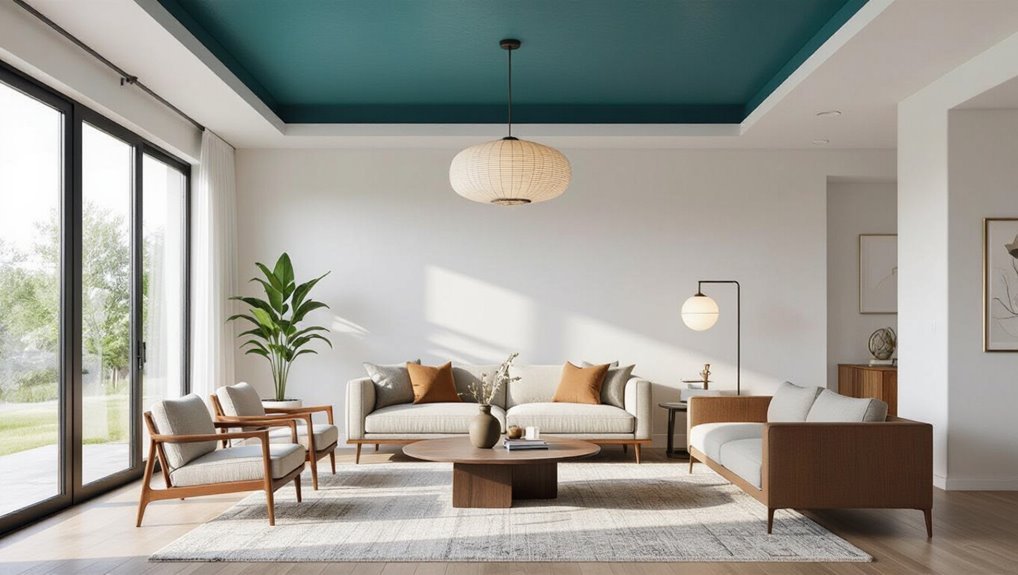
You might choose an accent ceiling when you want to define a space, draw the eye upward, or add drama to a room without repainting all the walls.
Pick a color that complements your room’s palette—darker tones for coziness, lighter or bolder hues for contrast—and test samples on the ceiling before committing.
When you’re ready to paint, follow proper prep, use extension poles and angled brushes for edges, and apply at least two even coats for consistent coverage.
When To Use Accent Ceilings
Wondering whether an accent ceiling will work in your room? You’ll weigh accent ceiling benefits and current accent ceiling trends to decide.
Consider when to use one:
- Low ceilings to create depth
- Open plans needing defined zones
- Focal rooms like dining rooms
- Simple spaces craving personality
Use it sparingly, matching scale and function.
Choosing Accent Ceiling Colors
How do you pick a ceiling color that feels intentional rather than accidental? You’ll use accent color psychology to set mood, match trim, and consider ceiling texture options before committing. Test swatches, view in varied light, and respect room scale.
| Mood | Color tip | Texture |
|---|---|---|
| Calm | Soft blue | Smooth |
| Bold | Deep teal | Matte |
| Cozy | Warm beige | Slight texture |
| Dramatic | Charcoal | Glossy |
Techniques For Painting Ceilings
Start by deciding whether an accent ceiling will truly enhance the room’s purpose and proportions. Then plan the techniques you’ll use to get a crisp, professional result. You’ll use ceiling texture techniques and practical ceiling painting tips to succeed.
- Prep: clean, repair, prime.
- Protect: tape, cover floors.
- Technique: roller patterns, cutting in.
- Finish: inspect, touch up, seal.
How to Coordinate Ceiling Color With Trim, Crown Molding, and Beams
When coordinating your ceiling with trim, crown molding, and beams, think of the ceiling as part of a layered palette—choose contrast to highlight architectural details or match tones for a seamless look.
You’ll use color harmony to tie walls, trim, and beams together while maintaining design balance. Pick a dominant tone, add an accent for depth, and keep finishes consistent for cohesion.
Which Ceiling Sheen to Choose: Matte, Eggshell, or Satin
Curious which sheen will make your ceiling look best? You’ll pick based on room use and desired reflectivity.
Consider ceiling finish options and sheen durability when choosing.
- Matte: hides imperfections, low reflectance.
- Eggshell: subtle sheen, easier to clean.
- Satin: noticeable glow, durable surface.
- Match trim? Use slightly higher sheen for practicality.
How Lighting Type Changes Perceived Ceiling Color
Because light temperature and direction change how your eyes read color, the same ceiling paint can look warm, cool, or washed out depending on fixtures and daylight.
You’ll notice that warm bulbs bring yellows forward, cool LEDs enhance blues, and sidelighting casts shadows that alter color perception.
Consider lighting effects when choosing hue and balance fixture type with natural light for consistent results.
How to Test Ceiling Paint: Samples, Swatches, and Timing
Lighting will change how a swatch reads on your ceiling, so you’ll want to test paint samples under the actual fixtures and daylight patterns in the room.
Test paint samples on your ceiling under real fixtures and natural light to see how color truly reads.
Use practical testing techniques and compare color combinations. Try these steps:
- Apply small swatches.
- View at different times.
- Inspect from seating and standing.
- Evaluate finish and light reflection.
Common Mistakes to Avoid When Choosing a Ceiling Paint Color
1 common mistake is picking a ceiling color without considering how it interacts with the room’s light and furnishings; you’ll want to avoid choosing a shade that clashes, reads too flat, or highlights imperfections once it’s on the ceiling.
Don’t ignore color psychology, test samples under real light, and match paint finish to function—matte hides flaws, satin reflects more—so your choice fits mood and maintenance.
Frequently Asked Questions
Can Ceiling Paint Be Low-Voc or Zero-Voc for Better Indoor Air Quality?
Absolutely — you can go low VOC or zero VOC for ceilings; you’ll breathe easier, and you’ll avoid off-gassing. Low VOC benefits include fewer fumes and better indoor air quality, while zero VOC options eliminate most harmful emissions.
How Often Should I Repaint Ceilings in High-Traffic Areas?
You should repaint ceilings in high-traffic areas every 5–7 years to maintain appearance and air quality; follow ceiling maintenance tips, inspect annually for stains or damage, and adjust repainting frequency if humidity, smoke, or wear’s accelerated.
Can Textured Ceilings Be Painted the Same as Smooth Ceilings?
Yes — you can paint textured ceilings like smooth ones, but you’ll use different textured ceiling techniques and paint application methods; you’ll choose thicker nap rollers, spray for deep textures, and work carefully to avoid clogging or uneven coverage.
Are There Fire-Retardant or Mildew-Resistant Ceiling Paints?
Like a shield in battle, yes—you can buy fire-retardant and mildew-resistant ceiling paints that boost fire safety and mold prevention. You’ll get special formulations and additives; follow manufacturer instructions for prep, ventilation, and proper application.
Can I Use a Roller Extension Pole Safely on Vaulted Ceilings?
Yes — you can safely use a roller extension pole on vaulted ceilings if you follow roller pole safety: lock joints, use balanced stance, extend telescopically, work in sections, and employ vaulted ceiling tips like angled heads and scaffold or sturdy ladder support.
