
Best Paint for Outside Walls: What to Use for Long-Lasting Protection
Choose a high-quality exterior 100% acrylic-latex paint with a matching primer to get long-lasting protection for your outside walls; it offers UV resistance, flexibility, mildew resistance, breathability, and easy cleanup with low-VOC options. Match the primer and finish to the substrate—masonry, wood, metal or vinyl—and pick satin or semi-gloss if you want easier cleaning. Prepare surfaces thoroughly and apply proper coats in good weather, and keep going to learn specific paint choices, primers, and tips.
Quick Buy Guide: Best Exterior Paints for Outside Walls
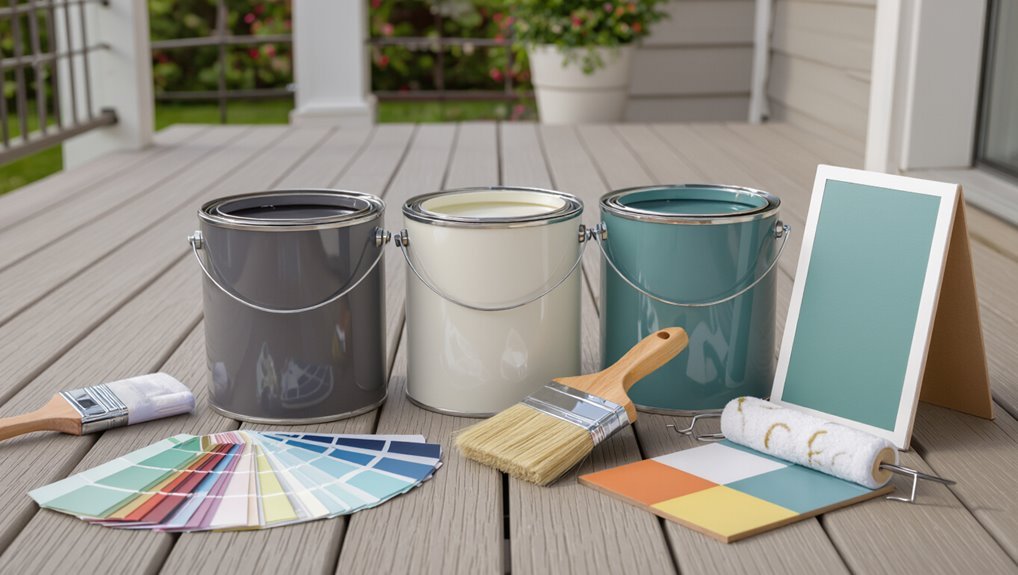
Choosing the right exterior paint doesn’t have to be overwhelming — pick a durable, weather-resistant formula that matches your surface and climate.
You’ll check coverage, mildew resistance, and dry time, compare VOC levels for environmental impact, and test color selection with swatches in sunlight.
Buy enough for full coats, grab compatible primer, and choose finishes that hide flaws while standing up to local weather.
Best Exterior Paint Types: Overview (Latex, Acrylic, Alkyd, Elastomeric)
When you’re picking paint for exterior walls, focus first on the resin type—latex, acrylic, alkyd, or elastomeric—because each delivers different durability, flexibility, adhesion, and maintenance needs.
You’ll weigh exterior paint chemistry: water- vs solvent-based binders, film flexibility, and breathability.
Match type to substrate, climate, and maintenance habits, and follow color selection tips to guarantee longevity and curb appeal.
Why Acrylic Latex Is the Default Exterior Choice
After weighing resin types, you’ll find acrylic latex stands out for most exterior jobs because it balances durability, flexibility, and ease of use.
You’ll appreciate acrylic benefits like UV resistance, strong adhesion, and easy cleanup. It resists cracking and sheds moisture while remaining breathable.
Consider environmental impact: low-VOC waterborne formulas reduce emissions and simplify disposal, making acrylic latex a practical green choice.
100% Acrylic vs. Acrylic Blend: When to Choose Each
When picking between 100% acrylic and an acrylic blend, think about how long the paint needs to last and how much you’re willing to spend.
You’ll weigh durability and lifespan against cost and value, and match the choice to your surface and local climate.
That way you can choose the option that balances performance with budget for your specific project.
Durability And Lifespan
Because exterior paint has to stand up to sun, rain, and temperature swings, you’ll want to pick a formula that matches the level of exposure and the lifespan you expect.
Choose higher-percentage acrylics for superior weather resistance and color retention; acrylic blends suit moderate climates and provide easier application.
Consider advanced paint technology—UV stabilizers and flexible binders—to extend durability and delay repainting.
Cost And Value
Weather resistance and longevity matter, but you’ll also want to weigh cost and overall value before choosing a paint.
For % acrylic vs. acrylic blend, consider budget considerations: blends cost less upfront, full acrylic costs more but lasts longer.
Do a value analysis comparing lifecycle costs, maintenance frequency, and resale impact so you pick the option that minimizes total expense while meeting performance needs.
Surface And Climate Suitability
Pick the paint that matches both the surface and the climate: full acrylic excels on porous, flexible substrates like stucco, fiber cement, and wood in hot, humid, or freeze‑thaw climates because it stretches and breathes.
Acrylic blends can be a cost‑effective choice for smooth, stable surfaces in mild, dry regions where extreme durability isn’t required.
Choose based on surface texture and local weather conditions.
Oil & Alkyd Paints: When They Still Make Sense
You’ll still reach for oil or alkyd when you need proven, long-lasting protection on high-wear surfaces.
They’re especially good for trim, metal, and doors where hardness and a smooth finish matter most.
Pick them for spots that tolerate slower drying if you want maximum durability.
Timeless Durability Benefits
Tradition still matters: when you want a hard, long-lasting finish on exterior wood or metal, oil and alkyd paints deliver durability that many modern formulations can’t match.
You’ll get superior weather resistance and excellent color retention, resisting chalking and fading. They form a tough, flexible film that shields surfaces from abrasion and moisture.
You should expect longer repaint intervals with proper prep and application.
Best Use Cases
If you want a finish that can take wear, oil and alkyd paints still shine in specific situations.
Use them on metal, trim, doors, and high-traffic areas where toughness beats breathability.
You’ll appreciate smooth leveling and rich gloss for classic color trends.
Choose low-VOC or reformulated sustainable options when possible, and prime properly to avoid adhesion or yellowing over time.
Paint Finishes Explained: Flat, Satin, Semi-Gloss, Gloss
Because the finish you pick affects both how the wall looks and how it stands up to wear, it’s worth knowing the differences between flat, satin, semi-gloss, and gloss paints.
You’ll choose flat finishes to hide imperfections, satin finishes for mild durability and easy cleaning, semi gloss benefits for trim and moisture-prone areas, and gloss advantages where maximum durability and shine matter most.
Paint Choices by Surface: Wood, Stucco, Brick, Metal, Vinyl
When you’re picking paint for different exterior surfaces, start by prepping each one properly—sand and prime wood, clean and repair stucco, and remove efflorescence from brick.
Use breathable, elastomeric or masonry coatings for stucco and breathable primers for brick to let moisture escape.
For metal and vinyl, choose rust-inhibiting primers and paints formulated for flexible adhesion so the finish lasts.
Wood Surface Preparation
Preparing wood for exterior paint starts with a clear inspection and steady cleaning; you’ll want to remove loose paint, mildew, and dirt so primer and paint can bond properly.
Apply appropriate wood treatment for rot or insect damage, use proper sanding techniques to smooth and feather edges, then clean again.
Prime with an exterior-grade primer before topcoat application for lasting protection.
Stucco Breathable Coatings
If your home has stucco, choose a breathable exterior coating that lets moisture escape while keeping water out; breathable elastomeric or mineral-based paints prevent trapped moisture that can cause staining and deterioration.
You’ll pick a product formulated for stucco texture to adhere without clogging pores.
Prioritize moisture management, UV resistance, and flexible films so the finish moves with substrate and resists cracking.
Brick, Metal, Vinyl Options
After addressing breathable coatings for stucco, turn your attention to brick, metal, and vinyl—each needs a different paint approach because of surface porosity, thermal expansion, and adhesion characteristics.
You’ll tackle brick painting with masonry primers and breathable elastomeric paints. Choose rust-inhibiting metal coatings for expansion, and pick low-VOC vinyl finishes.
Prioritize thorough surface preparation to guarantee adhesion and durability.
UV Resistance: How It Extends Exterior Paint Life
Because sunlight constantly bombards exterior surfaces, UV resistance is one of the most important factors in how long your paint will last.
You should choose coatings with UV protection benefits to prevent fading, chalking, and polymer breakdown. Proper UV-resistant formulations reduce repaint frequency and preserve color.
Consider pigments and binders rated for sunlight exposure effects so your finish endures without premature deterioration.
Mildew & Moisture Protection: Which Formulas Work
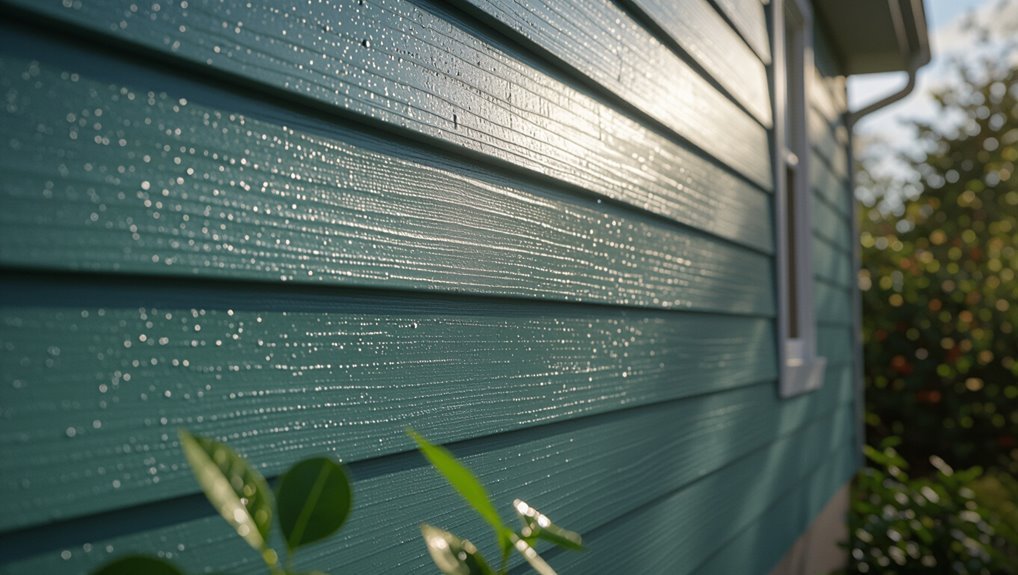
Sunlight isn’t the only enemy of exterior paint — moisture and mildew can ruin a finish from the inside out.
You should choose formulations with proven mildew resistance and water-repellent binders that form a durable moisture barrier.
Look for paints labeled for exterior damp conditions or those with antimicrobial additives.
Proper surface prep and ventilation help the coating perform, preventing stains and structural decay.
Primers for Exteriors: What to Use by Surface
When prepping exterior walls, you’ll pick a primer based on the surface to guarantee adhesion and longevity.
Use wood-specific primers that seal pores and block tannin bleed on siding and trim, while masonry or stucco need breathable, masonry-formulated primers to handle moisture and texture.
Choosing the right primer for each substrate will make your topcoat perform and last.
Primer By Surface Type
Choosing the right primer depends on the surface you’re covering, so start by identifying the material—wood, masonry, metal, or previously painted siding—and its condition.
Match primer types to surface compatibility: use masonry primers for porous block, metal etch or rust-inhibiting primers for steel, and high-adhesion or stain-blocking primers for aged or chalky siding.
Test adhesion before full application.
Wood-Specific Primers
If your exterior walls include wood, pick a primer formulated for both adhesion and moisture resistance so paint bonds well and the substrate stays protected.
You’ll control wood moisture, seal tannins, and guarantee even primer application before topcoat.
Choose oil- or acrylic-based wood primers suited to exterior exposure, apply per label, and sand between coats for best durability.
- Seal tannins
- Improve adhesion
- Reduce wood moisture uptake
- Even primer application
Masonry And Stucco Primers
Because masonry and stucco are porous and often chalky, you’ll want a primer that seals the surface, evens out suction, and bonds to mineral substrates so your topcoat goes on smoothly and lasts. You should follow masonry surface preparation and stucco adhesion techniques: choose a high-alkali-blocking, penetrating primer, apply after cleaning, and test adhesion before full coating.
| Type | Benefit | When to use |
|---|---|---|
| Silicate | Breathable | Mineral walls |
| Acrylic | Flexible | Mixed substrates |
| Epoxy | Strong bond | Heavy wear |
| Bonding | Primer for stucco | Poor adhesion |
Choosing Weatherproof & Flexible Coatings: Criteria
When you’re picking a weatherproof, flexible coating for exterior walls, focus on durability, elasticity, and adhesion—those three determine whether a finish will shed water, move with temperature changes, and stay bonded to substrates over time.
You’ll use weather resistance testing and paint flexibility analysis to compare products. Check:
- ASTM or ISO lab ratings
- UV and moisture resistance
- Elastic recovery percentage
- Adhesion after freeze/thaw
Match Sheen to Durability & Maintenance
Think about how sheen affects durability: higher sheens resist scuffs and shed dirt better than flat finishes.
You’ll clean glossy or satin walls more easily, but they’ll also highlight surface flaws.
Match the sheen to how much maintenance you’re willing to do and the condition of the substrate.
Sheen Versus Durability
Although sheen might seem like a purely aesthetic choice, it actually plays a big role in how well your exterior paint stands up to wear and how easy it’s to maintain.
You should consider sheen impact and durability factors when choosing finish; higher sheens resist scuffs and moisture better.
- Low sheen hides flaws
- Satin balances sheen and toughness
- Semi-gloss repels dirt
- Gloss maximizes durability
Cleaning And Maintenance
Because exterior paint takes the brunt of weather and everyday grime, you should match the sheen to how much cleaning and maintenance you’re willing to do: higher-sheen finishes wipe clean easily and resist mildew, while lower sheens hide surface flaws but need gentler care.
Choose satin or semi-gloss for porches and trim, plan cleaning techniques, set realistic maintenance schedules, and test spot-cleaning before full treatment.
Reading Labels: VOCs, Solids-by-Volume, Warranties
When you’re choosing exterior paint, the label’s fine print matters: look for VOC levels, solids-by-volume, and the warranty terms so you know what you’re actually getting.
You should check VOCs regulations, solid content percentage, and warranty length to judge durability, coverage, and environmental impact.
Compare claims, exclusions, and required maintenance.
- VOC limits
- Solid content %
- Warranty length
- Warranty exclusions
Best Brands & Product Lines for Longevity
If you want exterior paint that lasts, focus on established brands and their premium product lines—those formulations combine higher solids, UV inhibitors, and flexible resins to resist chalking, cracking, and mildew.
You’ll pick brands offering robust warranties, pro-grade primers, and fade-resistant pigments.
Compare best color options, shear strength, and eco friendly choices so you get durability, appearance, and lower environmental impact.
Cost vs. Lifespan: How Much to Spend Per Gallon
Although premium exterior paints cost more per gallon, you’ll often pay less over time thanks to longer intervals between full repaints.
Do a cost analysis comparing upfront price, coverage, and projected repaint frequency so your budget considerations align with expected lifespan.
- Higher-grade = fewer repaints
- Coverage reduces needed gallons
- Warranty can save money
- Factor labor and maintenance
Prepping Exterior Walls for a Long-Lasting Paint Job
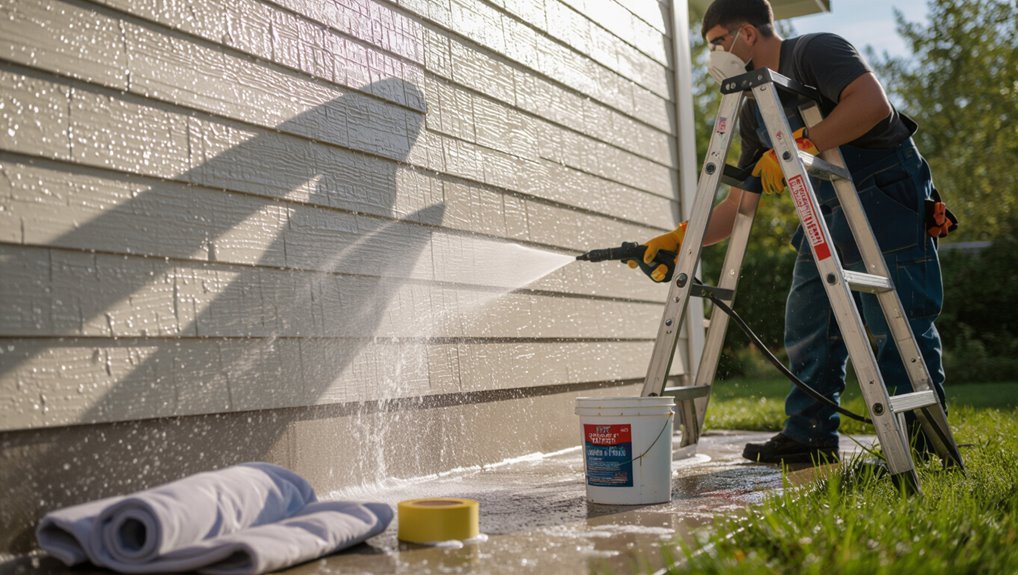
Spending more on higher-grade paint only pays off if the surface beneath it’s properly prepared.
So start your exterior project by inspecting and correcting any issues that would shorten the coating’s life. You’ll remove loose paint, clean mildew, repair cracks, and sand rough spots.
Good surface preparation and checking weather considerations—temperature, humidity, and upcoming storms—ensure primers and paint bond and last.
Application Tips: Tools, Coats, Drying Times, Conditions
When you’re ready to paint, pick the right tools and follow a clear plan so each coat goes on evenly and lasts longer.
Use proper application techniques: brushes for trim, rollers for flats, and extension poles.
Mind weather considerations—temperature and humidity affect drying times.
Apply two thin coats, wait manufacturer-recommended dry time, and inspect for missed spots.
- Brushes, rollers, poles
- Two thin coats
- Follow dry times
- Check conditions
Common Mistakes & When to Repaint or Call a Pro
If you skip proper prep or rush drying times, paint won’t last and problems like peeling, blistering, or premature fading will show up fast; avoid painting in humidity, neglecting primers, or using wrong brushes.
Check repainting frequency—typically 5–10 years depending on exposure.
Call a pro for large patches, wood rot, or trapped moisture. Hiring professionals saves time and guarantees durable results.
Frequently Asked Questions
Can Exterior Paint Change a Home’s Energy Efficiency?
Can exterior paint change a home’s energy efficiency? Yes—you can improve performance with energy efficient coatings that reflect heat and add thermal insulation; you’ll cut cooling and heating loads and save money while keeping your home’s envelope more stable.
Are Eco-Friendly Exterior Paints as Durable as Conventional Ones?
Yes — eco-friendly exterior paints can be as durable as conventional ones. You’ll find eco friendly performance matches traditional formulas when you choose high-quality, low-VOC sustainable options with advanced binders and weather-resistant pigments, applied correctly and maintained regularly.
How Does Color Choice Affect Exterior Paint Longevity?
Colors matter: think sun-bleached shutters versus deep, heat-absorbing walls. You’ll see faster color fading on dark hues because they absorb more heat, so lighter shades usually last longer and resist breakdown.
Can I Paint Over Lead-Based Exterior Paint Safely?
You can’t safely just paint over lead-based exterior paint; you’ll need lead paint safety measures. You should test for lead, stabilize loose paint, follow strict surface preparation, and hire certified abatement professionals if removal’s required.
Do Exterior Paints Repel Graffiti or Stains?
About 70% of municipalities report graffiti reduction after protective coatings; you’ll see graffiti resistance and stain prevention with sacrificial or anti-graffiti coatings, and you’ll clean vandalism off far easier than with standard exterior paints.
