
Why Is My Ceiling Paint Peeling? Causes and Fixes
Your ceiling paint is peeling because moisture, poor surface prep, incompatible coatings, or structural movement broke the paint’s bond. Start by checking for leaks, stains, or high humidity and remove loose paint. Dry and clean the area, sand glossy spots, use a stain‑blocking primer, then repaint with a flat or mildew‑resistant ceiling paint. For recurring dampness or cracks, get a plumber, roofer, or contractor. Keep going to get step‑by‑step checks, temporary fixes, and repair options.
Quick Answer: What Peeling Ceiling Paint Means – And What to Do First
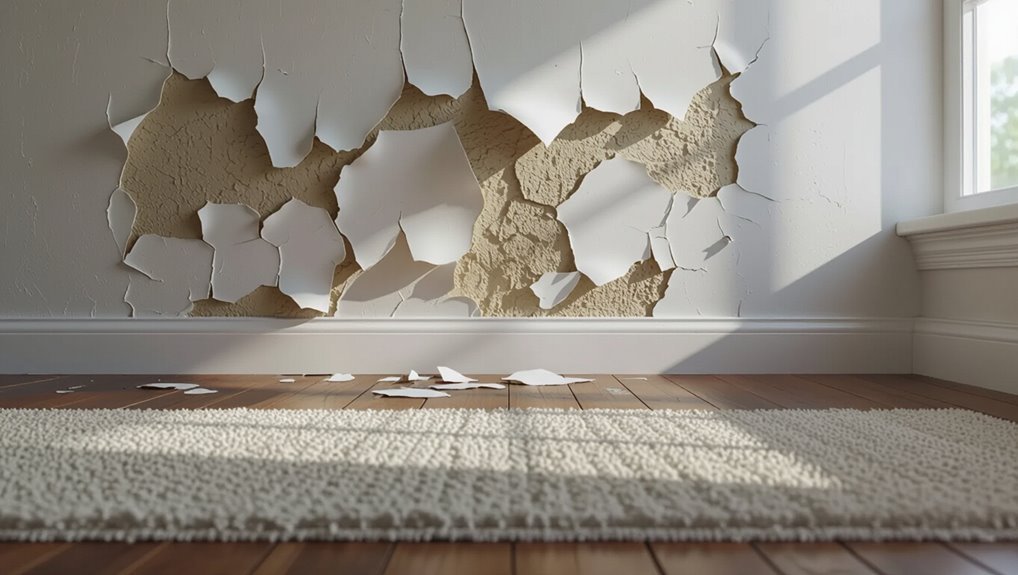
Why is your ceiling paint peeling? You’ll want to halt damage quickly: check for leaks, condensation, or poor adhesion.
Prioritize ceiling maintenance by removing loose paint, drying the area, and addressing moisture sources.
Clean, prime, and use appropriate paint to restore finish. These first steps protect paint longevity and limit further deterioration until you follow a full diagnostic checklist.
Diagnose Ceiling Paint Peeling: A Step‑by‑Step Checklist
Now that you’ve stopped immediate damage and dried the area, run through a systematic checklist to find the underlying cause and decide the right fix.
Inspect for leaks, condensation, mold, or poor ventilation. Tap and probe loose paint, measure affected area, document layers, and note paint type.
Prioritize diagnosing causes and evaluating damage to choose repairs or call a pro.
Temporary Fixes While You Investigate
While you’re still pinpointing the cause, apply quick temporary fixes to prevent further damage and keep the space safe and tidy.
Use drop cloths, secure loose paint with painter’s tape, and catch drips with buckets.
Perform quick assessments for active leaks or structural issues.
These temporary solutions limit harm and buy time while you schedule detailed inspections or professional repairs.
How Moisture Makes Ceiling Paint Peel
When water gets into your ceiling—whether from a leaky roof, a plumbing issue, or high indoor humidity—it breaks the bond between paint and the underlying surface by softening primers, swelling drywall paper, and dissolving adhesives.
As the substrate weakens and expands, the paint loses adhesion, cracks, and eventually peels away. You’ll notice different effects depending on moisture sources and paint types, so assess both promptly.
Identifying Leaks vs. Surface Condensation
Look for visible water stains and the pattern of moisture to tell if it’s a leak or just surface condensation.
If stains are localized, brown, or grow after rain, you’re probably dealing with a leak.
If moisture shows as uniform dampness or transient beading in cold spots, it’s likely condensation.
Visible Water Stains
Water stains on your ceiling tell you there’s a moisture problem, but they don’t always mean a roof leak—so you need to distinguish between an active leak and surface condensation.
Inspect stain size, drip marks, and nearby plumbing; fresh, spreading stains suggest active leaks and urgent water damage.
Smaller, evenly diffused stains often point to condensation.
Document photos, stop the source, then plan ceiling repairs.
Condensation Patterns
If you notice paint bubbling or peeling in patchy, diffuse areas without obvious drips, condensation is often the culprit rather than a roof or pipe leak.
You should inspect temperature swings, ventilation, and insulation to spot condensation sources and pick condensation solutions.
- Check cold spots and poor insulation
- Monitor humidity levels
- Inspect ventilation fans
- Look for surface-only dampness
- Consider dehumidifiers and air sealing
Poor Surface Prep and Adhesion Problems
When paint won’t stick, it’s usually because the surface wasn’t cleaned, sanded, or primed properly, so loose dust, grease, or glossy old coatings prevent adhesion and lead to peeling. You should remove surface contamination, sand gloss, and check paint compatibility before repainting to guarantee lasting results.
| Problem | Fix |
|---|---|
| Dust/Grease | Clean with degreaser |
| Glossy old coat | Sand and degloss |
| Poor priming | Use proper primer |
When Incompatible Paint Types Cause Failure
If you paint latex over old oil-based paint without proper prep, the new coat won’t adhere and will start peeling.
Similarly, putting a high-gloss finish over a matte surface can prevent bonding and highlight flaws.
Check the existing paint type and sand or prime as needed before recoating to avoid these failures.
Oil Over Latex Issues
Because oil-based paint won’t properly adhere to an existing latex layer, you’ll often see cracking, peeling, or flaking where the two meet.
You should address oil paint compatibility to prevent latex paint issues. Prep matters: remove loose film, scuff, prime with a bonding primer, and choose compatible finishes.
Follow these steps:
- Strip loose paint
- Sand glossy areas
- Clean thoroughly
- Use bonding primer
- Apply oil topcoat
Gloss Over Matte Problems
Ever wondered why a glossy topcoat peels off a matte ceiling? You apply a gloss finish over a matte finish without proper prep, and adhesion fails.
Matte surfaces repel some coatings; glossy layers need a clean, scuffed, or primed base.
Sand, degrease, and use a bonding primer or compatible paint to guarantee the gloss adheres and resists flaking.
How Temperature and Humidity Swings Stress Paint
When indoor air swings between cold and warm or dry and humid, your ceiling paint is forced to expand and contract repeatedly. That movement weakens its bond to the substrate.
You’ll notice stress where adhesion’s poorest; temperature fluctuations and humidity levels drive the cycle. Check ventilation and insulation, then repair failed spots.
- Monitor daily changes
- Improve airflow
- Stabilize temperature
- Control moisture
- Recoat properly
Structural Movement, Cracks, and Peeling Paint
Temperature and moisture swings aren’t the only forces that break paint loose — the house itself moves, and that movement shows up as cracks and peeling on your ceiling.
You’ll see hairline cracks at joints or where framing settles. Addressing structural integrity—fixing framing, drywall seams, or fasteners—prevents recurrent damage and preserves paint lifespan.
Prompt repairs stop small cracks from becoming widespread peeling.
Old Oil‑Based Paint Under New Latex: What to Watch For
If your ceiling has old oil‑based paint and you’re covering it with new latex, watch how the primer bonds—oil and latex don’t always play nice without the right bonding primer.
Poor adhesion or a rigid oil layer under a more flexible latex topcoat can cause cracking and peeling as the paint systems move differently.
You’ll want to test adhesion and use a compatible primer or remove the oil layer before repainting.
Oil Primer Compatibility
Because oil-based primers create a slick, nonporous surface, you can’t just slap latex paint over them and expect long-term adhesion; you’ll need to assess the condition of the old oil finish, scuff or degloss it, and use a bonding primer or a recommended adhesion promoter to prevent peeling and flaking.
- Check oil based durability and cure
- Sand to remove gloss
- Clean thoroughly
- Apply bonding primer
- Test latex flexibility over primer
Adhesion And Flexibility
Once you’ve prepped that old oil finish—sanded, cleaned, and primed—you still need to watch how the new latex interacts with it: oil and latex have different flexibility and surface energy, so movement in the substrate or a rigid oil layer can cause the latex to crack, lift, or peel.
Use proper adhesion techniques, choose primers and topcoats for compatibility, and account for flexibility factors when painting.
Tools and Materials You’ll Need for a Lasting Repair
Before you climb the ladder, gather the right tools and materials so the repair lasts — a reliable ladder, drop cloths, a putty knife, sandpaper (medium and fine grit), a quality joint compound or spackle, primer formulated for ceilings or stains, ceiling-grade paint, brushes and rollers with extension poles, painter’s tape, and dust masks or safety goggles.
You’ll need tools for repair techniques and surface preparation.
- Ladder
- Sandpaper
- Joint compound
- Primer
- Roller kit
Repair and Prevent Moisture‑Related Peeling
With your tools at hand, you can tackle peeling caused by moisture by first identifying and stopping the source — leaks, high humidity, or poor ventilation — so repairs won’t fail.
Dry the area, replace damaged drywall, and apply mildew‑resistant primer and paint.
Install moisture barriers, improve ventilation, and consider insulation upgrades in the attic to prevent condensation and recurring peeling.
Fix Peeling Caused by Poor Prep or Adhesion
If your ceiling paint is flaking despite no moisture issues, poor surface prep or weak adhesion is usually to blame.
You should remove loose paint, perform surface cleaning, and do adhesion testing before repainting. Follow these steps:
Remove loose paint, clean thoroughly, test adhesion, then follow proper prep and priming before repainting.
- Scrape and sand damaged areas
- Clean dust and grease thoroughly
- Repair cracks or imperfections
- Prime exposed substrate
- Recoat with proper technique
Best Primers and Paints for Ceilings
Before you repaint, you’ll want to pick the right primer—stain-blocking or adhesion primers work best on problem ceilings.
Choose a flat or low-sheen ceiling paint to hide imperfections and reduce glare, and consider mildew-resistant formulas for humid rooms.
I’ll also list trusted brands and product lines that balance coverage, durability, and ease of application.
Best Primer Types
Choosing the right primer can make or break a ceiling paint job, so you’ll want one that sticks well, blocks stains, and matches your ceiling material.
Know primer types and primer benefits to prevent peeling and improve adhesion. Pick based on surface and stains:
- Shellac for heavy stain blocking
- Oil for adhesion on slick surfaces
- Latex for easy cleanup
- Bonding for glossy surfaces
- Mildew-resistant for bathrooms
Paint Finish Options
Now that you’ve matched primer type to surface and stains, pick a paint finish that complements that primer and the room’s function. Choose matte finish for hiding flaws, eggshell finish for mild durability, satin finish for washability, and semi gloss for trim or damp areas. Visual guide:
| Finish | Best Use |
|---|---|
| Matte | Living rooms |
| Eggshell | Hallways |
| Satin | Kitchens |
| Semi gloss | Bathrooms |
Brand Recommendations
One key step in preventing ceiling paint from peeling is picking reliable primers and paints designed for ceilings; you’ll want products that block stains, adhere well, and dry to a low-sheen finish that hides imperfections.
- Choose top rated primers for stain blocking and adhesion.
- Pick ceiling paint brands with flat, hide-focused formulas.
- Match primer to substrate (plaster, drywall).
- Use mold-resistant options in damp areas.
- Follow manufacturer dry and recoat times.
When to Call a Pro: Plumbing, Roof, or Structural Concerns
If you spot peeling paint that’s accompanied by stains, persistent dampness, cracked plaster, or recurring leaks, call a pro—these signs often point to plumbing, roof, or structural problems that DIY fixes won’t solve.
You should get professional leak detection and a structural integrity assessment. A plumber, roofer, or structural engineer will diagnose hidden damage and recommend repairs before mold, collapse risk, or worsening rot occur.
Typical Costs and Timelines for Common Repairs
After you’ve involved a plumber, roofer, or structural engineer, you’ll want to know what repairs typically cost and how long they’ll take so you can plan budget and schedule.
Know repair costs and timeline expectations up front to avoid surprises:
- Minor drywall patch: low cost, 1 day
- Leak repair: moderate, 1–3 days
- Roof fix: moderate–high, 1–5 days
- Structural work: high, weeks
- Repaint: low–moderate, 1–2 days
Quick Maintenance Tips to Stop Peeling From Returning
When you’ve fixed the source of the problem, keep peeling from coming back by staying proactive: inspect for moisture, control humidity, and address small issues before they worsen.
You should schedule regular checks, clean surfaces gently, repaint with proper primers, and fix leaks immediately.
These preventive maintenance steps extend paint longevity, save money, and keep your ceiling looking sound and fresh.
Frequently Asked Questions
Can Peeling Paint Cause Health Problems or Allergies?
Yes — peeling paint can cause health problems. You’ll risk mold growth behind flakes, which harms air quality and can trigger allergies, asthma, headaches, or respiratory irritation; address moisture and remove damaged paint promptly.
Will Peeling Paint Affect My Home’s Resale Value?
Yes — peeling paint harms resale implications and buyer perceptions; buyers’ll assume neglect, lower offers, or request repairs. You should fix and document repairs to restore confidence, prevent negotiations, and protect your sale price.
Can I Repaint Over Peeling Spots Without Removing All Loose Paint?
You shouldn’t; you’ll need to remove loose paint for proper paint adhesion. Use repair techniques like scraping, sanding, patching, priming with a bonding primer, then repaint to guarantee a durable, even finish and prevent future peeling.
Are There Eco-Friendly or Low-Voc Ceiling Paint Options?
Like choosing a gentle breeze, you can pick eco friendly options and low VOC paints that reduce fumes and toxins. You’ll find water‑based, zero‑VOC formulas, plant‑based binders, and certified brands that perform well indoors.
How Long Should I Wait After Repairs Before Repainting the Ceiling?
You should wait at least 24–72 hours for drywall compound or primer to cure, longer for plaster or patching; follow the repair timeline on products so paint adhesion isn’t compromised, usually 7–14 days for full stability.
Conclusion
Think of peeling ceiling paint like a warning bell—ignore it and small leaks can turn into Noah’s-ark problems. You’ve learned to diagnose moisture, spot leaks, and apply temporary fixes while you investigate. Use the right primer and paint, and call a pro for plumbing, roof, or structural trouble. With prompt repairs and simple maintenance, you’ll stop the peel before it spreads—restoring calm overhead, one confident brushstroke at a time.
