
Why Is My Spray Paint Not Drying? 9 Common Reasons & Fixes
If your spray paint isn’t drying, check for nine common causes: too-thick coats, wrong paint/primer combo, expired or contaminated cans, oil or wax on the surface, high humidity or low temperature, poor ventilation, incompatible solvent systems, underlying varnish/latex/oil finishes, or incorrect spray technique. Fixes include thin even passes, proper primer match, thorough cleaning, temperature/humidity control, and gentle airflow or drying boosters. Keep going and you’ll find specific checks and step-by-step fixes to get a solid finish.
Quick Triage: 3 Fast Checks for Spray Paint That Won’t Dry
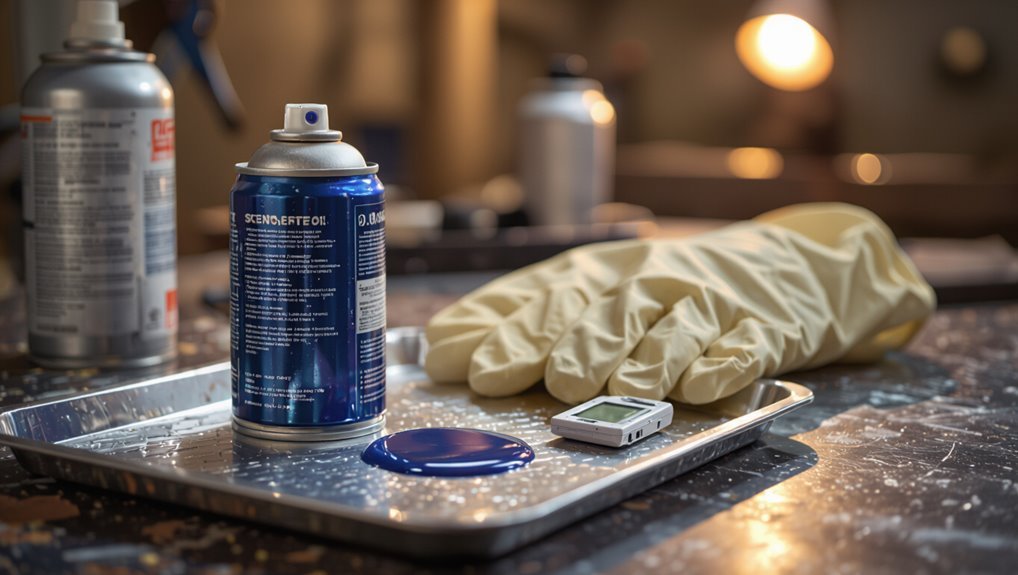
Wondering why your spray paint’s still tacky? First, check coat thickness: if you sprayed heavy, you’ll need additional drying time or light sanding between layers.
Second, inspect the can and label—wrong formula or expired paint alters drying time; this is basic spray paint troubleshooting.
Second, check the can—wrong formula or expired paint changes drying time; basic spray-paint troubleshooting.
Third, evaluate ventilation—airflow moves solvents away and speeds curing, so reposition fans or open windows.
Make drying time adjustments by applying thin, even passes and waiting recommended intervals before recoating.
Follow these checks in order; they fix most tackiness quickly and prevent wasting paint or creating sticky, uneven finishes.
Check Temperature and Humidity for Spray Painting
Check the temperature before you spray because most paints dry best between about 50–85°F (10–30°C).
You’ll also want to watch humidity—high moisture in the air slows solvent evaporation and can leave paint tacky.
Adjust timing or move to a drier, warmer spot if conditions are outside the ideal range.
Ideal Temperature Range
If you spray in temperatures that are too low or too high, the paint won’t level or cure properly, leaving tacky, uneven finishes; aim to work between about 50°F and 85°F (10°C–29°C) with stable conditions so solvents evaporate at the right rate and coatings bond correctly.
You should seek ideal spray conditions and expect excellent drying times within that band. Monitor ambient and surface temps, avoid direct sun or freezing surfaces, and adjust technique or thinner if needed.
Quick checklist:
- Measure air and surface temperature.
- Adjust spray distance and coat thickness.
- Use recommended thinner for temperature.
Humidity Effects On Drying
Because moisture in the air slows solvent evaporation, high humidity can keep spray paint tacky, extend cure times, and cause blushing or milky finishes, while very low humidity can make solvents flash off too fast and lead to poor flow or cracking; monitor relative humidity (ideally below about 60%) and surface dew point, avoid painting when conditions are damp or near the dew point, and use slower-evaporating reducers or add a retarder in marginal conditions to help coatings level and cure properly. You should monitor humidity levels, understand moisture impact, and control environmental factors like air circulation to shorten drying time.
| Humidity Range | Effect on Spray Paint | Fixes |
|---|---|---|
| >70% | Tacky, blushing | Wait, dehumidify |
| 40–60% | Ideal drying | Good air circulation |
| <30% | Fast flash-off, cracking | Use retarders, humidify |
Use the Right Spray Paint and Compatible Primers
When you want reliable drying and a smooth finish, match your spray paint to the primer and substrate you’re using.
You’ll extend drying times and cause tackiness if paint chemistry clashes with primer or material. Know the spray paint types (acrylic, enamel, lacquer) and confirm primer compatibility before spraying.
Use a primer designed for metal, plastic, or wood as needed. Follow label directions for flash time and recoating. Consider adhesion promoters for tricky plastics.
- Check paint chemistry.
- Match primer to substrate.
- Respect manufacturer flash/recoat times.
This avoids solvent conflicts and helps paint cure properly.
Clean and Prep the Surface (Oil, Dirt, and Wax)
1 simple step before you spray is to remove all oil, dirt, and wax from the surface so paint can bond and dry properly.
You’ll start with surface preparation: wash with mild detergent and warm water, scrub grease with a degreaser, then rinse thoroughly.
For stubborn wax or silicone, use isopropyl alcohol or a dedicated wax remover, following product instructions.
Lightly sand glossy areas and wipe away dust with a tack cloth.
Use proper cleaning techniques to avoid contaminants that block adhesion and slow drying.
Let the surface dry completely before priming or painting to guarantee consistent, durable results.
Spray Technique: Coat Thickness, Distance, and Speed
Mastering your spray technique means controlling coat thickness, distance, and speed so each pass lays down an even, tack-free film that will dry properly.
You’ll avoid runs by applying multiple thin coats rather than one heavy one. Keep a consistent distance and move smoothly to prevent pooling.
Watch your spray patterns and adjust nozzle or pressure to get a uniform fan. Vary application angles to reach edges without overspray buildup.
Follow this quick checklist:
- Thin coats, 2–3 light passes.
- Maintain 8–12 inches distance, steady speed.
- Adjust spray patterns and angles for coverage.
Improve Ventilation and Air Flow to Speed Solvent Evaporation
You can speed drying by increasing fresh air exchange so solvents don’t linger around the painted surface.
Position fans to pull air across the piece and out of the room, not just circulate the same air.
Pointing a fan to create a steady, gentle airflow over the paint will help solvents evaporate faster without disturbing the finish.
Increase Fresh Air Exchange
When solvents can’t get away, spray paint stays tacky, so improving ventilation is one of the quickest ways to speed evaporation. You want steady fresh air movement to replace humid, solvent-laden air and boost air circulation around the piece.
Open windows and doors to create a cross-breeze, and remove nearby obstructions so air can flow freely. Consider these simple steps:
- Position the work near an open window or vent.
- Keep doors open to form a clear airflow path.
- Remove covers or furniture blocking the exchange.
Faster solvent escape means quicker drying and fewer tacky finishes.
Use Fans Strategically
If you can’t rely on steady natural airflow, bring in fans to move solvent-laden air away from the work and speed evaporation.
Position one fan to draw fresh air toward the painted piece and another to exhaust away, optimizing fan placement so air flows across surfaces rather than directly at wet paint, which can create ripples.
Aim airflow direction parallel to the surface for gentle drying. Use low-speed settings to avoid dust lift while maintaining steady exchange.
For enclosed spaces, place intake and exhaust opposite each other.
Monitor temperature and humidity — fans help, but they don’t replace proper environmental control.
Test for Old or Contaminated Spray Paint
Because spray paint can degrade or become contaminated over time, you should run a quick spray test before committing to a project.
Run a quick spray test—paint can degrade over time, so test before starting any project.
Check expiration and storage to gauge spray paint lifespan; thick, clumpy, or off-smell batches show contamination signs. Spray onto scrap material and observe drying, adhesion, and finish for 15–30 minutes. If problems appear, discard or strain the can.
- Look for clogged nozzle or sputtering.
- Note uneven texture or slow dry time.
- Smell unusual solvents or rot.
If the test fails, replace the can — don’t risk a ruined project or prolonged tackiness.
How Underlying Finishes (Varnish/Latex/Oil) Affect Spray Paint Drying
While different base coatings can seem invisible, they strongly influence how spray paint dries and bonds; varnish, latex, and oil finishes each change drying time, adhesion, and final appearance.
You’ll notice spray over glossy varnish may bead and stay tacky because the sealer repels solvents, while porous latex soaks thinners, accelerating skin formation but risking uneven cure.
Oil-based bases can slow solvent release, lengthening dry time. Always assess underlying finishes for contamination and consider paint compatibility before spraying.
Matching solvent systems and using proper prep helps predict behavior; incompatible layers are a common cause of persistent tackiness.
Fixes & Prevention: Drying Boosters, Timing, and Best Practices
Knowing the finish underneath helps you choose the right fixes and preventive steps for sticky or slow-drying spray paint. You can speed cure with drying boosters formulated for aerosol finishes, or use heat and airflow cautiously.
Wait longer between coats, sand glossy undercoats, and avoid incompatible primers or oils. Prevent problems by testing a small area and following manufacturer temperature and humidity guidelines.
Key quick actions:
- Use a compatible primer and allow full cure before topcoats.
- Apply thin, even layers with proper spacing.
- Increase ventilation and moderate warmth, not direct heat.
Follow these practices to prevent tacky results.
Frequently Asked Questions
Can I Speed Drying With a Hairdryer or Heat Gun?
Yes — you can speed drying with a hairdryer or heat gun, but you’ll use gentle heat application and proper drying techniques, keep distance, move constantly, avoid high temps that blister paint, and ventilate to prevent fumes and softening.
Will Spray Paint Dry Properly on Plastic Without a Primer?
Once I sprayed a toy car without prepping; it peeled fast. No, you usually won’t get reliable spray paint adhesion on plastic without primer—plastic surface preparation like cleaning and scuffing boosts adhesion and long-term durability.
Is It Safe to Spray Paint Near Food or Kitchenware?
No — you shouldn’t spray paint near food or kitchenware; spray paint safety matters. You’ll contaminate surfaces and inhale fumes, so ventilate well, remove or cover dishes, and use dedicated ventilation or paint elsewhere for safety.
How Long Should I Wait Before Applying Decals or Stickers?
Like a calm tide, wait 24–72 hours before decal application so paint fully cures; if conditions were ideal, you can apply in 24 hours, but colder or humid weather means waiting longer for reliable sticker adhesion and durability.
Can Moisture Cause Bubbling After Paint Appears Dry?
Yes — moisture effects can cause bubbling; even if paint seems dry, trapped humidity or surface dampness creates bubbling causes like solvent reactivation or steam lift, so you’ll see blisters and adhesion failure later.
Conclusion
If your spray paint’s not drying, don’t panic—think of it like tuning an instrument: small adjustments make a big difference. Check temp and humidity, use compatible paint/primer, prep the surface, spray thin even coats from the right distance, and boost ventilation. Replace old cans and avoid painting over glossy or oily finishes. With these fixes and a little patience, your paint will dry properly and look great—practice makes perfect.
