
Should Spray Paint Dry in the Sun? Pros and Cons
You can let spray paint dry in the sun, but you shouldn’t on hot, direct midday days because rapid solvent loss can cause blistering, runs, and uneven sheen. Sun speeds curing and helps tack-free times, yet it can fade pigments, bake thin coats, and trap solvents in thick layers. Use indirect light, lower temps, or short sun bursts and always test first on scrap material. Keep going to learn smart fixes and best practices.
Should You Let Spray Paint Dry in the Sun?
You’ll use controlled drying techniques instead—partial shade, intermittent misting, or shorter exposure bursts—to balance speed and finish.
Monitor temperature and humidity, avoid direct midday heat, and test a scrap to confirm results before committing to a full piece.
Quick Decision Guide: Sun vs. Shade for Spray Paint
When you’re deciding between sun and shade for drying spray paint, weigh speed against finish—sun speeds curing but can cause blistering, tackiness, or uneven sheen, while shade slows drying for a smoother, more controlled result. Consider sunlight benefits vs. shade advantages, drying techniques, temperature effects, humidity impact, surface preparation, paint selection, project timing, outdoor conditions, and material considerations.
| Factor | Recommendation |
|---|---|
| Speed | Sunlight benefits |
| Finish | Shade advantages |
| Timing | Project timing |
| Prep | Surface preparation |
How Paint Chemistries React to Sunlight
Because different spray paint formulations cure by different mechanisms, sunlight can change how they dry and bond to a surface.
You’ll see UV exposure effects accelerate some curing processes but degrade resins in others.
Consider sunlight impact and weather conditions for outdoor applications; chemical reactions alter paint performance and long-term paint durability, so pick chemistries suited to direct sun to avoid peeling or fading.
How Temperature Affects Spray Paint Drying

Temperature changes can speed up or slow down drying time, so you’ll want to plan for faster curing in heat and longer tackiness in cool conditions.
If it’s too hot, the paint may skin over quickly and cause flow issues or sag before solvents escape properly.
Temperature also controls how fully the finish hardens, affecting durability and resistance once the paint has set.
Drying Time Variations
If you’re working on a project outdoors, remember that heat speeds chemical reactions in spray paint, so higher temperatures usually make paint tack-free and ready for handling faster.
You’ll use spray paint chemistry and drying techniques to judge timing. Consider:
- Low temp: slows cure
- High temp: faster tack-free
- Humidity interaction
- Manufacturer guidelines matter
Paint Flow And Sag
When you spray in hot conditions, the paint thins and flows more readily, increasing the risk of runs and sags as solvents evaporate faster than the film levels.
Conversely, cooler air slows solvent loss so coatings level better but can trap solvents longer, risking orange peel or solvent blistering.
You should adjust paint application techniques and choose spray paint types suited to temperature to prevent sagging.
Finish Hardness Development
Although heat speeds solvent evaporation and chemical curing, it doesn’t always mean your finish will instantly harden; you’ll get faster surface dry but the underlying film still needs time and the right conditions to develop full hardness.
You should monitor temperature and humidity to protect finish texture, finish adhesion, finish appearance, finish durability, finish longevity, finish performance, and finish resistance.
- Moderate heat
- Avoid extremes
- Allow cure
- Test feel
How Humidity Alters Outdoor Drying
Because moisture in the air slows solvent evaporation, humidity plays a critical role in outdoor spray paint drying and you should account for it before you paint.
You’ll notice humidity effects like extended tack time, slower cure, and increased dust adhesion.
Adjust drying conditions by choosing drier days, increasing airflow, applying thinner coats, or allowing extra cure time to avoid runs and contamination.
Blistering and Orange Peel: Causes in Sun
If you spray in direct sun, heat can make the solvent evaporate too fast and trap gases under the film, causing blistering and an orange-peel texture.
You’ll see raised bubbles or a rough, dimpled surface where the paint couldn’t flow out and level properly.
- Rapid solvent loss
- Hot substrate
- Contaminants
- Thick coats
These blistering causes create orange peel and prevent smooth leveling.
Runs and Sags: How Sun Exposure Can Help
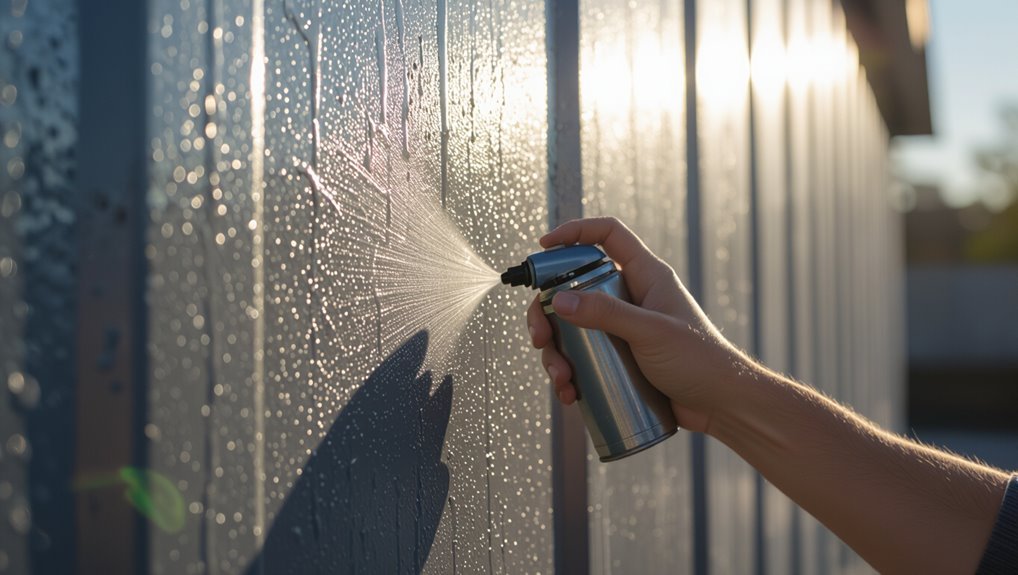
When you catch a fresh run or sag while the paint’s still wet, putting the piece in bright sun for a short, controlled time can help the solvent flash off faster so the film firms up and the gravity-driven drip stops before it grows.
You still need to watch closely so the sun doesn’t overheat the surface and cause curling or blistering.
Use sun exposure benefits with temperature management, humidity considerations and surface preparation tips to aid drying time optimization, mitigate paint adhesion effects, preserve finish quality impacts, follow outdoor drying techniques, and apply UV protection measures considering environmental factors.
UV Effects: Color Shifts and Fading
You’ll notice some pigments change tone when exposed to strong UV light, a process called UV-induced color shift.
Over time, sunlight can also break down binders and cause overall fading, especially with lighter or organic-based colors.
Protecting fresh paint from prolonged sun will help preserve the hue and vibrancy.
UV-Induced Color Shift
Because sunlight packs ultraviolet energy that breaks down pigments, spray-painted surfaces can shift hue or lose vibrancy over time. You’ll notice this most quickly with bright or dark colors.
You should weigh color stability and UV protection to limit pigment degradation and extend coating lifespan for outdoor longevity.
Consider:
- Clear UV topcoat
- Pigment choice
- Layer thickness
- Recoat schedule
Sunlight Fading Risks
How quickly will sunlight dull your spray paint? You’ll notice color shifts under harsh outdoor conditions; UV protection matters for color preservation and paint longevity.
Use protective coatings and surface shielding to limit degradation.
For fading prevention, apply UV-resistant clear coats, keep pieces in shade alternatives during curing, and plan maintenance to restore vibrancy if exposure exceeds expected protection.
Rapid Surface Heating and Adhesion Loss
If the sun heats your spray-painted surface too quickly, the top layer can skin over while the underlying paint is still wet, which weakens adhesion and leads to cracking or peeling as the layers cure unevenly.
You’ll want to monitor surface temperature to protect adhesion integrity and paint durability.
- Rapid curing increases performance variations.
- Environmental effects accelerate failure.
- Heat resistance limits matter.
- Adjust drying techniques.
Best Spray Paints for Sunny Outdoor Use
When you’re choosing spray paint for sunny outdoor projects, pick formulations built for UV resistance, fast-but-even cure, and flexible finish so heat and sun won’t cause premature cracking or fading.
Match paint to weather conditions, plan surface preparation to guarantee paint adhesion, consider color selection and application techniques, use drying equipment and protection methods, schedule project timing, and follow maintenance tips to preserve finish durability.
Enamel/Lacquer vs. Acrylic: When to Choose
Although both enamel/lacquer and acrylic sprays can handle outdoor sun, you’ll pick one over the other based on durability needs, surface type, and finish preferences:
- Enamel advantages include finish durability and color retention.
- Lacquer disadvantages: sensitivity to humidity and tricky application techniques.
- Acrylic versatility suits fast jobs and varied drying conditions.
- Prioritize surface preparation to guarantee adhesion and long-term results.
How Surface Material Affects Sun-Drying Spray Paint
Because different materials absorb heat and solvents unevenly, the substrate you’re spraying changes how paint behaves in direct sun.
You’ll notice heat absorption and reflective surfaces alter drying speed; rough surface texture can boost mechanical grip while smooth ones need proper material compatibility.
Choose paint formulation for adhesion strength, and account for environmental factors like humidity and wind to prevent failures and guarantee even cure.
How Layer Thickness Changes Sun-Drying Risk
If you spray thin coats in the sun, the solvent will evaporate quickly and dry the surface evenly. However, thicker layers trap solvent and increase bubbling or runs.
You’ll notice fast skin formation on the outside of a thick coat while the interior stays soft and cures slowly, raising the risk of wrinkling or solvent blisters.
Adjust your layer thickness to control evaporation rate and promote even curing.
Thin vs Thick Coats
One thin coat dries faster in direct sun but can bake unevenly. You should adjust spray techniques and monitor coat thickness to avoid runs or blistering.
Consider:
- Thin layers reduce sagging risk.
- Thick layers trap heat and cure inconsistently.
- Multiple thin passes build depth safely.
- Allow tack time between coats to prevent solvent issues and surface defects.
Solvent Evaporation Rate
When sunlight speeds solvent loss, thicker spray layers trap solvents longer and raise the risk of surface defects you’ll only see after the paint feels dry.
You’ll need to match solvent types to conditions: fast solvents may evaporate from the surface while deeper solvents linger.
Understanding evaporation mechanisms helps you choose coat thickness and drying environment to avoid wrinkling, blisters, or solvent entrapment.
Curing And Skin Formation
Although sunlight speeds the surface drying of spray paint, it can also cause a hard “skin” to form while solvents remain trapped underneath.
So thicker layers are far more likely to develop blisters, wrinkling, or solvent bubbles as the remaining solvents try to escape.
You’ll manage sun exposure effects and rapid drying concerns by monitoring layer thickness and curing process nuances:
- Thin coats improve spray paint adhesion.
- Thick coats trap solvents.
- Shade reduces skin formation.
- Flash times aid uniform cure.
Solvent Evaporation in Sunlight: Why It Matters
Because sunlight speeds solvent evaporation, you’ll see spray paint skin, cracking, or uneven finish if you dry it in direct sun; solvents leave too fast for pigments and binders to level properly.
You should manage solvent dynamics and evaporation rates, considering sunlight impact and UV exposure.
Adjust drying techniques for temperature effects, respect paint chemistry and surface interaction, and plan for outdoor challenges to preserve finish integrity.
How to Test a Small Area Before Full Sun Drying
Pick an inconspicuous spot for a test patch so you can judge how the paint reacts without risking the whole piece.
After the patch dries in the sun, check for tackiness, color shift, blistering, or uneven gloss.
Use those results to decide whether to proceed with full sun drying or adjust timing, coat thickness, or shade.
Test Patch Placement
Before you commit the whole piece to sun drying, try a small test patch in a discreet spot to see how the paint reacts to direct sunlight, heat, and the substrate.
Use these test patch techniques and choose ideal placement near edges and hidden areas.
- Clean surface
- Small mark
- Note timing
- Shade comparison
Evaluate Drying Results
When your test patch feels dry to the touch, check it for tackiness, color shifts, and surface texture by gently pressing with a clean finger, then give it the full curing time you noted and recheck for softness or stickiness; if it’s hard, even, and color-stable, the sun’s conditions are acceptable, but if it’s tacky, blistered, or faded you’ll need to alter exposure, lower temperature, or try a different paint.
| Aspect | Observation |
|---|---|
| adhesion | spray paint adhesion test |
| consistency | paint consistency check |
| environment | drying environment, airflow impact |
| durability | color retention, paint durability |
Timing Rules: Ideal Temperatures and Windows
Aim to spray when temperatures sit between about 50°F and 85°F (10°C–29°C), because that window gives solvents enough heat to evaporate steadily without causing runs or trapped solvents.
Use these timing rules:
Use these timing rules: check conditions, match paint and temp, prep surfaces, and adapt application.
- Check humidity levels and environmental factors.
- Match paint types to temperature range.
- Adjust application methods and surface prep.
- Consider sun exposure and drying equipment for best drying techniques.
Positioning Parts to Avoid Uneven Curing
How should you orient parts to prevent one side from curing faster than another? You’ll use positioning strategies and part arrangement to balance light exposure and drying efficiency.
Adjust ideal angles, rotate pieces, and account for uneven surfaces so your spray technique and curing methods spread heat and solvents evenly.
Small spacers and consistent spacing help maintain uniform airflow and finish.
Using Indirect Sun and Shade to Control Drying
Sun and shade let you control drying speed without sacrificing finish quality: place parts in indirect sunlight or dappled shade so they get steady warmth and airflow but not intense UV or heat that can skin or blister the paint.
You’ll use indirect sunlight benefits and shade advantages to manage drying techniques, temperature control, surface protection, humidity effects, paint consistency, drying speed, and outdoor conditions.
- Monitor environmental factors
- Rotate parts regularly
- Shield from direct rays
- Adjust timing based on humidity
When to Use a Drying Tent or Controlled Environment
If outdoor conditions are too windy, dusty, or humid, you’ll want to move your project into a drying tent or controlled environment to prevent contaminants and uneven curing.
Use a tent when you need consistent temperature and airflow that sunlight and shade can’t provide.
For high-quality finishes—like automotive or furniture work—controlled drying often makes the difference between a good result and a professional one.
When Outdoor Conditions Fail
When weather turns unpredictable or humidity climbs, you’ll want to move spray-painted pieces into a drying tent or controlled space to protect finish quality and speed curing.
Consider environmental factors and drying techniques to counter outdoor humidity, temperature fluctuations, wind effects, and UV exposure.
Guarantee surface preparation for paint adhesion.
Steps:
- Seal area
- Control temp
- Filter airflow
- Monitor humidity
For High-Quality Finishes
Because achieving a flawless, dust-free finish often depends on precise conditions, you should use a drying tent or controlled environment for high-quality spray-paint work—especially for multi-coat jobs, metallics, or clear coats that demand consistent temperature, low humidity, and protected airflow. It guarantees ideal curing and a high-quality sheen, reduces contamination, and gives predictable results.
| Benefit | Condition |
|---|---|
| Dust control | Enclosed airflow |
| Temp stability | 65–75°F |
| Humidity | 40–50% |
Techniques to Avoid Runs and Sags in Bright Light
Although bright sunlight helps paint cure faster, it also raises the risk of runs and sags. You’ll need specific techniques to keep your finish smooth.
Use these sunlight effects drying strategies:
- Apply thin, even coats.
- Keep can moving to avoid pooling.
- Hold recommended distance and angle.
- Work in shaded bursts to control heat buildup.
Preventing Dust and Debris When Drying Outdoors
If you’re drying spray-painted pieces outdoors, take steps to keep dust and debris off the surface so your finish stays smooth and blemish-free.
You’ll focus on surface preparation, use covers or tents, and choose drying techniques that minimize exposure.
Consider environmental factors and airflow considerations, timing outdoor drying for low-activity periods.
Plan outdoor drying around weather, airflow, and low-activity times to keep dust and debris off finishes.
Good dust management and debris prevention preserves your spray paint finish.
Managing Wind and Airborne Particles While Sun-Drying
Check the wind direction before you start so you can position your project upwind of nearby sources of dust.
Use barriers or a simple windbreak to block drifting debris without trapping heat against the paint.
If gusts pick up, move the piece to a sheltered spot to avoid airborne particles ruining the finish.
Wind Direction Awareness
When you’re sun-drying painted pieces, paying attention to wind direction is essential because even a light breeze can carry dust, pollen, or nearby spray mist onto wet surfaces and ruin the finish.
Monitor wind patterns and air circulation for outdoor stability. Use paint shielding and consider drying angles, surface preparation, paint layering, drying techniques, environmental factors, and temperature fluctuations.
- Face wind
- Block crosswinds
- Orient panels
- Time sessions
Dust And Debris Control
Because even a light breeze can float grit and pollen onto tacky paint, you’ll need a focused plan for keeping sun-drying surfaces clean. Use dust prevention techniques like covers, timed drying, and tack cloths. Apply debris management strategies: barrier placement, low-wind scheduling, and routine surface inspection.
| Method | Benefit | When to Use |
|---|---|---|
| Cover | Shields | Windy days |
| Tack cloth | Cleans | Before coat |
| Barrier | Deflects | Open areas |
Recoat Windows in Sunlit Conditions: Guidance
Although direct sunlight speeds drying, you shouldn’t recoat window frames in bright sun without adjusting your technique; the heat can cause fast surface skinning that traps solvents, leading to blistering, poor adhesion, and visible lap marks.
Follow these steps to manage sunlight impact and UV protection:
- Time paint application during milder outdoor conditions.
- Use temperature control and drying techniques.
- Prioritize surface preparation for paint adhesion.
- Adapt drying strategies to weather considerations.
Fixing Tacky or Gummy Finishes Caused by Heat
If your spray paint feels tacky from heat, give the piece a cool down period indoors so solvents can slow their evaporation.
You can speed recovery by letting solvents finish off-gassing naturally rather than forcing drying with heat.
If the finish stays gummy, you’ll need to recoat lightly after sanding to restore a smooth surface.
Cool Down Period
When heat leaves spray paint tacky or gummy, give the piece a cool-down period to let solvents finish evaporating and the film firm up.
Use cooling methods and shade alternatives, adjust paint application and timing adjustments, and consider weather considerations plus ventilation strategies.
Try drying aids and temperature regulation after proper surface preparation.
Steps:
- Move to shade
- Increase airflow
- Pause recoats
- Monitor temperature
Slow Solvent Evaporation
Because high temperatures slow solvent evaporation, heat can leave spray paint feeling tacky or gummy even after it seems dry.
You’ll notice slow drying when solvents can’t escape. To fix this, move the piece to a cooler, ventilated spot and let evaporation factors normalize; gentle air flow helps solvents leave without overheating the film.
Don’t force-dry with high heat.
Recoat And Sand
Start by evaluating the tacky area: gently press a fingertip in an inconspicuous spot to confirm it’s still gummy rather than fully cured.
Then follow these steps for recoat technique and sanding tips:
- Assess finish assessment and drying conditions.
- Use surface preparation and compatible sanding grit.
- Time ideal timing for layer bonding and application methods.
- Guarantee paint compatibility and quality control.
Repairing Blistering, Peeling, and Adhesion Failures
If your spray paint is blistering, peeling, or not sticking, you’ll need to remove the failed coating, find the root cause, and restore a sound surface before repainting. Identify adhesion issues, assess paint compatibility, and address weather conditions or temperature effects. Focus on surface preparation, blister repair, peeling prevention, and correct drying techniques.
| Step | Action |
|---|---|
| 1 | Strip failed paint |
| 2 | Clean & sand |
| 3 | Prime compatible |
| 4 | Control drying environment |
Correcting Color Shifts and Uneven Gloss After Sun Exposure
Once you’ve fixed blisters, peeled areas, and adhesion problems, you’ll still need to check for sun-induced color shifts and uneven gloss that can betray a rushed or improper cure.
Use these steps:
- Assess sunlight impact and drying environment considerations.
- Apply surface prep essentials, then spot-sand and clean.
- Use color correction techniques and gloss restoration methods.
- Seal with UV protection strategies and follow paint application tips.
Storing Spray Paint Cans Safely in Sunlight
When you store spray paint, keep cans within the manufacturer’s safe temperature range—usually between 40°F and 120°F—to prevent pressure build-up or freezing.
Don’t leave cans in direct sun for long periods, since prolonged sunlight exposure can overheat and rupture them.
If you need to keep cans outdoors temporarily, put them in a shaded, ventilated spot and check temperatures regularly.
Safe Temperature Range
Because aerosol cans are sensitive to heat, you should keep spray paint within a specific temperature range to avoid pressurization or freezing that can ruin the product and create hazards.
You should avoid temperature extremes to preserve pigment and drying efficiency. Store cans where you can control climate.
Recommended limits:
- Minimum: 40°F (4°C)
- Ideal: 65–75°F (18–24°C)
- Maximum: 120°F (49°C)
Sunlight Exposure Limits
If you plan to store spray paint where sunlight reaches it, keep exposure brief and indirect to prevent heat buildup and UV damage; direct sun can raise can temperature quickly and degrade propellants and pigments. You should monitor sunlight intensity, rotate cans to avoid hotspots, and use shaded drying techniques. Store upright, cool, and ventilated to preserve performance and safety.
| Risk | Mitigation |
|---|---|
| Heat buildup | Shade/short exposure |
| UV fade | Covered storage |
| Pressure rise | Cool location |
| Label loss | Airtight cases |
Environmental Impacts of Sun-Drying Spray Paint (VOCs & Runoff)
Although sun-drying spray paint might seem convenient, it accelerates the release of volatile organic compounds (VOCs) and increases the risk of contaminated runoff.
So, you should weigh the environmental trade-offs before choosing this method.
- VOCs impact: spray paint emissions raise health risks.
- Runoff concerns contaminate soil and water.
- Environmental regulations may restrict outdoor use.
- Favor outdoor safety, eco-friendly practices, and sustainable painting.
Cost and Time Trade-Offs: Sun Drying vs. Controlled Drying
You’ll weigh speed against finish quality when choosing sun drying or controlled drying, since faster curing in sun can mean more imperfections.
Using natural heat can cut energy costs, but you may pay with rework or weather-dependent delays.
Also consider labor and scheduling: controlled drying lets you plan shifts and throughput, while sun drying can create unpredictable bottlenecks.
Speed Vs. Quality
When you’re balancing time and budget, sun drying looks tempting because it cuts down wait time and eliminates electricity or equipment costs.
You’ll weigh speed drying against achieving a uniform, durable quality finish.
Consider factors:
- Temperature and UV intensity
- Humidity and dust exposure
- Paint type and coat thickness
- Risk of blistering or uneven curing
Energy Cost Savings
Speed and finish trade-offs also affect your wallet: sun drying cuts or eliminates energy expenses from heaters, fans, or climate-controlled booths, but it can raise indirect costs if runs, dust blemishes, or rework follow uneven curing.
You should weigh energy efficiency against potential scrap and touch-up. A simple cost analysis compares utility savings to likely rework frequency to choose the smarter drying method.
Labor And Scheduling
Although sun drying can shave hours off processing time by eliminating wait in climate booths, it also throws scheduling into flux because you’re tied to weather windows and daylight hours.
You’ll weigh labor efficiency against reliability:
- Faster turnover when sunny
- Unpredictable delays from rain or humidity
- Crew idle time vs. overtime costs
- Reduced scheduling flexibility for tight timelines
Project-Specific Advice: Furniture, Auto Parts, Outdoor Art
If you’re painting furniture, auto parts, or outdoor art, consider how sun, temperature, and surface type will change drying times and final finish. For furniture restoration, auto refinishing, and outdoor decor, choose paint selection wisely and test small areas. Below is a quick guide:
| Item | Sun effect | Tip |
|---|---|---|
| Wood | Speeds | Prime |
| Metal | Heat spots | Even coats |
| Plastic | Warp risk | Shade |
| Composite | Variable | Test |
Checklist: Decide Whether to Dry in Sun Right Now
Wondering whether to dry your freshly painted piece in the sun right now? Assess conditions quickly and choose proper drying techniques:
- Check temperature and humidity — aim for moderate heat, low moisture.
- Inspect direct sun exposure time; avoid intense midday rays.
- Verify paint type and manufacturer’s guidance.
- Prepare shaded fallback to prevent overheating or uneven curing.
Sun-Drying Myths: What’s True and What’s Not
Now that you’ve checked temps, sun exposure, paint type, and a shaded backup, let’s sort fact from fiction about sun-drying. You’ll learn how environmental factors alter drying effects, temperature influence, humidity impact, and outdoor painting outcomes. Watch color stability, finish quality, application techniques, and paint durability to decide if sun exposure helps or harms your project.
| Myth | Reality |
|---|---|
| Faster = better | Can cause skinning |
| Sun fixes color | UV alters pigments |
Pro Tips From Painters for Drying Outdoors
When you’re drying paint outdoors, follow pros who treat weather, surface prep, and timing like parts of one system: choose a cool, low-humidity window, keep direct midday sun off fresh coats, and plan thin, even applications so solvents evaporate without trapping moisture.
Treat weather, prep, and timing as one system: pick cool, low-humidity windows, shade coats, and apply thin, even layers.
Use these painter recommendations for outdoor drying:
- Monitor humidity.
- Elevate and ventilate parts.
- Avoid dusty breezes.
- Stick to recommended temps.
Quick Fixes: What to Do If Paint Dries Too Fast
If your spray paint is drying too fast, don’t panic — you can usually salvage the finish with a few quick fixes.
Adjust spray techniques and application techniques: thin coats, slower passes, and corrected paint consistency.
Move the piece to shaded drying environments, use drying tools like fans carefully, consider weather considerations, improve surface preparation, add paint layering, and refine finishing touches to blend and smooth.
Frequently Asked Questions
Can I Spray Paint Directly on Hot Metal Left in Sunlight?
You shouldn’t spray paint directly on hot metal left in sunlight; high metal temperature hinders spray paint adhesion, causing runs, poor cure, and bubbling. Let the metal cool to recommended temperature, then apply thin, even coats.
Will Sunlight Affect Spray Paint Odor Indoors Later?
Curious about lingering smells? Yes, sunlight effects can boost odor intensity as heat speeds solvent off‑gassing, so if you paint outside then bring items indoors, you’ll notice stronger fumes until the paint fully cures and solvents dissipate.
Does Sun-Drying Change Fire Resistance of Painted Objects?
No, sun exposure doesn’t meaningfully change fire resistance of painted objects; you’ll mainly affect drying speed and surface cure, while fire resistance depends on the paint’s formulation and substrate, not brief UV or heat from sun exposure.
Can Sunlight-Cured Paint Hinder Future Sanding or Refinishing?
Yes — sunlight-cured paint can, paradoxically, both harden faster and become tougher to sand later. You’ll face variable sunlight impact and altered curing efficiency, so you’ll need more aggressive sanding or chemical stripping to refinish.
Is It Safe to Spray Paint Near Plants in Direct Sun?
You shouldn’t spray paint near plants in direct sun; spray paint toxicity can harm foliage and soil, and heat increases overspray drift. Move plants or shield them thoroughly for plant protection, and wear PPE to reduce risks.
Conclusion
You can use sun to speed drying, but don’t be reckless—you’ll risk blistering, cracking, or uneven finish if it’s too hot or humid. Consider paint type, temperature, and humidity before deciding; sometimes shade or indirect sun gives better results. Want a flawless finish or a rushed job? If conditions aren’t right, move your project to a cooler, shaded spot, or control drying with fans and thin coats to protect your work.
