
Why Is Paint Flaking Off the Wall: Causes and Solutions Explained
You’re seeing paint flake off because the coating failed to bond to the surface, often from moisture intrusion, poor prep, incompatible layers, or low‑quality paint. Check for damp spots, peeling near trims, bubbling, or chalky old layers. Test adhesion by scraping and use a moisture meter if you suspect water. Fix by removing loose paint, repairing substrate, priming appropriately, and repainting under proper conditions. Keep going to learn specific tests, fixes, and prevention tips.
How This Guide Solves Paint Flaking Problems
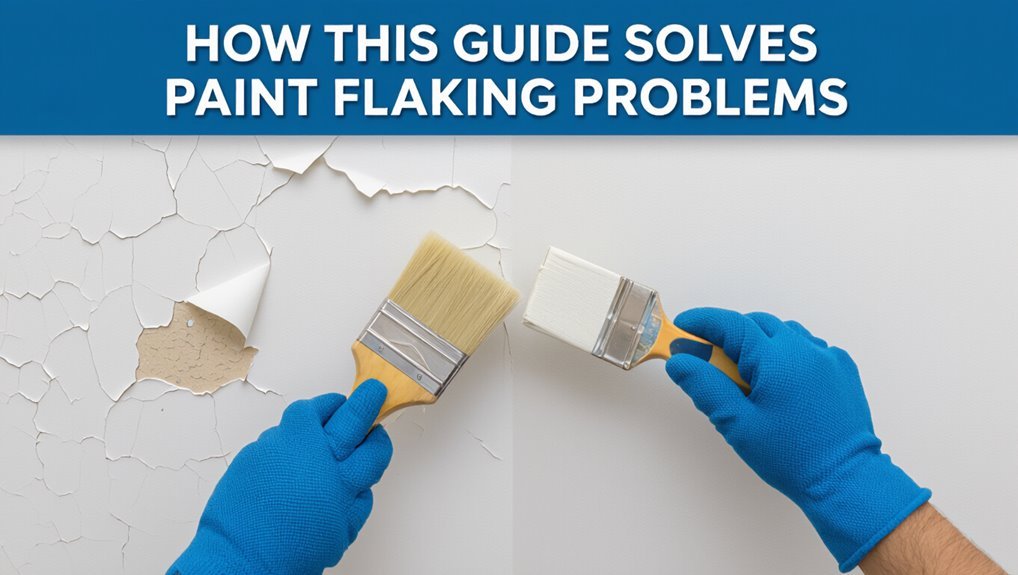
If you’ve been battling peeling or flaking paint, this guide cuts through confusion and gives you clear, practical steps to fix it—starting with how to diagnose the root cause and ending with durable repair techniques.
You’ll learn to identify causes, choose materials, and perform repairs that stop flaking paint.
It also outlines preventive measures so you can avoid repeat problems and maintain a lasting finish.
Quick Answer: Why Paint Is Flaking Off the Wall
Now that you know this guide will help you diagnose and fix peeling paint, here’s a quick answer: paint flakes off because the coating failed to bond to the surface beneath it.
You’ll usually see this from poor surface preparation, incompatible layers, moisture, or low paint durability.
Fixes target proper prep, correct primers, compatible topcoats, and moisture control to restore adhesion.
How to Inspect Flaking Paint Safely and Efficiently
Before you start, put on gloves, a mask, and eye protection so dust and old paint chips don’t get to you.
Gently press and scrape small areas to identify where paint is losing adhesion and note any patterns.
Finally, use a moisture meter or check for leaks and condensation sources that could be causing the flaking.
Wear Proper Protective Gear
Put on the right protective gear before you start inspecting flaking paint so you can stay safe and work efficiently.
Wear gloves, safety goggles, and an N95 or better mask to avoid dust and particles. Use long sleeves and shoe covers.
Follow basic Safety Precautions: ventilate the area, avoid inhalation, and have a waste bag ready.
Inspect tools and Protective Equipment for damage first.
Check Paint Adhesion Points
With your protective gear on and the area prepared, start by identifying where the paint is losing grip: look along edges, corners, around trim, and at joints where different materials meet.
Then perform simple adhesion testing and note paint compatibility issues. Use a utility knife or tape to probe loose areas.
- scrape test
- tape pull
- edge inspection
- substrate check
Test For Moisture Sources
If paint is flaking, you’ll want to check for hidden moisture sources that are often the real culprit: inspect around plumbing, behind trim, at exterior walls, and near windows where leaks or condensation commonly occur.
Use a moisture detection meter, look for staining or soft drywall, and test after drying.
Fix leaks, improve ventilation, and set humidity control to prevent recurrence.
Quick Tests to Identify Moisture, Substrate, or Coating Failure
Before you start repairs, run a few quick checks to pinpoint whether moisture, the substrate, or the coating is failing.
Use a moisture meter or tape test for dampness, tap or probe the surface to check substrate integrity, and perform a simple adhesion pull or tape test on the paint.
These fast tests will tell you where to focus your next steps.
Moisture Presence Checks
Because moisture is a common culprit behind flaking paint, you’ll want to run a few quick checks that distinguish wet substrate issues from coating failures.
Use moisture detection tools and monitor humidity control while testing.
- Feel for dampness and musty odor
- Tape a clear plastic sheet for 24 hours
- Check condensation on windows/trim
- Use a pin-type or infrared moisture meter
Substrate Integrity Tests
A quick set of substrate integrity tests will help you tell whether flaking paint stems from moisture, a failing substrate, or a coating problem. Do simple probes: tap, peel small areas, and sniff for dampness. Use substrate analysis to assess material and check structural integrity for crumbling or hollow spots before deciding repairs.
| Test | Purpose |
|---|---|
| Tap | Locate hollows |
| Peel | Check bond |
| Moisture meter | Detect damp |
| Scrape | Reveal layers |
| Probe | Test strength |
Coating Adhesion Trials
Start by running a few simple adhesion trials to pinpoint whether moisture, the substrate, or the coating itself is at fault.
You’ll perform quick adhesion testing and compare coating types to isolate problems.
Try these checks:
- Cross-hatch cut and tape pull
- Moisture probe or calcium chloride test
- Solvent rub test for coating softness
- Small patch repair to verify substrate stability
What Flaking Patterns Reveal About the Root Cause
When you examine flaking paint closely, the pattern itself often points directly to the problem: broad, blistered patches usually mean moisture trapped beneath the coating, while thin, powdery flakes suggest poor adhesion or an incompatible primer.
Use flaking patterns for quick paint analysis to differentiate causes: edge lifting, sectional peeling, or uniform powdering tell you whether adhesion, surface contamination, or mechanical wear produced the failure.
Moisture-Related Flaking: Common Signs to Watch For
If blistered, broad patches pointed you toward moisture as the likely culprit in the previous section, you’ll want to look for a few specific signs that confirm water damage.
Use moisture indicators during your flaking assessment and note patterns quickly so you can act.
- Peeling paint near baseboards
- Musty odor or mold spots
- Damp or discolored plaster
- Recurrent damp after rain
Condensation: Why Bathroom and Kitchen Paint Peels
When you cook or shower without good airflow, high humidity settles on walls and paint loses adhesion.
If vents are blocked or not used, that condensation keeps soaking the surface and causes peeling over time.
Improving ventilation and reducing moisture will stop the cycle before paint starts flaking.
High Humidity Levels
Because bathrooms and kitchens generate so much moisture, condensation often forms on walls and trim and quickly undermines paint adhesion.
You’ll notice humidity effects accelerating blistering and flaking, especially on cool surfaces. Improve moisture management to protect finishes and choose appropriate paints.
Consider these steps to address high humidity:
- Use moisture-resistant paints
- Wipe visible condensation
- Install dehumidifiers
- Seal gaps and cracks
Poor Ventilation Practices
Poor ventilation lets moisture linger after showers or cooking, so steam condenses on cool walls and slowly breaks down paint adhesion. You should improve ventilation systems and boost air circulation to prevent peeling. Run fans, open windows, and maintain vents to dry surfaces quickly.
| Action | Benefit | Frequency |
|---|---|---|
| Use exhaust fan | Removes humid air | During use |
| Open window | Increases circulation | 10–20 min |
| Service vents | Guarantees efficiency | Annually |
Rising Damp and Salt Stains: Interior Paint Failures Explained
If you notice blistering or powdery white deposits on interior walls, rising damp and the salts it brings are often the culprit.
You’ll see salt stains and efflorescence causing flaking patterns as moisture intrusion undermines paint adhesion and structural integrity.
Focus on surface preparation, efflorescence removal, ventilation solutions, and clear repair techniques.
- Identify damp sources
- Test for salts
- Improve ventilation
- Recoat properly
Roof, Gutter, and Flashing Leaks That Cause Paint Failure
When roof, gutter, or flashing systems fail, water finds its way behind siding and trim and undermines paint adhesion, causing peeling, blistering, and staining you can’t ignore.
You should address roof leaks quickly, schedule seasonal inspections, perform flashing repairs, keep up gutter maintenance, improve drainage solutions and ventilation strategies, reinforce moisture barriers and structural integrity, apply waterproof coatings, and use proven repair techniques to prevent further paint failure.
Exterior Humidity and Climate Effects on Paint Adhesion
If you paint when exterior humidity is high, the film may never fully cure and will be prone to blistering and flaking.
You’ll also see problems when seasonal temperature swings force repeated expansion and contraction of siding and trim.
Understanding how moisture and drastic temperature changes interact will help you pick the right timing and products to prevent failure.
High Humidity Effects
Because moisture in the air interferes with proper film formation, high exterior humidity can prevent paint from adhering and curing correctly on outdoor surfaces.
You should manage humidity control and install moisture barriers to avoid peeling, and you’ll spot blistering, slow drying, and poor adhesion quickly.
- Blistering
- Mildew growth
- Tape lift
- Soft, tacky finish
Seasonal Temperature Swings
Although seasonal temperature swings seem inevitable in many climates, they can seriously undermine exterior paint adhesion by repeatedly expanding and contracting substrates and paint films.
You’ll see cracking and flaking where paint flexibility can’t keep up with temperature extremes. To prevent this, choose coatings rated for your climate, allow proper curing, and maintain seals and flashings so moisture and movement don’t break bonds.
Poor Surface Preparation: Why Paint Won’t Stick to Untreated Walls
When paint peels off soon after you finish a wall, it’s usually not the paint that’s to blame but the surface you painted onto—untreated walls hold dust, oils, and loose particles that prevent proper adhesion.
You need to remove surface contaminants and consider wall textures before painting.
- Clean thoroughly
- Sand uneven textures
- Prime porous areas
- Use proper bonding primer
Old Paint Layers: How Age Causes Delamination and Flaking
If you’re painting over many existing layers, age itself can weaken the bond between coats and lead to delamination and flaking.
You’ll spot old paint cracking, chalking, or lifting as aging effects progress. Surface analysis helps identify paint deterioration and delamination causes.
Historical coatings may hide bonding issues. Use careful restoration techniques—cleaning, consolidating, and removing unstable layers—before recoating to prevent recurrent failure.
Incompatible Coatings: Why Mixing Oil and Latex Paints Fails
Because oil and latex paints cure and adhere differently, putting one over the other often leads to adhesion failure and peeling.
You’ll notice flaking when incompatible coatings trap solvents or can’t bond. Prevent this by testing and preparing surfaces before repainting.
- Check label compatibility
- Sand glossy oil layers
- Use a proper bonding primer
- Avoid applying wet latex over fresh oil
Wrong Primer: How the Primer Affects Paint Durability
Switching from the wrong paint combo to the proper paint type won’t fix flaking if the primer beneath it was inadequate. You should pick primer types for substrate and finish, apply correctly, and perform adhesion testing before topcoat. Proper primer seals, improves bonding, and resists moisture to extend durability.
| Primer Type | Use Case | Benefit |
|---|---|---|
| Latex | Interior drywall | Quick dry |
| Oil | Stained wood | Block stains |
| Shellac | Problem surfaces | Strong seal |
| Bonding | Smooth surfaces | Adhesion boost |
Substrate Problems (Plaster, Drywall, Wood) That Make Paint Peel
When you paint over compromised plaster, drywall, or wood, the coating often peels not because of the paint itself but because the substrate can’t hold it—loose plaster, powdery drywall paper, and weathered or greasy wood all undermine adhesion and create failure points that lead to flaking.
- Check plaster integrity and flaking patterns.
- Test for drywall moisture and perform adhesion testing.
- Inspect for wood rot and paint compatibility issues.
- Prioritize substrate repair to fix structural issues.
Structural Movement and Hairline Cracks That Break Paint Bonds
Loose or failing substrate isn’t the only reason paint flakes—subtle structural movement and hairline cracks can break paint bonds even on sound plaster, drywall, or wood. You’ll notice flaking where shifting undermines structural integrity and weakens paint adhesion. Repair cracks, stabilize framing, and use flexible primers to bridge movement so coatings stay put.
| Issue | Cause | Fix |
|---|---|---|
| Hairline cracks | Settlement | Caulk/mesh |
| Micro-movement | Thermal shifts | Flexible primer |
| Joints | Friction | Stabilize/frame |
| Paint loss | Bond failure | Repair/reprime |
Surface Contamination: Grease, Dust, and Efflorescence Explained
Although invisible to the naked eye at first, surface contaminants like grease, dust, and efflorescence will prevent paint from adhering properly and cause premature flaking.
You must address contamination during surface preparation and confirm paint compatibility to avoid failure.
- Clean grease and oily residues thoroughly
- Remove dust and loose particles
- Treat efflorescence and salt deposits
- Use primers that match substrate and paint system
Temperature and Humidity During Application: Why Timing Matters
If you apply paint outside the recommended temperature or humidity range, it won’t form a proper film and will be far more likely to crack, sag, or flake later.
You should plan application techniques around environmental influences: wait for moderate temperature, low humidity, and stable surfaces.
Avoid painting in damp or hot conditions, dry coats between sessions, and follow manufacturer guidelines to guarantee adhesion and long-term durability.
UV Exposure and Chalking That Lead to Surface Breakdown
When sunlight continually hits painted surfaces, ultraviolet (UV) rays break down binders and pigments so the finish weakens and the surface develops a powdery residue called chalking.
You’ll notice UV damage causing chalking effects and surface erosion, leading to coating breakdown that shortens paint longevity.
Use protective measures and maintenance strategies to combat environmental factors.
- Inspect for powdery residue
- Clean before repainting
- Apply UV-resistant coatings
- Schedule regular touch-ups
Poor Paint Quality or Expired Products as a Root Cause
If you use low-grade paint, it often lacks the binders and pigments that keep coatings flexible and adhesive, so it can flake sooner.
Expired paint or cans that have separated and been poorly mixed won’t form a uniform film, which weakens the finish.
Check manufacture dates and consistency before you paint to avoid these problems.
Low-Grade Paints
Although poor-quality or expired paint might seem like a minor cost-saving choice, it’s actually a common cause of flaking because the binders and pigments break down or never formed a strong film to begin with.
You’ll notice weak adhesion, poor paint quality, and failures after rough paint application. Check labels and test small areas.
- weak adhesion
- uneven coverage
- rapid chalking
- poor durability
Expired Or Separated Paint
Because paint is a chemical product, it can go bad over time, and expired or separated paint won’t form a stable film, leading to flaking and poor performance. You should discard expired paint and remix mildly separated paint only if it re-emulsifies. Store properly, check labels, and test small areas before full application to avoid failures.
| Issue | Sign | Fix |
|---|---|---|
| Expired paint | Sour smell | Replace |
| Paint separation | Layering | Stir/test |
Overcoating Without Proper Prep: Why Fresh Paint Fails Fast
When you slap new paint over old without cleaning, sanding, or priming, it won’t adhere and will peel sooner than you expect.
Slapping new paint over old without prep leads to poor adhesion and quick peeling—prep first.
You’ll face overcoating mistakes and poor paint compatibility that cause bubbling and flaking.
Prep fixes this: remove loose paint, sand glossy surfaces, clean dust and grease, and use a proper primer to guarantee adhesion and longevity.
- Remove loose paint
- Sand glossy areas
- Clean surfaces
- Use primer
When to Call a Pro: Damage That Needs Specialist Assessment
If you spot crumbling drywall, bowed studs, or cracks that keep growing, call a pro—those are signs of structural wall damage that need expert assessment.
Also contact a specialist if paint keeps peeling across large areas or you can’t find the source of recurring moisture, since extensive moisture intrusion can hide serious problems.
Persistent paint failure despite proper prep and priming often means there’s an underlying issue a contractor should diagnose.
Structural Wall Damage
Though small cracks and peeling paint can often be fixed with DIY patches, structural wall damage signals problems you shouldn’t ignore and usually requires a professional assessment.
You should call a pro if visible cracking affects structural integrity, suspect hidden moisture sources, or notice bulging, sagging, or shifting. They’ll diagnose causes and recommend repairs.
- Cracks through studs
- Bulging drywall
- Foundation gaps
- Uneven floors
Extensive Moisture Intrusion
Structural problems often go hand in hand with water issues, so if you’ve already noticed cracking or bulging, watch for signs of widespread moisture intrusion that need a specialist.
You should call a pro when dampness spans multiple rooms, persistent musty odors, or visible mold appear.
Experts assess moisture barriers, trace sources, and implement infiltration prevention measures like repairs, drainage, and vapor control to protect structure and finish.
Persistent Paint Failure
When paint keeps failing despite good surface prep and proper products, it’s time to get a specialist involved. Persistent peeling, widespread blistering, or repeated coating breakdown across multiple cycles usually signals an underlying problem beyond routine maintenance.
You should call a pro when failures defy standard fixes, regardless of paint types or added moisture barriers.
- Structural moisture sources
- Hidden mold or rot
- Incompatible substrates
- Failed flashing or seals
Tools and Materials Checklist for Repairing Flaking Paint
Gathering the right tools and materials before you start will make repairing flaking paint faster and give you a more durable finish.
For a concise tools overview, gather scrapers, sandpaper, putty knives, wire brush, drop cloths, and quality brushes or rollers.
For material selection, pick compatible primer, patching compound, paint, and appropriate cleaners.
Don’t forget gloves, mask, and painter’s tape.
Step‑By‑Step Surface Preparation for Small Interior Patches
Start by clearing loose paint and dust from the damaged area so you’re working on a clean, stable surface.
Inspect for adhesion and moisture; do a quick surface evaluation to decide appropriate patching techniques.
Then follow these steps:
- Apply suitable filler for the hole size
- Smooth and level the patch
- Let it fully dry
- Prime before repainting
Proper Methods for Scraping and Sanding Flaking Paint
Before you paint, prepare the surface properly by removing loose flakes, dirt, and any failing primer so new coatings can bond.
Use the correct scraping technique—hold the blade at a shallow angle and work with steady, overlapping strokes to strip paint without gouging the substrate.
Finish by sanding to smooth edges and feather junctions so the repair blends seamlessly with the surrounding surface.
Prepare Surface Properly
Although it’s tempting to rush, preparing the surface properly is the step that determines whether your new paint will stick or peel again—so you’ll need to remove loose paint, rust, and contaminants down to a sound substrate.
You’ll clean surface contamination, check paint compatibility, and guarantee dryness before priming. Follow these steps:
- Scrape loose material
- Degrease and wash
- Sand to feather edges
- Apply suitable primer
Correct Scraping Technique
Work methodically when you scrape and sand flaking paint so you get a clean, stable surface without damaging the substrate.
You should use firm, even strokes with a sharp scraper at a low angle, collect loose chips, and avoid gouging.
Apply scraping techniques suited to the substrate, control dust, and perform targeted paint removal until only sound adhesion remains, ready for priming.
Sanding For Smoothness
Once you’ve scraped away loose paint, sand the surface with steady, even strokes to blend edges and create a uniform profile that new paint can grip.
You should use proper sanding techniques for effective surface preparation, keep dust low, and check for imperfections before priming.
- Use medium grit first
- Finish with fine grit
- Vacuum and tack cloth
- Inspect under good light
Cleaning and Decontaminating Walls Before Repainting
Before you start repainting, clean and decontaminate the walls so the new paint will adhere properly and last longer.
You’ll perform surface inspection, then use cleaning tools and cleaning solutions for contamination removal.
Follow decontamination methods and proven cleaning techniques for wall cleaning and wall maintenance.
Proper surface preparation improves paint adhesion and prevents future flaking.
Make certain surfaces are fully dry before proceeding.
Choosing the Right Primer for Adhesion and Moisture Control
Because primer bridges old surfaces and new paint, pick one that matches both the substrate and the moisture conditions you’ll face.
You’ll consider primer types, moisture barriers, surface preparation, paint compatibility, application techniques, environmental factors, product recommendations, and long term durability to prevent flaking.
- Use oil or acrylic primers per substrate
- Seal with moisture barriers where needed
- Follow application techniques precisely
- Choose products rated for durability
Best Paint Types for High‑Moisture Rooms and Exteriors
When you’re choosing paint for bathrooms, kitchens, or exterior walls exposed to rain, pick formulations designed to resist moisture, mildew, and peeling; high-quality acrylic latex paints and specially formulated mildew‑resistant enamels are usually the best choices because they combine flexible film formation with breathability and durable binders that shed water without trapping vapor.
Use moisture resistant paint and pair it with the best primer types for adhesion, stain blocking, and added mildew protection.
How to Match New Paint to Existing Layers Safely
Before you paint, test the existing layers to check for lead and adhesion so you know what you’re working with.
Match the sheen and color to avoid patchy results.
Finally, prep the surface properly—clean, sand, and prime—so the new coat bonds and lasts.
Test Existing Paint First
Wondering how to match a new coat to existing layers without damaging them? You’ll test small areas to identify paint types and spot adhesion issues before committing.
Follow quick checks and document results:
- scrape a tiny area to see layers
- use solvent/solubility tests
- perform an adhesion tape pull
- try a small touch-up patch and observe drying
Match Sheen And Color
Although matching new paint to existing layers can seem tricky, you can get a near-perfect match by focusing on two things: sheen and color.
Start with accurate color matching—bring a sample to the store or use a spectrophotometer.
For sheen selection, compare finishes under the room’s light and pick the closest gloss level.
Apply a small test patch before committing.
Prep Surface Properly
Strip loose paint, sand glossy areas, and clean the surface so new layers will adhere and match the old.
You’ll remove surface contaminants, assess wall texture, and feather edges for a seamless finish. Use primer where needed, and test a small patch to confirm sheen and color match.
- Remove dust and grease
- Sand and blend edges
- Apply appropriate primer
- Test a sample patch
Replastering and Skim‑Coat Fixes for Damaged Substrate
If your plaster or drywall has multiple cracks, hollows, or loose patches that keep causing paint to flake, you’ll often need to replaster or apply a skim coat to restore a sound substrate before repainting.
You should assess damage, remove loose material, then use appropriate replastering techniques and skim coat applications to level surfaces.
Sand, prime, and allow full cure before repainting.
Fixing Rising Damp and Efflorescence Before Repainting
Before repainting, you should pinpoint any sources of rising damp—like leaking drains, poor ventilation, or failed damp-proof courses—and stop them at the source.
Remove all salt deposits thoroughly, since residual efflorescence will push new paint off.
Finally, apply appropriate damp-resistant treatments and allow the wall to dry fully before you repaint.
Identify Damp Sources
When you spot powdery white deposits or damp patches at the base of a wall, you’re likely dealing with rising damp or efflorescence, and you’ll need to locate the moisture source before repainting.
Check damp sources and moisture indicators quickly to prevent recurrence:
- Inspect external drainage and gutters
- Look for leaking pipes or internal plumbing
- Check ground levels and missing damp-proof course
- Examine roof and flashing for entry points
Remove Salts Thoroughly
Because salts carried by rising damp will keep leaching into new paint, you’ve got to remove them thoroughly so your repairs last.
Start salt removal by brushing loose powder, then wash surfaces with a mild acidic solution to dissolve deposits.
Rinse well, let dry, and repeat until efflorescence treatment shows no residue.
Only then repaint to prevent recurring flaking.
Apply Damp-Resistant Treatments
If rising damp or efflorescence has caused flaking, treat the underlying moisture first by applying a proven damp-proof course or surface water-repellent and using suitable salt inhibitors so new paint can adhere and last.
You’ll choose damp proofing methods and moisture barriers, repair plaster, then repaint only when fully dry.
- Inject a damp-proof course
- Apply surface water-repellent
- Use salt inhibitors
- Install external drainage
Repairing Leaks and Flashing to Prevent Future Peeling
Since water intrusion is one of the most common causes of peeling paint, you should find and fix leaks and flashing before repainting so new coating won’t suffer the same fate.
Use leak detection to locate sources, perform flashing repair, install moisture barriers and drainage solutions, apply waterproof coatings, and use precise sealing techniques.
Verify repairs before painting to prevent recurrence.
Addressing Condensation: Ventilation and Heating Fixes
When condensation collects on walls and ceilings, it creates a persistent dampness that softens paint and encourages bubbling and flaking; you can stop that cycle by improving ventilation and balancing indoor humidity.
Use ventilation solutions and targeted heating adjustments to keep surfaces dry.
Try practical steps:
- Open vents and use extractor fans routinely
- Increase air circulation with fans
- Lower humidity by airing rooms after showers
- Adjust heating schedules to reduce cold surfaces
When to Use a Dehumidifier or Moisture-Resistant Paint
Although ventilation and heating fixes often solve mild damp, you’ll need a dehumidifier or moisture-resistant paint when persistent humidity or frequent condensation keeps recurring despite those measures.
Use a dehumidifier to reduce indoor moisture quickly — dehumidifier benefits include preventing mold and paint failure.
Apply moisture resistant paint in high-humidity rooms after surfaces are dry and primed to improve durability and adhesion.
Techniques for Blending Repaired Sections Invisibly
Once you’ve controlled moisture and repaired the substrate, you’ll want the patched area to vanish into the surrounding finish. Use precise sanding, feathering edges, matched primer and thin coats of paint.
Apply painting tape sparingly and blend with light cross-hatch strokes.
- Test color on scrap
- Sand progressively finer
- Use compatible primers
- Match sheen and application
These blending techniques and repair strategies make seams invisible.
Curing and Drying Times That Affect Final Adhesion
Because drying and curing happen on different schedules, you need to respect both to guarantee new paint bonds properly.
You’ll follow drying techniques for tack-free paint, then allow full curing processes for maximum hardness and adhesion.
Rushing recoats or exposing fresh work to humidity, cold, or heavy use weakens the finish.
Check manufacturer times and wait fully before stressing the surface.
Preventive Maintenance to Stop Paint From Flaking Again
Letting paint fully dry and cure prevents many failures, but keeping a finish intact over time takes regular care. You should adopt paint maintenance strategies and simple flaking prevention techniques so small issues don’t grow.
Inspect yearly, clean gently, touch up chips, and control moisture to extend life.
- Inspect yearly for loose paint
- Clean surfaces gently
- Touch up chips promptly
- Control humidity and leaks
Long-Term Choices: Breathable Systems vs. Impermeable Coatings
When you choose between breathable masonry systems and impermeable coatings, think about how each handles trapped moisture.
Breathable systems let vapor escape and reduce the risk of paint blistering and flaking, while impermeable paints can seal moisture in and cause long-term damage.
Consider long-term moisture control needs for the building before you pick a finish.
Breathable Masonry Systems
If you want paint that lasts on masonry, choose breathable systems that let moisture escape while still shedding rain; they prevent trapped dampness that causes peeling and flaking.
You’ll prefer breathable materials over impermeable layers; pair them with proper moisture barriers at vulnerable joints.
Benefits include:
- Improved wall drying
- Reduced paint failure
- Compatibility with masonry
- Lower maintenance needs
Risks Of Impermeable Paints
Choose impermeable paints for masonry and you’ll likely trade short-term shine for long-term problems: these coatings trap moisture beneath the surface, driving blistering, peeling, and accelerated substrate decay as trapped water freezes, salts migrate, or timbers rot.
You’ll see faster deterioration where impermeable paint prevents drying, causes moisture buildup, and forces repairs sooner than breathable systems would—so pick coatings with care.
Long-Term Moisture Control
Because long-term performance hinges on how a wall handles moisture, you should weigh breathable systems against impermeable coatings based on the building’s needs, climate, and substrate condition.
Choose breathable finishes where vapor needs escape; use moisture barriers or impermeable coats only with proper ventilation systems.
Consider:
- Climate humidity
- Wall porosity
- Indoor ventilation systems
- Maintenance access and inspection intervals
Cost Comparison: Quick Patch vs. Full Wall Restoration
When you’re weighing a quick patch against a full wall restoration, the decision often comes down to upfront cost versus long-term value.
You’ll do a cost analysis balancing quick patch savings, time investment, and minimal material choices against full restoration expenses.
Consider long term durability, aesthetic considerations, and project scope: quick fixes suit small spots, but full restoration pays off for widespread damage.
Safety Tips for Lead Paint and Older Homes
If your home was built before 1978, assume paint may contain lead and take precautions before you start scraping or sanding: protect yourself, seal work areas, and avoid dry sanding.
Practice lead paint safety in older homes to reduce exposure.
- Wear an N100 respirator and disposable coveralls
- Wet-sand or use HEPA tools
- Contain and bag debris securely
- Test paint before major work
How to Choose a Contractor for Major Paint Failure Repairs
When you’re facing major paint failure, start by verifying a contractor’s licensing and insurance so you’re protected if something goes wrong.
Ask for a detailed repair plan that outlines prep, materials, and methods they’ll use.
Confirm the warranty and timeline in writing so expectations and remedies are clear.
Verify Licensing And Insurance
Start by confirming a contractor’s licensing and insurance before you even request a bid; those credentials show they’re legally allowed to work in your area and that they’ll cover injuries or damage if something goes wrong.
Check local licensing requirements and verify insurance coverage details—ask for certificates and policy limits.
- Validate license number
- Confirm liability limits
- Verify workers’ comp
- Request written proof
Request Detailed Repair Plan
1 clear, itemized repair plan separates a quick patch from a lasting fix, so ask every contractor to put their approach in writing.
Insist they detail substrate prep, moisture mitigation, and specific repair techniques.
Require paint selection rationale—brand, finish, and compatibility with primers—and a step-by-step scope, material list, and cleanup procedure so you can compare bids and avoid shortcuts.
Confirm Warranty And Timeline
Once you’ve got a written repair plan, the next step is to confirm the contractor’s warranty and timeline so you know how long the work and the protection will last.
You should get clear warranty confirmation and a realistic repair timeline, ask about exclusions, and insist on milestones and completion dates.
- Verify written warranty terms
- Confirm start and end dates
- Ask about exclusions
- Request milestone updates
Common DIY Mistakes That Cause Repeat Peeling
Although DIY projects save money, common mistakes can make paint peel again and force you to redo the work.
You skip proper surface preparation, choose wrong product selection, ignore environmental factors, or rush application timing.
Poor DIY techniques and patchy repair methods cause repeat peeling.
You should follow quality assurance steps, read labels, and test small areas to prevent recurring failures.
Seasonal Timing: Best Months to Repaint Exterior Walls
You should plan exterior painting for months when daytime temperatures stay in the paint’s ideal range, usually between about 50–85°F (10–29°C).
Pick low-humidity days so paint can cure properly, and avoid the rainy season to prevent washout and adhesion problems.
Timing your project this way reduces the chance of flaking and extends your paint’s life.
Ideal Temperature Range
When planning an exterior repaint, pick months when daytime temperatures consistently sit between about 50°F and 85°F, because most paints cure properly in that range and won’t blister, crack, or fail to adhere.
You’ll also want perfect humidity and other ideal conditions to guarantee lasting results.
- Paint adheres best in steady warmth
- Avoid sudden temperature drops
- Check overnight lows
- Time for dry, calm days
Low Humidity Days
Because paint needs moisture to evaporate at a steady rate to form a durable film, choosing low-humidity days for exterior repainting helps coats dry evenly and stick longer.
You should plan work when low humidity effects reduce tackiness and blistering risk, so paint drying proceeds uniformly.
That minimizes adhesion failure and flaking, ensuring a tougher, longer-lasting finish on exterior walls.
Avoid Rainy Seasons
If you schedule exterior painting outside the rainy season, coats dry properly and bond tightly instead of softening or washing away. Pick months with predictable dry weather so you’re not racing between showers or dealing with humidity spikes that cause blistering and flaking.
You’ll improve paint preparation, reduce rework, and prolong finish life by timing projects wisely.
- Check long-range forecasts
- Avoid peak rainy months
- Prep on dry days
- Use quick-dry primers
Three Short Case Studies: Bathroom, Exterior, and Plaster Wall
Although each situation has its own quirks, these three short case studies—one in a bathroom, one on an exterior siding, and one on an interior plaster wall—show the common causes and quick fixes you can use to diagnose flaking paint. You’ll check bathroom ventilation, inspect exterior weathering, and test plaster integrity.
| Location | Cause | Quick fix |
|---|---|---|
| Bathroom | Moisture | Ventilate |
| Exterior | UV/rain | Seal |
| Plaster | Bond failure | Reprime |
One‑Visit Checklist to Fix Flaking Paint
Start with a quick walkthrough that lets you diagnose, prep, and repair flaking paint in a single visit: inspect the extent of failure, remove loose paint, address the root cause (moisture, adhesion, or weathering), sand and clean the surface, prime where needed, and apply the appropriate topcoat.
You’ll use efficient repair techniques and a clear checklist:
- Assess damage and cause
- Scrape and sand
- Clean and prime
- Topcoat with suitable paint
Signs Your Repair Worked: How to Monitor Painted Surfaces
Now that you’ve completed the checklist—diagnosed the cause, removed loose paint, primed, and topcoated—keep an eye on the repair to confirm it holds.
Use simple monitoring techniques: inspect weekly for a month, then monthly for six months.
Perform a surface evaluation for cracking, lifting, or discoloration.
Note humidity changes and touch adhesion gently.
Record findings and act promptly if issues reappear.
Further Reading and Troubleshooting Resources
If you want to dive deeper or troubleshoot stubborn problems, this section points you to reliable books, technical guides, manufacturer resources, and online forums that pros and DIYers use.
You’ll find paint maintenance tips and flaking prevention strategies for lasting results.
- Manufacturer technical bulletins
- Practical repair manuals
- Community forums and how‑to videos
- Product-specific troubleshooting guides
Frequently Asked Questions
Can Wallpaper Removal Cause Future Paint Flaking?
Yes — wallpaper removal can cause future paint flaking if you don’t do proper wall preparation and residual adhesive quality is poor; you’ll need to remove adhesive, repair surface, prime correctly so paint will adhere and last.
How Do Pets Affect Paint Adhesion Indoors?
About 70% of homes report pet allergens; you’ll find pet grooming reduces dander and improves air quality, which helps paint adhesion—pets scratch, rub, and deposit oils, so you’ll clean, groom, and use durable, washable paint.
Does Nearby Construction Vibration Lead to Peeling Paint?
Yes — nearby construction vibration effects can cause peeling; you’ll see weakened adhesion, hairline cracks, and eventual flaking. Construction impacts transmit through structures, so inspect, reinforce surfaces, and use flexible, vibration-resistant coatings to prevent recurrence.
Will Priming With DIY Homemade Primer Work?
Short answer: you probably shouldn’t — homemade ingredients can be tempting, but primer effectiveness is often weaker than commercial products, so you’ll risk poor adhesion, more peeling, and extra work later unless you test carefully first.
Can Indoor Plants Increase Wall Moisture Enough to Peel Paint?
Yes — they can. You’ll raise plant humidity and local moisture levels near walls, especially with many or large plants, poor ventilation, or close placement, which can contribute to peeling paint over time if conditions stay damp.
Conclusion
You’ve learned how to spot causes, run quick tests, and choose fixes so paint peeling won’t keep surprising you. Tackle moisture, prep surfaces, and use compatible primers and paints; think like a detective and follow the one‑visit checklist. Watch repaired areas over weeks to confirm adhesion. Keep troubleshooting resources handy so problems get nipped early. With regular checks, your walls will hold up like a well‑stitched coat, protecting and looking good.
