
How Long Does Concrete Floor Paint Take to Dry
You’ll usually get a tack-free surface within a few hours and light foot traffic after about 24–48 hours, but full cure can take 7–30 days depending on product and conditions. Latex and acrylic dry fastest; oil-based and solvent systems take longer. Two-part epoxies may be traffic-ready in 24–48 hours but need several days to reach full chemical strength. Cooler temps, high humidity, thick coats, or damp concrete all slow curing—keep going for tips to speed and check cure.
What This Guide Covers : Concrete Floor Paint Drying Times
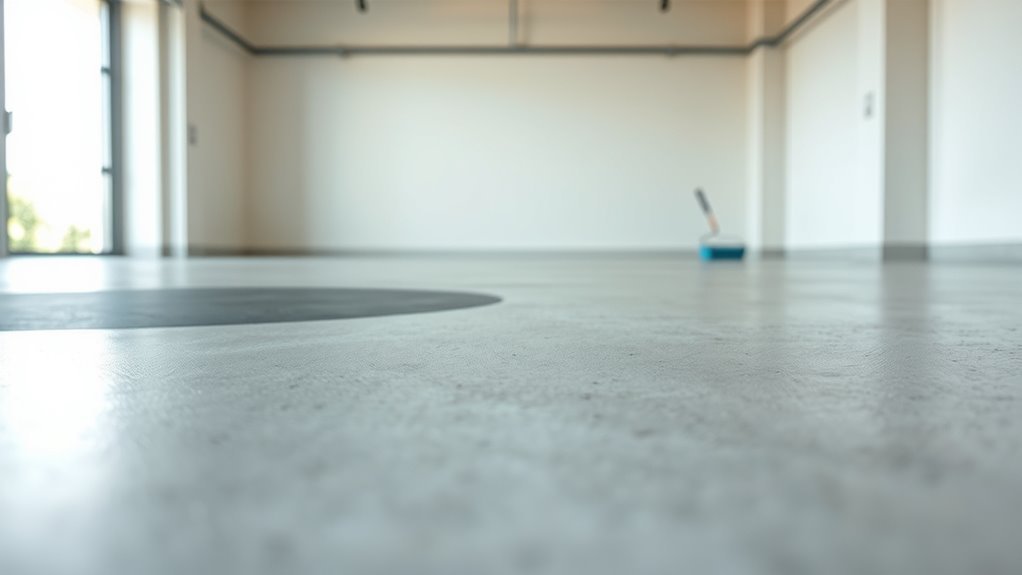
Whether you’re planning a garage refresh or prepping a commercial slab, this guide explains how long different concrete floor paints take to dry, what affects those times, and how to speed up safe curing.
You’ll get clear sections on paint types, typical drying stages, and the roles of temperature, humidity, and concrete porosity. You’ll also learn about environmental concerns like VOCs and runoff, plus safety precautions for ventilation, PPE, and proper disposal.
Practical tips cover surface prep, timing between coats, and accelerating cure without harming adhesion. Use this to plan timelines and avoid costly mistakes.
Quick Answer: Tack-Free, Walk-On, and Full Cure Times
You’ll usually notice a tack-free surface within a few hours, meaning the paint won’t stick to your touch.
Walk-on time is often a bit longer, but full cure — when the coating reaches its maximum hardness and chemical resistance — can take days to weeks depending on the product and conditions.
Keep reading for specific time ranges and tips to judge each stage.
Tack-Free Time
Although exact timings vary by product and conditions, concrete floor paint generally reaches a tack-free state within 1–6 hours. Lets you walk on it lightly in 24–48 hours, and fully cures in 7–30 days.
Tack-free time means the paint’s surface won’t stick to your finger, letting you move objects without transfer or damage. You’ll still avoid heavy traffic until walk-on time.
Temperature, humidity, and ventilation control this interval, so monitor conditions. Good surface preparation speeds drying and helps color selection appear consistent.
Always follow the manufacturer’s instructions and test a small patch before treating the entire floor.
Full Cure Time
If you want a quick summary: concrete floor paint typically goes tack-free in 1–6 hours, can handle light foot traffic after 24–48 hours, and reaches full cure in about 7–30 days depending on product and conditions.
Full cure means the coating achieves maximum hardness, chemical resistance, and adhesion so you can move heavy furniture or vehicles without damage. You’ll follow manufacturer cure charts and control temperature and humidity to avoid soft spots.
Historical techniques for surface prep inform modern practice, and if you use decorative finishes, test adhesion and wear in a small area before full use.
How Paint Type (Latex, Epoxy, Acrylic, Oil) Affects Drying
Different paint chemistries dry on very different schedules, so you’ll want to pick the right type for your timeline.
Latex and acrylic typically become touch-dry within a few hours but can take days to fully cure.
Oil-based paints feel tacky longer and need more time to harden.
Epoxy coatings often become walk-on in 24–48 hours but require several days to reach full chemical cure.
Dry Time By Paint Type
When you pick a paint type for a concrete floor, its chemistry largely determines how fast it dries and how long you should wait before walking or moving furniture. You’ll also consider color options and surface preparation, since both influence heat absorption and adhesion, affecting dry time.
Typical ranges:
- Latex: dries to touch in 1–2 hours; light traffic in 24.
- Acrylic: similar to latex but often faster recoat, 1–2 hours touch, 12–24 hours foot traffic.
- Oil-based: touches in 6–8 hours; allow 24–48 hours for use.
- Epoxy: industrial strength; 24–72 hours for safe traffic.
Curing Versus Touchability
Because drying and curing aren’t the same, you should treat a “dry-to-the-touch” floor differently than one that’s fully cured. Touchability tells you when you can walk across it without leaving marks, while curing measures when the paint reaches full hardness and chemical resistance.
You’ll find latex and acrylic feel touch-dry quickly but need days to cure. Oil-based paints take longer to touch-dry and can take weeks to fully cure.
Epoxy may seem hard fast but can require several days to a week for true chemical resistance.
Proper surface preparation and choosing compatible color options affect adhesion and final durability.
Drying Timeline: Single-Coat Latex
If you apply one coat of latex floor paint, it’ll usually be touch-dry in 1–2 hours and ready for light foot traffic in about 4–6 hours under ideal conditions. You should wait 24–48 hours before moving heavy items.
Color variations and budget considerations affect your choice: cheaper paints may need more coats and longer recoat times, while premium latex dries more uniformly. Keep temperature and humidity in check to hit those windows.
Cheaper paints often need extra coats and longer drying—premium latex dries more evenly; control temperature and humidity.
- Prep: clean and etch for adhesion.
- Thin coats dry faster than thick ones.
- Ventilate to speed evaporation.
- Test a small patch first.
Drying Timeline: Two-Part Epoxy
With two-part epoxy you’ll need to distinguish between surface drying and full curing, since the floor can feel dry long before it reaches full strength.
Expect specific recoat windows and safe walk-on times listed by the manufacturer, and don’t rush them.
Temperature, humidity, and ventilation will noticeably speed up or slow down both drying and curing.
Curing Versus Drying
When you apply a two-part epoxy to a concrete floor, don’t confuse surface dryness with full cure. You’ll see tack-free surfaces within hours, but chemical crosslinking continues for days to weeks. That affects durability, chemical resistance, and how final Color options appear under traffic. Protect the surface until full cure; premature use risks blemishes and weak bonds.
Also clean tools promptly—proper Tool maintenance prevents wasted mixed epoxy and ensures next use goes smoothly.
- Surface dry: hours
- Light foot traffic: 24–48 hours
- Vehicle load: 3–7 days
- Full cure: 7–14+ days
Recoat And Walk Times
Because epoxy keeps crosslinking beneath the surface, you’ll need to plan recoat and walk-on windows carefully to avoid trapping solvents or causing adhesion problems. You should wait the manufacturer’s minimum recoat time—often 6–12 hours at 70°F—so the first coat is tacky but not fully cured.
For light foot traffic expect 24 hours; full chemical and vehicle resistance can take 7 days. Proper surface preparation ensures each layer bonds and prevents peel.
If you change color options between coats, test adhesion first. Always follow product data sheets for exact intervals and don appropriate ventilation and safety gear.
Environmental Impact Factors
Although two-part epoxy cures through a chemical reaction rather than simple solvent evaporation, environmental conditions like temperature, humidity, and ventilation still change how fast that reaction proceeds and how long the floor stays tacky or sensitive to traffic.
You’ll want to monitor site conditions because colder temps slow cure, high humidity can alter finish and adhesion, and poor ventilation traps solvent odors. Consider environmental concerns when choosing products and processes, and weigh eco friendly coatings if emissions matter.
Practical steps you can take:
- Control temperature with heaters or scheduling.
- Use dehumidifiers or ventilators.
- Test small areas before full application.
- Follow manufacturer cure charts.
Typical Tack-Free, Walk-On, and Full Cure Times by Paint Type
If you’re wondering how long you’ll wait before walking on or fully using a painted concrete floor, drying times vary widely by paint type and environmental conditions.
Water-based acrylics usually become tack-free in 1–2 hours, are walk-on in 4–6 hours, and fully cure in 5–7 days. They suit varied color choices and many decorative finishes.
Epoxy coatings tack-free in 6–12 hours, allow light foot traffic in 24 hours, and reach full cure in 7 days to a week (sometimes longer for thicker coats).
Polyurethane and solvent-based paints often need 24–48 hours to be walkable and up to 14 days to cure.
How Temperature Affects Concrete Floor Paint Drying
When temperatures rise, paint solvents and water evaporate faster and chemical reactions speed up, so your concrete floor will dry and cure much quicker; you’ll still need to manage timing based on paint type and conditions.
Choose Color selection wisely—darker hues absorb heat and can speed surface set.
Prioritize Surface preparation so the coating bonds uniformly regardless of temperature.
Monitor manufacturer temperature ranges to avoid film defects.
- Higher temps shorten tack-free time but may reduce working time.
- Low temps slow cure and can trap solvents.
- Extreme heat risks blistering or poor leveling.
- Aim for consistent mid-range temperatures.
How Humidity and Ventilation Affect Concrete Floor Paint Drying
Temperature isn’t the only environmental factor that shapes how your concrete floor paint dries—humidity and ventilation play a big role too. High humidity slows evaporation, extending tack time and increasing dust pickup; low humidity speeds curing but can cause surface skinning. Good ventilation moves moist air away, equalizing drying and preserving paint sheen and true color options.
| Condition | Effect on Drying |
|---|---|
| High humidity | Slower evaporation, tacky finish |
| Low humidity | Faster cure, risk of skinning |
| Poor ventilation | Uneven drying, gloss loss |
| Good ventilation | Even cure, preserved sheen and color options |
Why Concrete Porosity and Moisture Slow Drying
Because concrete acts like a sponge, its porosity lets moisture move up into the paint layer and slow solvent evaporation, so you’ll notice longer tack times and uneven curing on damp or porous slabs. You need good surface preparation and often concrete sealing to control moisture movement; otherwise paint stays soft, blisters, or peels.
Concrete’s porosity draws moisture into paint, slowing cure and causing tacky, blistered, or peeling finishes without proper sealing.
Pores and capillaries trap water that competes with solvent-driven drying, and salts can further interfere with film formation.
- Pore absorption reduces paint adhesion and extends cure time.
- Trapped moisture causes blushing and soft spots.
- Capillary rise feeds moisture into new coatings.
- Sealing limits vapor transmission and stabilizes drying.
How to Test Concrete Moisture Before Painting
Before you paint, test the concrete’s moisture so you don’t trap dampness under the coating and invite adhesion problems. Start with simple tape and plastic: tape a 2×2 ft plastic sheet to the floor, seal edges, wait 24–48 hours. Visible condensation means high moisture.
Use a moisture meter for spot checks—pin meters read deeper, non‑penetrating meters measure surface dampness. For full assurance, run a calcium chloride test per manufacturer directions.
Record results and consider them in surface preparation. Only paint when readings meet product specs; that ensures your color options perform well and coatings adhere without blistering.
How Coat Thickness and Number of Coats Change Cure Times
How thick you apply each coat directly affects drying and final cure — thicker layers take longer to release solvents and harden.
Plan multiple coats with enough wait time between them so the lower layers aren’t trapped wet, which can extend overall cure time.
Pay attention to how each layer interacts: tacky undercoats, overlap of drying windows, and manufacturer recommendations will tell you when it’s safe to recoat.
Coat Thickness Effects
When you apply a thicker coat of concrete floor paint, it takes longer to dry and cure because solvents and water need more time to evaporate and the film needs to harden throughout. You’ll notice slower tack-free times and a longer wait before foot traffic or overlay.
Thicker layers can also affect appearance—color options and texture finishes may look different until fully cured. Control thickness to balance durability and drying.
- Thicker film increases solvent retention and cure time.
- High-build paints cure slower than thin coats.
- Environmental heat and airflow alter thickness effects.
- Follow manufacturer wet-film recommendations.
Multiple Coat Scheduling
Thicker single coats already slow drying, but stacking multiple layers compounds that effect and changes scheduling: each additional coat adds wet film that traps solvents and reduces airflow to underlying layers, so you’ll need longer tack-free and recoat intervals than for a single application.
Plan coats by drying window, not just by feel: follow manufacturer recoat times and err on the long side for high-build or low-odor formulas.
If you change color options or texture choices between coats, allow extra cure time to avoid bleed or embossing.
Keep ventilation steady and test a small area to confirm practical recoat timing before full application.
Layer Drying Interactions
Because each additional layer changes how solvents escape and moisture migrates, you’ll see cure times grow nonlinearly as coats stack up. You should apply thinner coats and let them flash to avoid trapping solvents; thick layers slow crosslinking and extend tack time.
Color trends and decorative finishes can tempt you to add layers, but plan cures between coats. Consider these effects:
- Thicker single coats: longer surface and core drying.
- Multiple thin coats: faster overall cure, better adhesion.
- High-solids formulas: reduced recoat window, more heat sensitivity.
- Textured decorative finishes: pockets retain moisture, lengthening full cure.
When Can You Walk on Painted Concrete?
If you’ve just painted your concrete floor, you can usually walk on it after about 6 to 24 hours, depending on the paint type, ventilation, and temperature.
You’ll want to test a small area with clean socks or soft-soled shoes; if no paint transfers and the finish sheen feels dry, light foot traffic is safe. Avoid dragging heavy items or wearing cleated shoes.
Faster cure occurs with good airflow and moderate warmth; high humidity slows drying.
Also remember pigment and color options don’t affect tackiness much, but textured additives might—adjust expectations and test before regular use.
When To Move Furniture and Vehicles Back Onto the Floor
Once you’re confident the paint can handle light foot traffic, you’ll need to wait considerably longer before returning furniture or parking vehicles.
You’ll resist heavy weight for at least 48–72 hours for most products; porous concrete or cold conditions can extend curing to a week.
Protect finishes when moving items, use felt pads under legs, and avoid sharp-edged wheels.
- Check manufacturer’s vehicle weight guidance.
- Test with a small, nonslip mat before full parking.
- Use soft casters or plywood ramps for heavy pieces.
- Consider Creative color schemes and Eco friendly options when planning replacements.
How Long To Wait Before Applying a Second Coat
When you’re ready to add a second coat, follow the paint maker’s recommended recoat window—usually between 2 and 8 hours for fast-drying acrylics, or 12–24 hours for epoxy and oil-based formulas—so the first layer is tack-free but not fully cured, allowing proper adhesion.
Check the label for maximum overcoat time to avoid sanding. Lightly scuff glossy spots and confirm surface preparation was thorough—clean, dry, and free of dust.
Match your second coat to chosen color options and mix thoroughly for uniform coverage. Work methodically, maintain consistent thickness, and allow the full cure per manufacturer instructions.
How To Check If Concrete Paint Is Fully Cured
To confirm the paint is fully cured, start with a visual surface inspection for uniform color, sheen, and absence of tacky spots.
Then do a light touch and pressure test in an inconspicuous area to check for stickiness or indentations.
For the most reliable result, use a moisture meter to verify the substrate and coating have reached appropriate dryness levels.
Visual Surface Inspection
If you want to confirm the paint has fully cured, do a close visual inspection under good light and at different angles; look for uniform sheen, consistent color, and absence of surface defects. Consider concrete chemistry and color selection—different pigments and binders affect drying appearance.
Check these specifics:
- Even sheen across the floor with no dull or glossy patches.
- Consistent color tone with no streaks, blotches, or dark spots.
- No visible bubbling, cracking, or flaking of the film.
- Clear edge lines at junctures with no lifting or irregular margins.
If all look right, the surface appearance indicates proper cure.
Touch And Pressure Test
Although a visual check tells you a lot, a touch and pressure test gives a practical confirmation that the paint’s cured enough for use. Gently press with your fingertip across several spots, testing areas with different color options and texture finishes to guarantee uniform response.
A cured surface will feel firm, not tacky, and won’t deform under light pressure. Try a firm palm press and a heel press for resilience—paint should spring back without leaving marks.
If any area feels soft, tacky, or shows impressions, wait longer before traffic. Repeat tests after additional drying time until all areas pass.
Moisture Meter Reading
When you suspect surface tests aren’t telling the whole story, use a moisture meter to confirm the concrete paint has fully cured. Place the meter on multiple spots, avoiding seams and edges, and compare readings against the manufacturer’s acceptable moisture range.
Color options or texture finishes won’t affect moisture content, but thicker coats or textured applications can trap moisture longer.
- Calibrate the meter per instructions.
- Test at least 3–5 locations across the floor.
- Record readings and note paint type and layer thickness.
- Repeat after 24–48 hours if readings approach limits.
Trust numbers over feel to guarantee full cure.
Ways To Speed Up Drying: Heaters, Fans, Dehumidifiers, Ventilation
Because concrete holds moisture, you’ll want to actively control the environment to speed up paint drying. Use heaters to raise temperature evenly, fans to boost air movement, and dehumidifiers to pull moisture from the slab.
Position heaters safely and circulate warm air with oscillating fans so coatings cure uniformly—this helps decorative finishes set without blushing. Lower relative humidity with a dehumidifier for faster solvent evaporation, especially after washing or patching.
Open windows and doors for cross-ventilation when outdoor conditions are drier than indoors. Also consider color selection—darker colors absorb heat and can dry a bit faster under controlled warmth.
Safety, VOCs, and Ventilation Limits When Speeding Drying
When you speed up concrete paint drying with heaters and fans, you’re also increasing VOC emissions that can irritate your eyes, throat, and lungs.
You should balance airflow because forced ventilation has limits—too little and VOCs build up, too much and you can stir up dust or cause uneven drying.
Check product labels and local ventilation guidelines so you can speed drying safely.
VOC Emission Risks
If you speed up concrete floor paint drying by raising temperature or using solvents, you’ll likely boost VOC emissions and increase health risks for anyone nearby. You should weigh faster curing against exposure: choose eco friendly options when possible and balance Aesthetic considerations with safety. Limit time spent in the space and use masks rated for organic vapors.
- Identify solvent-based vs low-VOC formulas and pick lower-emission products.
- Read product data sheets for specific VOC levels and recommended PPE.
- Consider water-based alternatives that reduce fumes but may alter finish.
- Monitor symptoms and leave if irritation occurs.
Forced Ventilation Limits
Speeding up paint drying with higher temps or solvents will raise VOCs, so you need to control airflow carefully rather than just blasting the room with fans. You should balance ventilation to dilute fumes without dispersing solvents into neighboring spaces or across HVAC intakes.
Open windows and use fans directed outwards, keeping air exchanges steady; monitor odor and humidity. Wear appropriate PPE and follow local VOC limits on labels.
Consider color choices that may hide flaws so you can avoid extra coats, and maintain tools to prevent contamination.
Proper ventilation timing—ventilate during and after curing—reduces exposure and ensures even drying.
Choosing Primers That Speed Concrete Paint Drying
Because primers control how paint bonds and dries, picking the right one can noticeably cut your concrete paint’s cure time. You should choose a primer formulated for masonry or concrete to improve adhesion, reduce porosity, and speed moisture release.
Consider primers that match your color options needs so fewer topcoat coats are needed, and think about how primer affects final finish sheen for consistent appearance.
- Acrylic masonry primer — fast-drying, breathable.
- Epoxy primer — strong bond, lowers soak-in.
- Latex primer — economical, quick tack-free time.
- Bonding primer — for slick, dense slabs.
How Fast-Curing Additives and Formulas Change Expectations
When you add fast-curing additives or choose specially formulated concrete paints, you’ll shorten tack-free times and shift how soon you can recoat or walk on the surface. You’ll get quicker handling and often faster full cure, but you should test small areas first: additives can alter texture consistency and sometimes increase brittleness.
Fast formulas may resist color fading initially, yet UV exposure and abrasion still matter. Follow manufacturer ratios and avoid over-thinning. Expect different pot life and working time; work in smaller sections.
Proper mixing, substrate prep, and ventilation keep performance reliable while you speed up project timelines.
Seasonal Planning: Winter vs Summer Concrete Painting
Faster-curing additives change how quickly you can move through a paint job, but seasonal conditions still dictate whether those gains matter. In winter you’ll battle low temps and high humidity that slow drying; in summer heat speeds cure but raises flash drying and tack issues.
Faster-curing additives speed jobs, but seasonal temps and humidity still control drying—cold stalls cures; heat risks flash drying.
Use Historical trends to schedule work around typical frost and heat waves. Color selection matters: lighter colors reflect heat, darker absorb it, affecting surface temp and cure.
- Monitor temperature and humidity forecasts daily.
- Use heaters or ventilation to control conditions.
- Test small patches before full application.
- Allow extra cure time in cold.
Estimating Project Timelines for Garage, Basement, and Warehouse Floors
Estimating realistic timelines for garage, basement, and warehouse floor projects hinges on three factors you can control: surface prep, paint type and coat count, and on-site conditions like temperature and ventilation.
You’ll plan a single-car garage in a weekend: degrease and etch day one, primer and first coat day two, second coat and light cure day three.
Basements often need moisture testing and slower cure—allow extra 24–48 hours.
Warehouses demand larger crews, staged sections, and forklift return-to-service times.
Factor in drying between coats, chosen color options, and any decorative flooring patterns to set accurate start-to-finish dates.
Tacky Paint or Bubbles? Troubleshooting Fixes That Work
If your concrete floor paint feels tacky or develops bubbles, don’t panic—you can usually fix it by identifying the cause and taking targeted steps. You’ll check humidity, temperature, and coating compatibility first.
Bubbles often mean trapped solvent or moisture; tackiness means insufficient cure or heavy coats. Consider sanding and spot-priming before recoating.
Bubbles usually signal trapped solvent or moisture; tackiness indicates incomplete curing or overly thick coats—sand and spot-prime before recoating.
- Remove bubbles: scrape, sand, and clean thoroughly.
- Fix tacky areas: allow longer dry time or thin coats.
- Prevent recurrence: control ventilation and follow manufacturer cure times.
- Match appearance: choose appropriate color options and texture finishes for seamless repair.
Practical Checklist To Plan and Time Your Concrete Floor Painting Project
While you’ll want to account for surface prep, weather, and product cure times, a clear checklist keeps the job on schedule and prevents costly mistakes.
Start by testing moisture and cleaning thoroughly, noting cure windows on your calendar. Gather paint, primer, rollers, and PPE.
Plan days for etching, priming, painting, and recoat, allowing full dry times between steps. Monitor forecast; avoid rain or high humidity.
Label zones for furniture placement and mark off curing areas. Schedule light use delay and final walkthrough.
Keep gardening tips in mind if outdoor runoff could affect paint curing. Review checklist before starting.
Frequently Asked Questions
Can I Paint Over Existing Floor Paint Without Stripping It First?
Yes — you can paint over existing floor paint if it’s clean, adhered, and scuffed; you’ll expand color options and improve finish durability, but you’ll prep the surface, use a compatible primer, and choose proper paint for longevity.
Will Floor Paint Adhere to Sealed or Epoxy-Coated Concrete?
Don’t worry about paint peeling like wallpaper; you can get floor paint to stick to sealed or epoxy-coated concrete if you do thorough surface preparation and confirm paint compatibility, sanding or etching where needed to promote proper adhesion.
How Long Before I Can Apply Floor Markings or Striping?
You can usually apply floor markings or striping after 24–48 hours; wait for full tack-free cure, guarantee surface preparation was thorough, and choose products for color durability so lines won’t chip or fade prematurely.
Can Pets Safely Return to Painted Floors Before Full Cure?
Better safe than sorry.” You shouldn’t let pets on painted floors until tack-free drying and substantial floor curing have occurred; pet safety matters, so wait full cure or use barriers and ventilation to avoid fumes and paw marks.
Does Radiant Floor Heating Affect Paint Adhesion or Drying?
Yes — radiant heating can affect adhesion and drying; you’ll want to monitor radiant heating and paint temperature, avoid high heat during curing, and follow manufacturer guidelines so paint bonds properly without blistering or accelerated skinning.
Conclusion
Think of your concrete floor like a sleeping dragon — wake it gently. You’ll need patience: tack-free in hours, walk-on in a day or two, full cure in up to a month depending on paint type and conditions. Plan around temperature and humidity, allow extra time in winter, and follow manufacturer instructions for coats and ventilation. Troubleshoot tackiness or bubbles promptly to avoid rework. With sensible timing, your floor’ll look and perform great.
