
How to Repair Bubbling Paint on Walls Quickly and Easily
You can stop bubbling paint fast by scraping away loose flakes, drying the wall, and fixing any moisture source like a leak or high humidity. Sand edges smooth, fill holes with spackle, sand flush, then prime the patch with a suitable primer. Match paint sheen and feather new paint into the surrounding area with a brush or roller, letting each coat dry fully. Follow these quick steps now, and keep going to learn simple tips for lasting repairs.
Quick Steps to Fix Bubbling Paint Fast
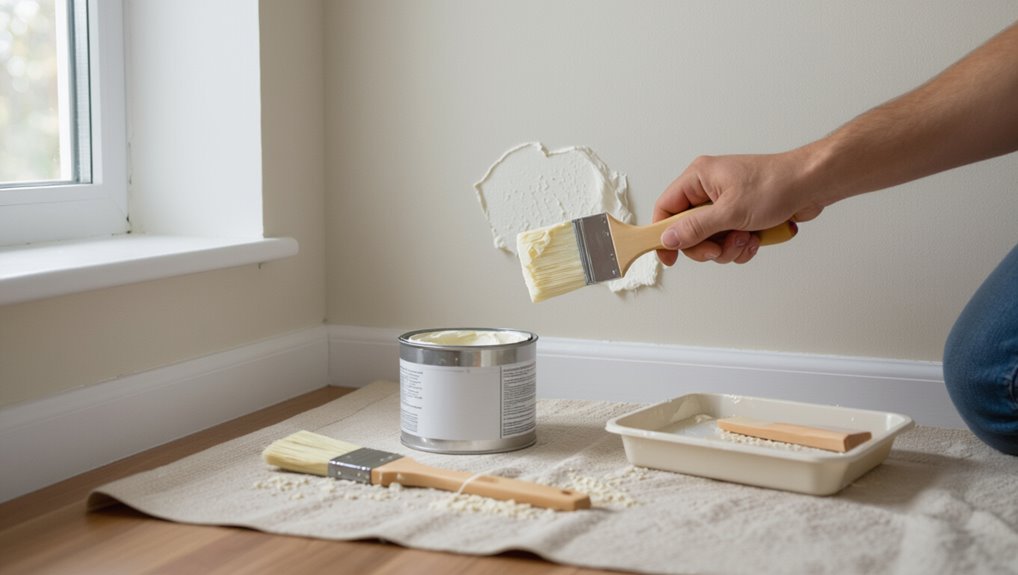
If you want to stop bubbling paint quickly, start by scraping loose film and sanding the area smooth so new paint can adhere.
Next, clean debris, dry thoroughly, and apply a suitable primer.
Patch holes with spackle, sand again, then repaint using thin coats.
These repair techniques prevent re-bubbling paint and restore a flat, durable finish efficiently.
Real-World Quick Repair Checklist You Can Follow Today
You’ve got the basics down—now use this compact checklist to tackle bubbling paint step by step.
Inspect area, mark affected spots, gather scraper, sandpaper, patching compound, primer, and matching paint.
Inspect the spot, mark it, and gather scraper, sandpaper, patching compound, primer, and matching paint.
Ventilate and protect floors.
Remove bubbles, sand smooth, apply compound, sand again, prime, then paint.
Clean tools and monitor for recurrence.
These repair techniques save time and prevent bigger jobs.
How to Tell Blisters vs Peeling vs Efflorescence
How can you tell whether a wall problem is a blister, peeling, or efflorescence? Inspect texture, attachment, and residue. Use blister identification by pressing: blisters are raised, paint intact. For peeling distinction, paint lifts and flakes. Efflorescence leaves powdery white salts.
| Feature | Look |
|---|---|
| Surface | Raised vs flake |
| Residue | None vs powder |
What Causes Paint to Bubble (Interior Causes)
If you’re seeing bubbles on interior walls, two common culprits are trapped moisture behind the paint and poor surface preparation.
Moisture from leaks, high humidity, or wet drywall forces paint away from the substrate, creating blisters.
And if the surface wasn’t cleaned, sanded, or primed properly, the paint won’t adhere and can lift or bubble sooner.
Moisture Behind Paint
Several common sources can trap moisture behind interior paint and cause it to bubble.
You’ll find moisture sources like roof leaks, plumbing drips, condensation from poor ventilation, and damp masonry. These create steam or liquid that disrupts paint interactions with the substrate, lifting film and breaking adhesion.
Address leaks, improve ventilation, and dry assemblies before repainting to prevent recurring bubbling.
Poor Surface Preparation
When you skip cleaning, sanding, or priming before painting, the new coat won’t bond properly and can bubble as it cures.
You’ll notice bubbles where surface contaminants—dust, grease, or old loose paint—prevent contact.
Fix by removing loose material, deglossing or sanding, and using a suitable primer to eliminate adhesion issues.
Proper prep prevents failure and saves you time.
What Causes Paint to Bubble (Exterior Causes)
Outdoor paint bubbles for a few common reasons you can spot and often prevent: moisture intrusion through siding or stucco, trapped damp beneath a fresh coat, extreme heat that causes paint to dry too fast and lose adhesion, and poorly prepared or incompatible surfaces that won’t let the film stick.
You should watch exterior moisture, surface temperature, sunlight exposure, air circulation and humidity levels, and choose proper paint quality and formulation.
How Moisture Causes Bubbling Paint
Moisture from leaks, rising damp, or high indoor humidity can get behind paint and start the bubbling process.
When water soaks the wall it weakens the paint film and adhesive bond, causing the coating to blister and peel.
You can stop recurring problems by locating moisture sources, fixing them, and improving ventilation or waterproofing before repainting.
Sources Of Moisture
Because water finds its way into walls through many routes, bubbling paint often signals an underlying moisture source you need to locate and fix.
Check common moisture sources: roof or flashing leaks, plumbing drips, rising damp from foundations, and condensation from high humidity levels.
Inspect attics, basements, around windows, and behind appliances; fix leaks and improve ventilation to stop recurring bubbling.
Paint Film Failure
When water gets trapped behind your paint, it breaks the bond between the coating and the wall so the film lifts and forms bubbles you can see and feel.
You’ll notice blistering, flaking, and reduced paint adhesion as moisture expands. Proper surface preparation prevents weak spots, but once film failure occurs you must remove loose paint, dry the substrate, and repair before repainting.
Preventing Future Dampness
If water keeps reaching your walls, paint will keep blistering and peeling no matter how well you patch it; preventing future dampness means stopping the moisture at its source.
You should inspect leaks, improve ventilation, and install proper flashing.
Use damp proofing techniques like membrane barriers and choose water resistant materials for trims and coatings so repairs last and paint stays adhered.
How Poor Prep and Adhesion Cause Bubbles
Though you might rush into painting to save time, skipping proper surface prep and using incompatible products almost guarantees bubbling.
You’ll face adhesion issues when dirt, grease, or damp stay on walls or when primers and paints clash.
Use correct preparation techniques: clean, sand, repair and prime. That guarantees paint bonds, prevents lifting, and keeps bubbles from forming during drying.
When Bubbling Paint Signals Structural Problems
Skipping prep not only causes cosmetic bubbling but can also hide deeper issues you’ll want to catch early.
If bubbles appear with staining, cracking, or soft drywall, inspect for moisture, mold, or rot that threaten structural integrity.
Don’t ignore spreading bubbles; they may indicate hidden damage like leaks or framing problems that need a professional assessment before you repaint.
Gather Tools and Materials for a Quick Repair
Before you start scraping and patching, gather the right tools and materials so the job goes quickly and cleanly: a putty knife or paint scraper, sandpaper (80–120 and 220 grit), a utility knife, a stiff brush, spackling compound or joint compound, primer (stain-blocking or mold-resistant where needed), matching paint, painter’s tape, drop cloths, and a small container for mixing.
You’ll assemble tool essentials for efficient repair techniques.
Safety Gear and Ventilation Tips Before You Start
Before you start, put on personal protective equipment like gloves, a respirator or mask, and safety goggles to protect your skin, eyes, and lungs.
Make sure the room is well ventilated by opening windows and running a fan to push fumes outside.
Handle cleaners, strippers, and solvents carefully—read labels, keep containers closed when not in use, and store chemicals away from heat and children.
Personal Protective Equipment
You’ll want at least a basic set of personal protective equipment before you tackle bubbling paint.
Wear protective gloves or chemical gloves, safety goggles, and a respirator mask or dust mask for particles and fumes.
Put on a work apron and knee pads for comfort, and use ear protection if you’ll run loud tools.
Inspect gear for damage before starting.
Ensure Proper Room Ventilation
Since solvents and dust can build up quickly, make sure you create steady airflow by opening windows and doors, running a box fan or exhaust fan toward an exterior opening, and keeping interior doors closed to channel fresh air through the work area.
You’ll monitor air circulation and use a dehumidifier or heater for humidity control, preventing paint failure and speeding drying times.
Safe Chemical Handling Procedures
1 simple rule will keep most accidents away: treat every paint, stripper, and solvent as hazardous until you’ve checked its label and prepared accordingly.
Wear gloves, goggles, and a respirator when labels require, and open windows or use fans for ventilation.
Store chemicals in labeled, sealed containers with proper chemical storage.
Keep a spill response kit nearby, and know emergency contacts before you begin.
How to Evaluate Bubble Size and Severity
How big and how deep are the bubbles?
- Inspect visually for size and clustering; use bubble analysis to note patterns.
- Press gently—if paint springs back, it’s superficial; if it cracks, it’s deeper.
- Map affected area and estimate percent coverage for damage assessment.
- Prioritize large, spreading bubbles for repair first; small isolated ones can wait.
How to Test for Moisture Behind Bubbling Paint
To check for moisture behind bubbling paint, start by using a moisture meter on the affected area to get a quick, reliable reading.
If you don’t have a meter, try the hairdryer test: warm the blistered spot for a minute and see if moisture appears or the bubble softens.
Those steps help you decide whether you’re dealing with trapped moisture or just a paint adhesion issue.
Check With A Moisture Meter
If you’re seeing bubbling or peeling paint, check the area with a moisture meter before you scrape or repaint; it quickly tells you whether trapped dampness is causing the problem or if the issue is purely cosmetic.
Use moisture testing for accurate bubble assessment and follow these steps:
- Calibrate meter.
- Scan affected spot.
- Compare readings to dry areas.
- Note high-moisture zones.
Use The Hairdryer Test
A hairdryer test gives you a quick, inexpensive way to check for trapped moisture behind bubbling paint: heat the area gently and watch how the blister responds—if the bubble softens and the paint releases moisture, you’ve likely got dampness; if it stays hard and dry, the issue is probably surface-level.
Use the hairdryer technique as part of your bubble diagnostics, keeping heat low and moving.
How to Check Adhesion With a Tape Test
Want to know whether that bubbling paint is just cosmetic or a sign of poor adhesion? Use simple tape adhesion test methods to check.
Want to know if bubbling paint is cosmetic or poor adhesion? Try a simple tape test.
- Clean area and press a strong tape strip firmly.
- Wait 30 seconds, then pull back quickly at 45°.
- Inspect tape for paint flakes.
- Repeat multiple spots to confirm loosening; if paint lifts, it’s poor adhesion.
Spot Repair vs Repainting the Whole Wall
When bubbling appears, decide whether you can fix just the spots or need to repaint the whole wall based on how widespread the damage and adhesion issues are.
If bubbling is isolated and adhesion tests pass nearby, choose spot repair benefits: faster, cheaper, less disruption.
If bubbling is extensive or adhesion fails across the surface, repainting drawbacks are outweighed by the need for a uniform, lasting finish.
How to Stop Active Moisture Before Repairing
Before you patch or paint, stop the moisture that’s causing the bubbling so your repairs actually stick and last.
Before repairing, halt the moisture causing bubbling so your patch and paint will adhere and last
You need immediate moisture control and ongoing humidity management to prevent recurrence. Act quickly: identify leak source, shut water or seal exterior, improve ventilation, and protect repaired area while the cause is fixed.
- Find leak source
- Seal or stop water
- Boost ventilation
- Use dehumidifier
How to Dry a Damp Wall Quickly and Safely
First, identify where the moisture is coming from so you fix the source rather than just the symptom.
Then speed drying by increasing air circulation with fans or open windows and, if needed, placing desiccant packs near the damp area to absorb residual moisture.
Don’t rush repairs until the wall is fully dry to avoid new bubbling.
Identify Moisture Source
If your paint is bubbling, you need to find where the moisture’s coming from before you dry the wall so you don’t just treat the symptom.
You’ll inspect common moisture sources and identify leaks quickly, then fix the root cause.
- Check plumbing fixtures.
- Inspect roof and flashing.
- Look for condensation points.
- Examine exterior siding and seals.
Increase Air Circulation
Once you’ve stopped the leak, speed drying the wall will prevent mold and further paint damage.
Open windows and doors to create cross-breeze, position fans to push moist air outward, and use window fans or box fans to boost airflow techniques.
Seal off unaffected rooms, run bathroom or kitchen exhausts, and choose ventilation solutions that move humid air outdoors for faster, safer drying.
Use Desiccant Packs
When walls stay damp despite increased airflow, place desiccant packs nearby to pull moisture out of the air and speed drying; these silica- or clay-based packets work quietly, need no power, and’re safe to use in occupied rooms.
- Check desiccant effectiveness ratings.
- Position packs close to damp sections.
- Replace or recharge packs as moisture absorption decreases.
- Combine with ventilation for faster results.
Fix Leaks That Cause Bubbling Paint (Plumbing & Roof Basics)
Because leaks often start small and go unnoticed, you should inspect plumbing and roof areas first when paint bubbles appear, since moisture is the most common cause.
Check under sinks, around fixtures, and attic ceilings for damp spots. Use basic leak detection methods and schedule roof maintenance if you spot stains.
Fix or call a pro promptly to stop recurring bubbling and mold risk.
Remove Loose Paint Without Damaging Surfaces
Start by testing paint adhesion with firm pressure or a putty knife to spot loose areas before you do anything else.
Use a plastic scraper or a light sanding block to gently remove flaking paint, keeping your movements shallow to avoid gouging the surface.
Protect trim, floors, and nearby fixtures with drop cloths and painter’s tape so surrounding surfaces stay clean and undamaged.
Assess Paint Adhesion
Before you scrape, test small patches to see how well the paint’s stuck — press a fingernail or a putty knife under an edge and lift gently; if large flakes come away or the blade slides in easily, the coating’s failed and needs removal.
But if it resists and peels only in thin, brittle strips, you can feather the edges instead.
- Check paint quality.
- Inspect wall condition.
- Mark loose areas.
- Note underlying damage.
Use Gentle Scraping
Now that you know which areas are loose and how the paint’s adhering, gently remove the failing material so you don’t harm the substrate.
Use gentle scraping techniques: hold a flat putty knife at a low angle, work from intact paint toward edges, and chip away minimal flakes.
Choose effective scraping tools with comfortable grips and sharp, flexible blades to control pressure and avoid gouging.
Protect Surrounding Surfaces
Protect the surrounding surfaces so you don’t trade one repair for a new mess: cover floors, trim, and furniture with drop cloths or plastic sheeting, secure edges with low-tack painter’s tape, and remove or shield fixtures that could get nicked by scraping.
- Lay protective coverings neatly.
- Tape seams to prevent dust.
- Do surface cleaning before work.
- Use gentle tools to avoid damage.
Drain and Pop Paint Blisters Correctly
Start by locating each blister and deciding whether it needs draining or popping: use a sterile pin to pierce small bubbles, squeeze out trapped moisture, and blot dry.
For larger blisters, pop and press flat to remove air pockets.
Apply bubble removal techniques carefully to prevent further paint adhesion issues, and allow the area to fully dry before any repair.
Scrape and Sand for a Smooth Patch
Start by scraping away any loose paint so you’ve got a solid base to work with.
Then sand the edges smooth and remove rough spots until the surface feels even.
Finally, feather and blend the patched area into the surrounding paint so the repair disappears once you repaint.
Remove Loose Paint
Before you patch and repaint, remove all loose or flaking paint so the new finish will adhere properly.
You’ll scrape and sand to expose sound layers, check paint compatibility, and reveal true surface texture.
Follow these steps:
- Scrape loose paint with a putty knife.
- Sand edges lightly.
- Vacuum and wipe dust.
- Inspect for remaining adhesion problems.
Smooth Rough Edges
Now that you’ve removed loose paint and cleaned the area, smooth the rough edges so the patch will sit flush with the surrounding wall.
Use a putty knife to trim jagged bits, then employ sanding techniques—start with medium grit, finish with fine—to level connections.
Work until the surface feels even.
Wipe dust away before applying filler or primer to guarantee good adhesion.
Feather And Blend
Once the filler has set, scrape and sand the edges so the patch tapers smoothly into the surrounding paint; you want the shift to be gradually feathered rather than abrupt.
Use careful paint blending techniques and feathering methods to hide changes.
Steps:
- Scrape excess.
- Sand progressively finer.
- Dust off surface.
- Prime thinly, then repaint to blend.
Fill Pinholes and Shallow Voids After Popping Bubbles
After you’ve popped the bubbles and scraped away loose paint, you’ll need to fill any pinholes and shallow voids so the surface’s smoothness matches the surrounding wall.
Use a lightweight spackling compound and a flexible putty knife for precise filling techniques. Press compound into voids, wipe excess, let dry, then sand flush for consistent surface smoothing.
Prime before repainting.
Skim-Coat Larger Areas After Removing Bubbling Paint
Once you’ve removed the bubbling paint, prep the surface by cleaning, sanding, and priming any exposed areas so the skim coat will bond.
Mix and apply thin, even coats of joint compound or skim plaster, feathering edges as you go.
Let each coat dry fully and sand lightly before adding the next for a smooth, consistent finish.
Prep Surface Properly
If bubbling has affected a sizable patch of wall, you’ll need to skim-coat the area to restore a smooth, paint-ready surface.
Before you skim, assess surface conditions and complete wall preparation: remove loose paint, clean debris, and sand feathered edges.
Then:
- Wash and dry the area.
- Scrape remaining loose material.
- Apply bonding primer.
- Mix and trowel skim coat smoothly.
Apply Thin Even Coats
Now that the surface is prepped and you’ve skim-coated any large damaged sections, apply thin, even coats to build a uniform surface and prevent new bubbling.
Use proper paint application techniques: load the brush or roller lightly, work in overlapping passes, and allow recommended drying between layers.
Follow surface preparation tips for adhesion, and sand lightly between coats for a smooth, consistent finish.
Choose the Right Primer for Repaired Areas
Because repaired spots soak up paint differently than intact wall areas, you’ll want a primer that evens out absorption and hides imperfections before you repaint.
Choose based on substrate and finish, and follow proper primer application.
Consider these primer types and steps:
- Oil-based for stains and durability
- Latex for general use
- Shellac for severe stains
- Bonding primer for glossy surfaces
Spot-Prime vs Prime the Whole Wall
When deciding whether to spot-prime or prime the whole wall, weigh how visible the repaired areas will be and how uniform you want the finish to look; you’ll choose spot-prime benefits when repairs are small and out of sight, saving time and material.
Prime the whole wall if repairs cluster or you can’t tolerate full wall drawbacks like extra time, cost, and effort.
Match Paint Sheen and Color for Seamless Fixes
If you want the repair to disappear, match both the paint color and the sheen—flatter or glossier finishes reflect light differently, so even a perfect color match can look obvious if the sheen’s off.
Use color matching and careful sheen selection to blend repairs.
- Test small swatch
- Compare under room light
- Match finish label (eg. eggshell)
- Let dry and reassess
How to Feather New Paint to Blend Repairs
After you’ve matched color and sheen, blend the new paint into the existing surface by feathering the edges so the repair disappears.
Use light, overlapping strokes that taper pressure outward, lifting the brush to soften ridges. Practice feathering techniques on scrap before working the wall.
Keep a slightly thinned edge and blend edges into surrounding paint; check in varied light to verify an invisible repair.
Spray, Roll, or Brush: Best Application Methods
Wondering whether to spray, roll, or brush? You’ll choose based on surface compatibility, finish types and texture considerations.
Match spray techniques to thin paint thickness; use roll methods for coverage efficiency on flat walls; brush application helps edge blending and detail.
Consider drying speeds when sequencing.
- Spray: fast, thin coats
- Roll: even coverage
- Brush: precise edges
- Hybrid: combine methods
Wait Times Between Prep, Primer, and Paint Coats
Before you repaint, check basic drying times so each prep coat is fully dry to the touch.
Give primer its recommended cure period before sanding or topcoating to avoid trapping moisture.
Between paint coats, wait the manufacturer’s minimum—longer in cool or humid conditions—to prevent new bubbling.
Drying Time Basics
When you’ve fixed bubbling and prepped the wall, give each step enough time to dry so the next coat bonds properly; rushing between prep, primer, and paint often causes new bubbles or peeling.
- Use gentle drying techniques like fans and ventilation.
- Monitor humidity effects—high humidity slows cure.
- Wait manufacturer minimums before next coat.
- Touch-test edges; avoid painting if tacky.
Primer Cure Period
Once the prep is dry and you’ve followed the drying basics, give the primer proper cure time so paint can bond and bubbles don’t return.
After primer application, wait per manufacturer: most primers need 24–48 hours to cure fully; high-adhesion or quick-dry primer types may be faster.
Don’t rush topcoats—ensure full cure to prevent lifting or new blisters.
Between Coat Waiting
Although it’s tempting to rush, you should let each layer dry and cure the recommended time between prep, primer, and paint so coatings bond properly and bubbling doesn’t return.
- Follow manufacturer’s between coat techniques for ideal adhesion.
- Make drying time adjustments for humidity and temperature.
- Lightly scuff primer before topcoat to promote bonding.
- Wait full cure before heavy cleaning to prevent blistering.
Speed-Dry Paint Safely Without Harming Finish
If you’re short on time, you can speed-dry paint without harming the finish by controlling temperature, airflow, and humidity rather than blasting heat at the surface. Use gentle fans, moderate warmth, and dehumidifiers as part of speed dry techniques for safe drying; avoid direct heat.
| Method | Effect | Tip |
|---|---|---|
| Fan | Evaporation | Point sideways |
| Heat | Risk | Keep low |
| Dehumidifier | Faster | Run longer |
Prevent Bubbling When Painting in Humid Conditions
Speeding up drying helps, but humidity itself is the main culprit for bubbling, so you’ll want to address moisture before you paint.
Use humidity control and smart paint selection to reduce risk. Follow these steps:
- Run dehumidifiers or fans until humidity is stable.
- Paint during drier times of day.
- Fix leaks and ventilation first.
- Wipe surfaces dry before priming.
Pick Paint Formulations That Resist Bubbling
To reduce future bubbling, pick paint formulations that handle moisture and heat well.
You’ll want low-VOC options for faster drying and fewer solvents, acrylic or latex for flexibility, and heat-resistant variants for warm areas.
Choosing the right combo makes your repair last.
Choose Low-VOC Formulas
Low-VOC paints cut down on the solvents that can cause poor adhesion and bubbling, so pick formulations labeled “low-VOC” or “zero-VOC” when you want a cleaner, more stable finish.
- Check eco friendly options at stores for safer paint selection.
- Read VOC ratings on labels.
- Prefer reputable brands with clear data sheets.
- Test a small patch to confirm adhesion before full application.
Use Acrylic Or Latex
Choose acrylic or latex paints when you want a finish that stands up to moisture and won’t bubble as easily; these water-based formulations flex with temperature changes, dry more uniformly, and adhere better to properly prepared surfaces than solvent-heavy options.
You’ll appreciate Acrylic benefits for durability and easy cleanup, while Latex versatility lets you pick sheens and formulations suited to walls, reducing future bubbling when applied correctly.
Select Heat-Resistant Paint
When walls face heat from sunlight, appliances, or poorly ventilated rooms, pick a heat-resistant paint formulation so the finish won’t soften, blister, or bubble under high temperatures.
These specialized paints contain binders and pigments designed to withstand elevated heat and keep adhesion intact.
- Choose labeled heat resistance.
- Prefer high-temperature binders.
- Test small patch for paint durability.
- Use recommended primers and ventilation.
Handling Bubbling on Textured or Plaster Walls
If your wall has texture or plaster, you’ll need a gentler approach than you’d on smooth drywall; aggressive sanding or scraping can ruin the profile.
Probe bubbles gently, peel loose paint, and spot-clean with a mild detergent.
Use flexible patching compound for textured surfaces and follow manufacturer steps for plaster repairs.
Feather edges, prime with bonding primer, then repaint to match texture.
Fix Bubbling Around Windows, Doors, and Trim
Because windows, doors, and trim sit at junctions where moisture and movement concentrate, bubbling often appears along those edges and needs a targeted approach.
Because moisture and movement meet at edges, trim and openings often bubble—address them with focused repairs.
- Remove bubbled paint, check trim materials for rot, and sand smooth.
- Inspect and replace door seals and check window treatments for trapped moisture.
- Prime gaps with appropriate primer for the chosen paint types.
- Caulk joints, repaint with compatible paint, and monitor for recurrence.
Address Bubbling on Exterior Siding or Stucco
Edges around windows and doors often show the first signs of moisture, but exterior siding and stucco can hide larger problems that demand a different fix.
Inspect siding materials for rot, gaps, and failed flashing.
For stucco texture, chip away loose areas, let surfaces dry, apply suitable patching compound, sand smooth, prime, and repaint with breathable exterior paint to prevent recurrence.
When to Replace Drywall or Plaster Instead of Repair
When bubbling has compromised large sections of drywall or plaster, you’ll usually need to replace the damaged panels rather than patch them.
You should consider full drywall replacement when water has warped studs, mold is present, or plaster damage is widespread.
Assess structural integrity, then act.
- Large area softening
- Mold growth
- Structural warping
- Recurrent leaks
Avoid These Quick‑Fix Mistakes That Make Bubbles Recur
If you rush through fixes or skip diagnosing the cause, bubbles will almost always come back. Don’t sand without removing trapped moisture, use low-quality paint, or ignore leaks—address moisture control, substrate prep, and paint quality. Follow proper drying and priming steps.
| Mistake | Cause | Fix |
|---|---|---|
| Skipping diagnosis | Hidden moisture | Find leak, dry |
| Cheap paint | Poor adhesion | Use quality paint |
Maintain Repaired Walls to Prevent Future Bubbles
Once you’ve repaired bubbling paint, keep a regular maintenance routine to catch problems early and prevent recurrence.
- Inspect monthly for moisture or new lifting — bubble prevention tips start with quick checks.
- Fix leaks and improve ventilation to stop moisture-driven bubbles.
- Clean gently to avoid damaging coatings.
- Touch up paint promptly and document wall maintenance strategies so small issues don’t become big repairs.
Cost and Time Estimates for Common Repairs
Expect most common repairs for bubbling paint—scraping, patching, priming, and repainting—to take anywhere from an hour for a small spot to a full day for a larger patch or multiple rooms.
The cost will range between $20–$200 in materials or $100–$600+ if you hire a pro, depending on size, underlying damage, and regional labor rates.
You’ll get a clear cost breakdown and realistic time estimates to plan.
When to Call a Pro: Signs You Shouldn’t DIY
When you’re facing bubbling paint, call a pro if the issue goes beyond surface blemishes—extensive peeling, recurring bubbles after repairs, visible moisture stains, mold growth, or crumbling drywall all signal underlying problems that need specialist diagnosis and tools.
You should seek a professional assessment to explore repair alternatives and avoid worsening damage.
- Structural damage
- Persistent moisture
- Mold presence
- Electrical/plumbing risk
Fast Troubleshooting: If Bubbles Come Back, Do This
If bubbles reappear after you’ve repaired them, don’t panic—start by identifying the source: check for lingering moisture, poor surface prep, or incompatible paint layers, because addressing the root cause prevents repeated fixes.
Next, dry and clean the area, strip failed paint, and apply compatible primer before repainting.
Use bubble recurrence solutions and immediate repair techniques like spot sanding and quick-sealing to stop further damage.
FAQ: Quick Answers Homeowners Ask About Bubbling Paint
Now that you know how to stop recurring bubbles, here are quick answers to the questions homeowners ask most often about bubbling paint.
- How did bubbling paint form? Moisture, poor prep, or incompatible layers.
- Can I fix it myself? Yes, with proper repair techniques and patience.
- When should I call a pro? Large areas, persistent moisture, or structural leaks.
- How to prevent recurrence? Fix moisture, sand, prime, and use quality paint.
Frequently Asked Questions
Can Bubbling Paint Release Harmful Mold Spores Into My Home?
Bubbling paint itself won’t release harmful mold spores, but if mold growth’s under failing paint due to poor paint adhesion and moisture, you’ll disturb spores when scraping, so wear protection and address moisture before repairing.
Will New Paint Bubbles Appear if I Repaint Immediately After Repairs?
Yes — unless you want a surprise encore. If repairs aren’t fully dry or you skip proper repair techniques, paint adhesion will fail and new bubbles can form, so wait and prep surfaces thoroughly before repainting.
Can Wallpaper Cause Paint Bubbling Underneath It?
Yes — wallpaper can cause paint bubbling underneath it. If wallpaper adhesion fails or traps moisture issues, you’ll get bubbling, peeling, or mold. You’ll need to remove, dry, and properly prep surfaces before repainting.
Is Bubbling Paint Linked to Poor Ventilation in Bathrooms?
About 85% of bathroom paint issues relate to humidity; yes, you’ll often see bubbling linked to poor ventilation. You’ll need moisture control measures and ventilation solutions like fans or dehumidifiers to prevent recurrence.
Do Heat Sources Like Radiators Cause Localized Paint Bubbling?
Yes — you’ll see localized bubbling when radiators cause heat expansion in paint layers and substrate; that heat plus moisture buildup from nearby humidity weakens adhesion, so paint blisters where thermal cycling and dampness concentrate.
Conclusion
You’ve got this—think of fixing bubbling paint like mending a small ark before the next rain. Follow the quick steps, spot the signs, and act fast so water doesn’t recruit more trouble. If bubbles return or the damage’s widespread, call a pro. Otherwise, a little sanding, sealing, and repainting’ll restore your walls and peace of mind. Keep tools handy, trust your eye, and tackle problems early to stop small blisters becoming big storms.
