
How to Get Red Wine Off a Painted Wall Without Damaging the Finish
Act fast and blot the spill with a clean, dry cloth—don’t rub—then use a mild soap solution to lift remaining color, rinsing and blotting until it’s gone. Test any cleaner in an inconspicuous spot first to avoid dulling finishes. For set stains try a baking soda paste or a hydrogen peroxide plus dish soap spot treatment on durable sheens, or call a pro if you’re unsure. Keep going for step-by-step methods and paint-specific tips.
How to Get Red Wine Off a Painted Wall Without Damaging the Finish Quick Answer
If the spill’s fresh, blot it immediately with a clean, dry cloth to lift as much wine as possible.
For a quick fix without harming paint, grab mild dish soap, warm water, a soft sponge, or a microfiber cloth—avoid abrasive scrubbers.
Those simple tools usually remove stains fast while keeping the finish intact.
Immediate one-line remedy for fresh stains
Blot the fresh red wine immediately with a clean white cloth or paper towel—don’t rub—to lift as much liquid as you can without spreading the stain or damaging the paint.
If you’re wondering how do you get red wine off a painted wall, repeat blotting with fresh cloth sections until the spot’s damp, then air-dry; avoid scrubbing or harsh chemicals that can dull or strip the finish.
Best quick tools and household items to use
A few common, gentle tools and household items will let you tackle red wine on painted walls without damaging the finish: use soft, absorbent items and mild cleaners you already have to blot and lift stains quickly.
- Microfiber cloths or white cotton rags
- Plain club soda or diluted dish soap solution
- Soft sponge and a small bowl for controlled cleaning
Understanding Red Wine Stains on Painted Walls
You’ll notice red wine often stains more visibly than other liquids because its pigments and tannins bind to paint rather than just sit on the surface.
The type and finish of your paint—matte and eggshell being more porous than satin, semi-gloss, or gloss—will change how easily those pigments lift.
That difference also tells you whether the mark is surface-level (wipeable) or has penetrated the paint and needs a gentler, targeted treatment.
Why red wine stains differently than other liquids
Because red wine carries both pigment and acidity, it behaves differently on painted walls than plain water or clear beverages.
You’ll notice pigment sinks into microtexture and binds with surface compounds while acids can alter pigments and loosen residues.
Unlike oil or cola, wine’s tannins create stubborn colorants that set quickly, so prompt blotting and correct cleaners matter to prevent permanent discoloration.
How paint type and finish affect stain removal (matte, eggshell, satin, semi-gloss, gloss)
When you tackle a red wine spill, the paint’s type and finish determine how much the stain soaks in and how aggressive your cleaning can be.
Matte and flat absorb more and resist scrubbing, so blot gently and use mild cleaners.
Eggshell and satin balance absorption and durability.
Semi-gloss and gloss resist penetration—be firmer with cleaning but avoid abrasive pads to protect sheen.
When a stain is surface-level versus when it has penetrated the paint
If the red wine stayed on the surface, you can often lift it with gentle blotting and mild cleaners; if it’s soaked in, you’ll need stronger techniques and possibly a repaint.
You’ll know it’s surface-level if color wipes away with minimal pressure and no discoloration remains.
Penetration shows as persistent staining, dulling, or bleed-through that resists cleaning and may alter texture or finish.
Safety and Preparation Before You Start
Before you start, test a hidden spot to make sure cleaners won’t damage the paint finish.
Put on gloves, keep the room ventilated, and consider eye protection if you’ll be using stronger cleaners.
Gather a checklist of mild detergent, white vinegar, baking soda, clean cloths, a soft brush, and a spray bottle so you won’t have to pause mid-clean.
Test spot protocol to protect finish
Though a full cleaning’s tempting, start by testing your chosen cleaner on an inconspicuous patch to protect the paint finish.
You’ll confirm colorfastness and finish integrity before tackling the stain. Wait the recommended dwell time and inspect under good light; if dulling, bubbling, or color loss appears, stop and choose a milder option.
- Pick a hidden area near the stain
- Use the exact applicator you’ll work with
- Document results and wait 24 hours
Safety gear and ventilation recommendations
Since you’ll be working with cleaners and scrubbing near painted surfaces, wear nitrile gloves and safety goggles to protect your skin and eyes.
Open windows or run a fan to keep fresh air moving.
Keep pets and kids away, don’t breathe vapors, and avoid mixing chemicals.
- Wear gloves and eye protection
- Ventilate the room well
- Keep bystanders and pets out of the area
Materials and supplies checklist
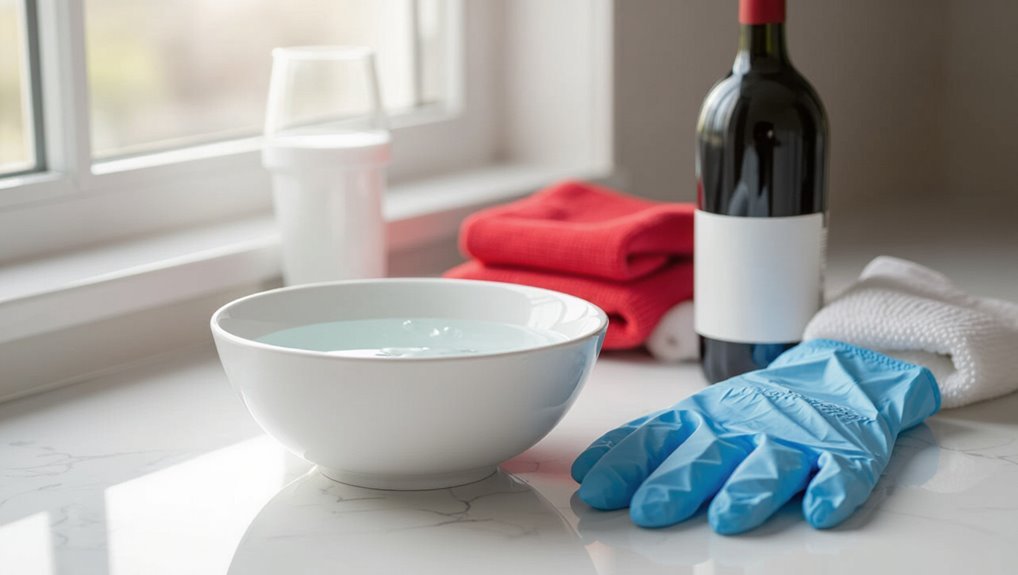
When you gather the right supplies, you’ll make the cleanup faster and reduce the risk of damaging the paint.
Have gentle cleaners, absorbent cloths, and soft brushes ready. Test cleaners in an inconspicuous spot first. Work from the outside of the stain inward and avoid scrubbing.
- Microfiber cloths and paper towels
- Mild dish soap, hydrogen peroxide, or dedicated stain remover
- Soft sponge or small nylon brush
Step-by-Step Removal Methods
You’ll find a set of targeted methods for different situations, from quick blotting with mild soap for fresh spills to a baking soda paste for set-in marks on washable paint.
For tougher jobs, we’ll cover hydrogen peroxide with dish soap, dry cleaning sponges and specialty products for delicate or nonwashable finishes, and a repainting spot-repair workflow when nothing else works.
Follow each procedure in order and stop if the finish shows damage.
Method A For fresh stains: Blotting and mild soap solution
1 quick, decisive action can keep a fresh red wine splash from setting into paint: blot immediately with a clean, absorbent cloth to lift as much liquid as possible.
Then gently work a mild soap-and-water solution into the area to break down pigment without harming the finish. You’ll rinse, blot dry, and repeat until the stain fades.
- Blot, don’t rub
- Use mild dish soap
- Pat dry gently
Method B For set-in stains on washable finishes: Baking soda paste method
If a red wine stain has dried into a washable painted surface, you can lift it with a simple baking soda paste that draws pigment out without stripping the finish.
Mix baking soda and water to a thick paste, apply to the stain, let sit 15–30 minutes, then gently rub with a soft cloth.
Rinse, pat dry, and repeat if needed.
Method C For washable finishes: Hydrogen peroxide and dish soap approach
When the baking soda paste doesn’t fully lift the stain or you want a faster option, try a hydrogen peroxide and dish soap mix that’s gentle on washable paint but powerful on pigment.
Mix one part 3% hydrogen peroxide with one drop of mild dish soap per tablespoon.
Blot gently with a clean cloth, rinse with water, then pat dry.
Repeat once if needed.
Method D For delicate or nonwashable finishes: Dry cleaning sponge and professional products
Because delicate or nonwashable finishes can’t handle water-based scrubbing, use a dry cleaning sponge and targeted professional products to lift red wine without damaging the paint.
Gently blot with the sponge, working outward. Test any solvent in an inconspicuous spot first.
Apply a small amount, dab—don’t rub—then use the sponge to lift residue. Repeat sparingly until stain fades.
Method E For stubborn stains: Repainting spot repair workflow
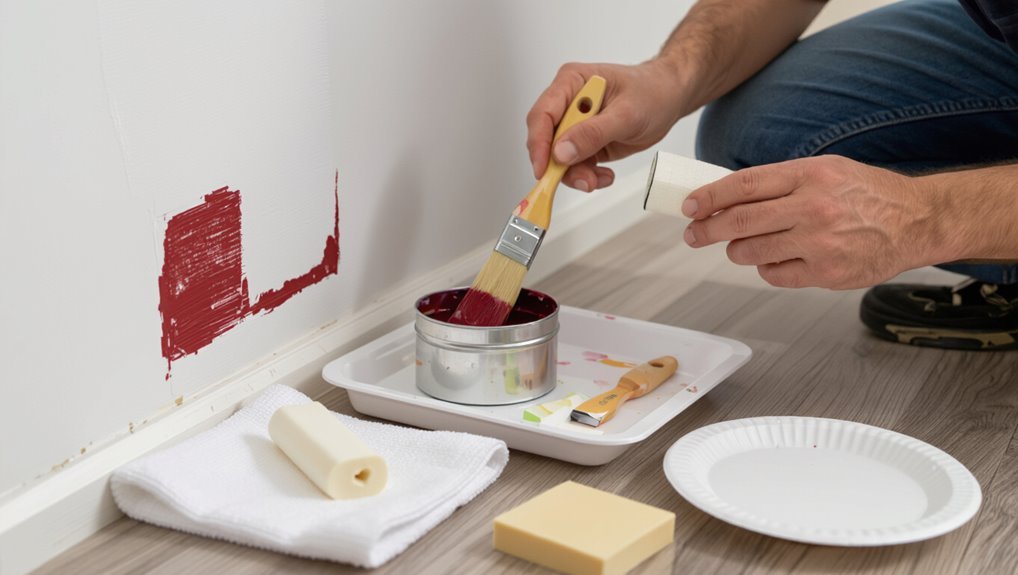
Sometimes even careful blotting and solvent work won’t fully remove a deep-set red wine stain, so you’ll need to move on to a spot repaint repair.
Sand lightly, feather edges, apply primer to seal any bleed-through, then match paint and use thin coats.
Let each coat dry, sand between if needed, and finish with the original sheen for an invisible repair.
Choosing the Right Method by Paint Type
You’ll want to match the stain-removal approach to your paint finish so you don’t damage the surface. Check the table below to quickly compare finishes and recommended actions, then test any cleaner in an inconspicuous spot. Start gently and only escalate if the finish tolerates it.
| Paint Finish | Recommended Approach |
|---|---|
| Flat/Matte | Blot, then mild detergent; avoid scrubbing to prevent sheen loss |
| Eggshell | Mild detergent and soft sponge; spot-test first |
| Satin | Mild detergent or diluted vinegar; gentle scrubbing OK |
| Semi-gloss | Stronger cleaners or baking soda paste; more abrasion tolerated |
| High-gloss | Most resilient — safe to use stronger cleaners and light scrubbing |
Matching stain-removal approaches to paint finish
When you’re choosing a stain-removal method, match your technique to the paint finish: flat and matte paints absorb liquids and handle gentle blotting, eggshell and satin can tolerate mild scrubbing, and semi-gloss or gloss stand up to stronger cleaners and more vigorous wiping.
Test first in an inconspicuous spot, work outward, and rinse well.
- Blot, don’t rub for flat/matte
- Gentle scrub for eggshell/satin
- Stronger cleaners for semi-gloss/gloss
Common Mistakes That Damage Paint and How to Avoid Them
Don’t scrub aggressively or you’ll strip finish and leave visible scuffs — use gentle strokes and a soft cloth instead.
Avoid over-wetting the wall, which can spread the stain and cause run marks or paint bleeding.
Never reach for bleach, strong solvents, or acidic cleaners without checking your paint type, because they can discolor or dissolve the finish.
Abrasive scrubbing and wrong cleaners to avoid
If you scrub hard or grab harsh cleaners out of frustration, you can strip paint, leave dull patches, or grind stain deeper into the finish.
Instead, test cleaners on an inconspicuous spot, use soft microfiber, and apply gentle blotting. Avoid abrasive pads, bleach, and solvent-heavy products that dissolve finish.
Be patient and work from edges toward the center.
- Test first
- Soft cloth only
- Skip abrasives
Over-wetting and causing bleeding or run marks
Because paint softens with excess moisture, over-wetting a stained area can cause the color to bleed and leave unsightly run marks that are much harder to fix.
Work with damp—not dripping—cloths, blot gently from the edges inward, and change cloths as they absorb wine.
Pause to let the wall dry between attempts so you don’t spread the stain or weaken the finish.
Misusing bleach, solvents, and acidic cleaners
When you reach for bleach, nail polish remover, or vinegar to tackle a red wine stain, remember that those powerful cleaners can strip or discolor paint almost as fast as the wine itself.
Don’t use strong solvents or acidic mixtures; test mild soap and water first on an inconspicuous spot.
If needed, try a paint-safe cleaner or consult a professional to avoid irreversible damage.
Preventive Measures and Best Practices
When a spill happens, act fast to blot and dilute it so the stain doesn’t set.
You can also add protective clear coats or sacrificial finishes ahead of time to make cleanup easier.
Keep a stain-repellent paint option and a small touch-up kit nearby for quick fixes if the color or finish gets damaged.
Immediate actions to minimize staining
Act fast: blot the spill with a clean, absorbent cloth or paper towel to lift as much wine as you can without rubbing.
Then gently dab diluted mild detergent or club soda, working outward from the stain. Rinse with a damp cloth and dry.
- Blot; don’t rub.
- Test cleaner in an inconspicuous spot.
- Work from edges to center.
Protective coatings and finishes to add before accidents occur
Although you can’t predict every spill, you can make your painted walls far more forgiving by adding protective coatings and finishes beforehand.
Apply a clear, breathable polyurethane or water-based varnish over high-risk areas to resist liquids and allow gentle cleaning.
Consider satin or semi-gloss for easier wipe-up.
Test small sections first, follow manufacturer cure times, and maintain finishes regularly to preserve protection.
Stain-repellent paint options and touch-up kits to keep on hand
If you want walls that shrug off splashes and make fixes quick, choose stain-repellent paints and keep a simple touch-up kit nearby.
Pick washable, low-porosity latex or acrylic paints with stain blockers.
Store a small kit: matching paint sample, angled brush, mild cleaner, microfiber cloth, and clear protective topcoat.
Test a hidden spot before treating visible stains.
Comparison of Commercial Cleaners vs. Household Remedies
You’ll want to weigh commercial cleaners against household remedies for effectiveness, finish safety, cost, and ease of use before you start. Below is a quick comparison to help you decide which route fits your situation. Try a small test spot first to protect your paint.
| Commercial Cleaners | Household Remedies |
|---|---|
| Often more effective on set stains | Can be effective on fresh stains |
| Formulated to protect finishes | Risk of dulling or discoloring finishes |
| Higher upfront cost | Low cost or free ingredients |
| Generally easy to use as directed | May require more effort or repetition |
| Consistent results when used properly | Results vary by stain age and technique |
Effectiveness, safety for finishes, cost, and ease of use
When deciding between commercial cleaners and household remedies, weigh how well each removes red wine, whether it risks your paint finish, how much you’ll spend, and how simple the process is; you’ll often trade faster stain lift from commercial products for higher cost and potential finish risk, while household fixes can be gentler, cheaper, but slower and messier.
- Commercial: fast, costlier, check label.
- DIY: gentle, cheap, slower.
- Test first on hidden spot.
Troubleshooting Scenarios
If the fresh spill spread beyond the initial spot, act quickly to blot outward edges and prevent further soaking.
For textured or wallpapered painted surfaces, you’ll need gentler blotting and spot-testing to avoid damage.
If you still see residual discoloration after cleaning, try targeted stain removers or a light repaint touch-up.
Fresh stain that spread beyond the initial spot
Although quick action usually keeps a spill contained, a fresh red wine stain can still spread beyond its initial spot if the liquid soaks into the paint or runs down the wall.
Stain on textured or wallpapered painted surfaces
Textured paint and wallpaper demand a gentler, more careful approach because their grooves and seams can trap wine and cleaning agents.
Blot gently with a soft cloth, don’t scrub. Test any cleaner on an inconspicuous area first.
Use a mild solution (dish soap and water) applied with a soft brush to lift stains from crevices, then blot and air-dry.
Repeat sparingly.
Residual discoloration after cleaning next steps
When a faint tint lingers after you’ve cleaned, don’t assume it’s permanent—there are targeted troubleshooting steps you can take to restore the finish.
Test a discreet area with diluted hydrogen peroxide or a baking soda paste, rinse, then dry.
If color remains, lightly scuff and touch up with matching paint or consult a pro for color-correcting primer before repainting.
FAQ
You probably have a few quick questions about using common cleaners or whether it’s worth repainting after a spill, and this FAQ will answer the most practical ones.
You’ll learn what cleaners are safe, how long stains stay treatable, and when repainting is the better option. If you try anything new, test a hidden spot first to avoid surprises.
- Can bleach or rubbing alcohol be used safely on painted walls?
- How long after the spill can you still remove the stain effectively?
- Should you keep trying treatments or just repaint?
Can I use bleach to remove red wine from painted walls?
Curious if bleach will salvage that red-wine stain? You can use diluted bleach on white or very durable, nonporous painted surfaces, but it risks discoloring or stripping paint and fumes are harsh.
Always spot-test in an inconspicuous area, ventilate, and wear gloves. Prefer milder cleaners first; reserve bleach for stubborn stains and repeated tests show no paint damage.
Will rubbing alcohol remove red wine without damaging paint?
If bleach seems too harsh for your paint, rubbing alcohol offers a milder solvent that often lifts red wine without stripping finish.
Dampen a white cloth with isopropyl alcohol, blot gently from the stain’s edge inward, and avoid scrubbing.
Test an inconspicuous spot first to confirm colorfastness.
Rinse with a damp cloth and pat dry to remove residue.
How long after the spill can I still remove the stain effectively?
How soon you act makes a big difference: fresh red wine on painted walls is far easier to remove than a set stain.
You’ll have the best success within minutes to a few hours—blot promptly, then clean with a mild detergent or alcohol-based solution if paint allows.
After 24–48 hours the pigment bonds and removal becomes harder; prompt treatment is key.
Is it better to repaint than to keep trying to remove a stubborn stain?
When prompt cleaning hasn’t lifted the stain or the pigment’s set after a day or two, you’ll have to weigh continued removal attempts against repainting.
If solvents risk dulling or stripping finish, repainting often saves time and prevents damage. Match paint type and sheen, feather edges, and prime stained areas.
Repainting is usually the cleaner, more reliable fix for stubborn, set-in wine stains.
Can commercial carpet or upholstery cleaners be used on painted walls?
Can you use carpet or upholstery cleaners on painted walls? You can, but proceed cautiously.
Many cleaners contain solvents or brighteners that may dull, soften, or strip paint. Test a hidden spot first, follow dilution instructions, and blot—don’t rub.
Use mild, pH-neutral formulas and rinse thoroughly with clean water. If finish changes, stop and try gentler methods or repaint.
Conclusion and Best Next Steps
Start by using the safest, most effective methods you tried—blot, mild detergent, then a targeted stain remover if needed.
If the stain’s old, large, or has damaged the paint, call a professional cleaner or a restoration specialist (look for local upholstery and paint-restoration pros with good reviews).
Keep an emergency stain kit and always test any method on a hidden spot before treating the visible area.
Quick recap of safest, most effective approaches
Although a fresh spill gives you the best chance of full removal, you can still lift set stains if you act methodically:
Begin with gentle blotting and plain water, move to a mild detergent or dish soap solution, and—for stubborn marks—use a diluted hydrogen peroxide or an ammonia-based cleaner suited to the paint type, testing each step on an inconspicuous spot first.
Follow with gentle rinsing and blotting.
When to call a professional and recommended pros to contact
If you’ve tried the gentle steps above and the stain won’t budge, or if the paint finish looks damaged or highly textured, it’s time to call in a pro.
You’ll want specialists who can assess finish type, remove stains safely, or repair paint without visible seams.
- Professional cleaners experienced with interior paint
- Paint restoration or conservator services
- Local painting contractors with fine-finish experience
Call to action: keep an emergency stain kit and test methods on hidden spots
Because spills happen fast, keep a small emergency stain kit handy and always test any cleaning method on a hidden spot first; you’ll save time and prevent damage by having the right supplies (clean cloths, mild detergent, rubbing alcohol, a soft brush, and touch-up paint) and confirming they won’t harm your finish before you tackle the visible stain.
Store it near problem areas, label contents, and rehearse quick, gentle steps.
