
How to Remove Latex Paint From Cabinets Without Damage
You can remove latex paint from cabinets without damage by first evaluating the paint type and cabinet material, then using the gentlest method that will work. Start with warm, soapy water and a soft cloth for fresh splatters, try rubbing alcohol or plastic scrapers for thin spots, and use a noncaustic stripper or heat gun sparingly on stubborn areas. Protect surfaces, test hidden spots, ventilate, and finish with light sanding and primer; keep going to learn full techniques and precautions.
Quick Answer: Safest Way to Remove Latex Paint From Cabinets
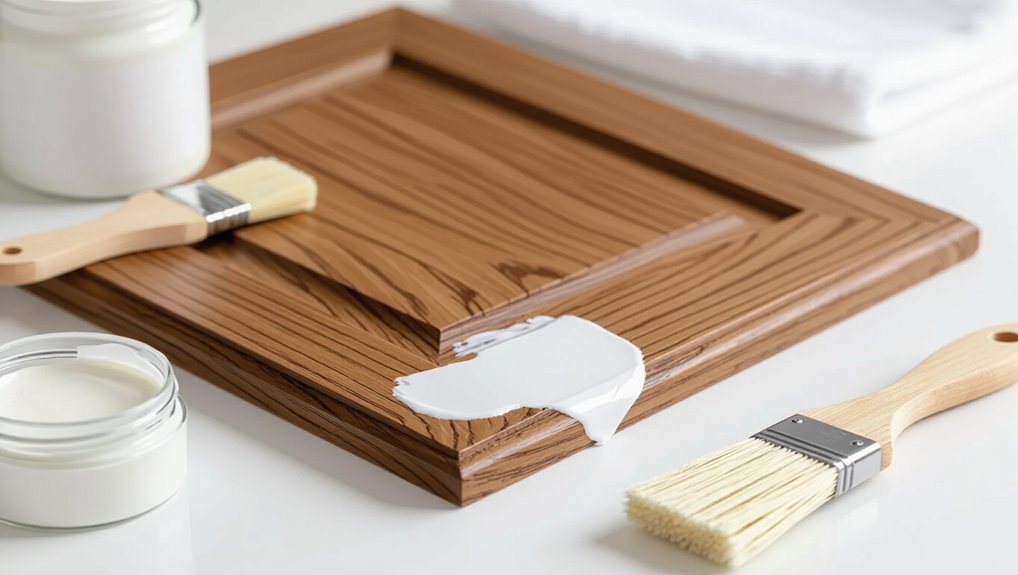
Start by testing the gentlest method first: warm, soapy water and a soft cloth.
Begin with the gentlest test: warm, soapy water and a soft cloth before trying anything harsher.
If that fails, try a plastic scraper and mild solvent suited to the paint types involved, then a citric-based stripper for stubborn latex.
Work gently, testing hidden areas.
Sand lightly only if necessary and finish with a compatible primer.
These removal techniques minimize damage and preserve cabinet surfaces.
Who This Guide Is For and What It Covers
If you followed the quick steps above but need more guidance, this guide is for homeowners, DIYers, and pros who want clear, step-by-step methods for removing latex paint from cabinet surfaces without causing damage.
You’ll learn to identify paint types and protect various cabinet finishes, pick safe removers, and use proper tools.
- Identification
- Safe removers
- Techniques
- Finishing steps
Assessing Damage: Drip, Splatter, Full Coat, or Tacky Paint
When you’re ready to remove paint, first determine whether you’re dealing with a drip, a splatter, a full coat, or tacky paint, because each requires a different approach and level of care.
Inspect severity: drips and splatters often scrape or soften; full coats may need stripping; tacky paint needs slower solvent or heat.
Match method to paint types and existing cabinet finishes to avoid damage.
Which Cabinet Materials Need Special Care (Wood, Veneer, Laminate, Painted)
If your cabinets are solid wood, you’ll need to use the gentlest methods—soft scrapers, mild solvents, and light sanding—to avoid gouging or stripping the finish.
Veneer and laminate can look similar but react differently, so test a hidden spot first and skip aggressive scraping or harsh chemicals that can lift or melt the surface.
For painted cabinets, treat the topcoat carefully to remove paint without removing the underlying paint layer unless you plan to refinish.
Wood Requires Gentle Methods
Because solid wood and thin veneers can soak up solvents and swell, you’ll need gentler methods than you’d use on metal or solid plastic.
You should use gentle scrubbing, minimal moisture application, and patience to protect grain and finish.
- Test a hidden spot first
- Use soft cloths or sponges
- Prefer mild cleaners
- Dry thoroughly afterward
Laminate And Veneer Caution
Though laminate and thin veneers look durable, they react differently to solvents and scrubbing than solid wood, so you should treat them with extra care.
Test cleaners in an inconspicuous spot to confirm laminate differences and avoid warping.
For veneer care, use mild soap, soft cloths, and gentle blotting; never sand or use harsh chemicals that lift edges or strip the thin finish.
Gather Tools and Supplies You’ll Need
Before you start, make a checklist of essential tools like scrapers, putty knives, sandpaper, and a heat gun or chemical stripper.
Put on protective supplies—gloves, goggles, a respirator, and drop cloths—to keep yourself and your workspace safe.
Gather paint-removal materials such as commercial stripper, mineral spirits, and rags so you’re ready for whatever method the cabinet material requires.
Essential Tools Checklist
You’ll want a compact kit of tools and supplies ready before you start stripping latex paint from cabinets—this saves time and prevents mistakes.
Focus on tool types and essential items that let you work efficiently and avoid damage.
- Plastic scrapers, putty knife
- Chemical stripper or heat gun (as chosen)
- Fine-grit sandpaper, sanding block
- Soft brushes, clean rags
Protective Supplies Needed
Safety gear keeps the job from turning into a hazard, so gather protective supplies that shield your skin, eyes, lungs, and floors.
Wear protective gloves and safety goggles, add a respirator or mask rated for vapors, and use disposable coveralls or long sleeves.
Lay down drop cloths or plastic sheeting and secure edges to protect flooring and nearby surfaces from spills and dust.
Paint-Removal Materials
Now that you’ve got your protective gear and drop cloths in place, gather the specific tools and products that actually strip paint.
Choose supplies that match your paint removal techniques and consider eco friendly solutions when possible.
- Chemical or gel stripper (low-VOC or biodegradable)
- Plastic scrapers and putty knives
- Fine-grit sandpaper and sanding block
- Soft brushes, rags, and a bucket of warm water
Protect Surrounding Surfaces and Hardware Before You Start
Before you touch a brush, clear and cover the area so paint stays only where you want it: remove loose items, open cabinet doors, and lay down drop cloths or plastic sheeting to protect floors and countertops.
Tape edges, remove or mask knobs and hinges, and wrap exposed trim for surface protection and hardware safeguarding.
Keep a trash bag and tack cloth handy for quick cleanup.
Do a Patch Test: How to Test Removal Methods Safely
Before you start on a visible area, test your chosen remover on a small, hidden spot like the inside edge or back of a cabinet door.
Apply the product in stages—wait between applications—so you can see how the finish and wood react without causing damage.
If the patch shows discoloration or finish loss, stop and try a gentler method.
Small Hidden Area
Pick a small, out-of-the-way spot—inside a cabinet corner or the backside of a trim piece—and try your chosen removal method there first.
Use hidden techniques to check finish reaction and guarantee cabinet preservation before proceeding.
- Clean area gently
- Apply remover briefly
- Blot, don’t rub
- Inspect for color or finish change
Stepwise Application Test
Start by choosing a small, inconspicuous patch—such as the inside edge of a door or the back of a trim—and work in clear, measured steps so you can judge how the surface reacts.
Apply one removal technique per test spot, wait the recommended time, then gently wipe.
Note results—finish, adhesion, discoloration—before proceeding to larger areas.
Soften Latex Paint With Warm Water and Soap (When It Works)
When the latex paint is still fresh or only mildly adhered, warm water and dish soap can soften the film enough for you to wipe it away with a cloth or sponge.
Use gentle pressure and short soak times to avoid finish damage. Concentrate on soap effectiveness and repeat as needed.
- Wet area
- Apply soap
- Agitate gently
- Blot dry
Remove Small Spots With Rubbing Alcohol and Isopropyl
Dab a cotton ball or soft cloth with isopropyl rubbing alcohol and gently rub the paint spot—this dissolves fresh or thin latex without harming most finishes if you work carefully.
Test a hidden area first. Work small, blotting loosened paint, and avoid scrubbing hard.
Rubbing alcohol evaporates quickly, so reapply sparingly until the spot lifts, then wipe with a damp cloth and dry.
Use Plastic Scrapers and Putty Knives Without Gouging Finishes
Pick up a plastic scraper or a flexible putty knife and work gently along the paint edge so you lift latex without gouging the cabinet finish.
Use plastic scraper techniques and putty knife tips to keep angle shallow, pressure light, and blade flat.
Follow these steps:
- Test on hidden spot.
- Hold tool at 30°.
- Scrape with grain.
- Clean residue with damp cloth.
Use a Heat Gun Safely to Lift Latex Paint From Cabinets
If scraping doesn’t budge stubborn latex, a heat gun can soften the paint so you lift it without chipping the finish.
Hold the gun 6–8 inches away, use low to medium heat settings, and warm small areas. Gently peel softened paint with a plastic scraper.
Wear gloves, eye protection, and a respirator as safety precautions, and keep a fire extinguisher nearby.
Why and When Mineral Spirits Can Help : and When to Avoid Them
You can use mineral spirits to loosen stubborn latex paint on raw or unsealed wood and to clean up residue after scraping.
Avoid them on painted or laminate surfaces that can be dulled, and don’t use them near open flames or in poorly ventilated spaces.
Always test a hidden spot first and wear gloves and eye protection.
When Mineral Spirits Help
Because mineral spirits dissolve oil-based paints and clean greasy residues, they’ll often be your best first step when removing latex paint that’s been applied over an oil finish or mixed with oily contaminants.
You’ll appreciate mineral spirits effectiveness and check paint compatibility first.
- Test a hidden spot.
- Use gloves and ventilation.
- Apply sparingly with a cloth.
- Wipe clean and assess.
When To Avoid
Mineral spirits work well in many situations, but they aren’t right for every cabinet or paint problem — and you’ll want to know when to skip them.
Don’t use them on delicate or water-sensitive cabinet finishes, veneered surfaces, or unknown paint types that might soften or discolor.
Test a hidden area first. If damage appears, stop and choose a gentler method like mild soap, heat, or sanding.
Choose Gentle Chemical Removers for Cabinets
When paint won’t come off with sanding or a heat gun, reach for a gentle chemical remover formulated for latex and safe on wood finishes.
If sanding or a heat gun fail, try a gentle latex-safe chemical remover made for wood finishes.
You’ll want gentle solvents that won’t strip varnish or stain. Test in an inconspicuous spot, follow directions, and protect surfaces.
- Choose noncaustic formula
- Read label for cabinet finishes
- Use soft applicator
- Neutralize residue
Use Commercial Latex Paint Strippers Safely on Wood Cabinets
When you use a commercial latex paint stripper on wood cabinets, pick a product labeled safe for wood and suited to latex paint removal.
Prepare the work area by ventilating, laying down drop cloths, and wearing gloves and eye protection.
Apply the stripper per instructions, then neutralize and rinse the surface thoroughly before refinishing.
Choose Appropriate Stripper
Pick a commercial latex paint stripper formulated for use on wood cabinets and follow the label — these products vary in strength, solvent type, and drying time, so choosing one rated safe for finished or bare wood will protect the substrate while removing paint efficiently.
- Compare paint stripper types: caustic, solvent, and gel.
- Look for eco friendly options.
- Check compatibility with your finish.
- Test on a hidden area.
Prepare Work Area
Before you open a can of stripper, set up a well-ventilated, contained work area so fumes stay away from you and the rest of the house.
Lay drop cloths over the work surface, remove hardware, and mask surrounding areas. Use cardboard or plastic to shield floors and nearby cabinets.
Keep a fire extinguisher, gloves, goggles, and proper disposal bags close at hand for cabinet protection.
Apply And Neutralize
Now that your workspace is prepped and protected, it’s time to apply a commercial latex paint stripper to the cabinet surfaces.
Follow directions, wear PPE, and test a small spot. After paint softens, scrape gently and neutralize per product instructions.
Use proper cleaning techniques to remove residue and check paint adhesion before refinishing.
- Apply stripper
- Wait and soften
- Scrape gently
- Neutralize and clean
Remove Paint From Painted-Over Cabinets Without Stripping the Finish
Start by evaluating the surface to determine how firmly the new paint is bonded to the original finish; you’ll want to remove the topcoat without damaging the underlying finish. Test mild solvents and a plastic scraper, observing paint adhesion and cabinet finishes. Work gently, spot-test, and wipe clean.
| Tool | Method | Result |
|---|---|---|
| Scraper | Gentle | Lift topcoat |
| Solvent | Spot-test | Softens paint |
| Cloth | Wipe | Cleans residue |
| Brush | Detail | Removes edges |
Remove Paint From Stained or Varnished Cabinets Without Dulling Sheen
If the cabinets are stained or varnished rather than painted, you’ll need a gentler approach that lifts the unwanted paint without flattening the existing sheen.
Use methods that preserve your paint finish and overall cabinet care:
- Test solvent on hidden area.
- Use citrus or soy-based remover sparingly.
- Gently scrape with plastic tools.
- Clean residue with mineral spirits, then polish.
Handle Painted Hardware and Hinges: Remove, Clean, and Protect
Remove the hardware before you tackle painted hinges and pulls so you can clean thoroughly and avoid further marring the cabinet finish.
Unscrew knobs and hinges, label pieces, and soak metal parts in mild detergent or a vinegar solution to loosen paint.
Use gentle cleaning techniques with nylon brushes, rinse, dry, and apply hardware protection like clear lacquer or wax to prevent corrosion and future paint adhesion.
How to Neutralize Solvents and Clean Residue After Removal
Once you’ve lifted softened paint and wiped away most solvent, neutralize remaining chemicals and clean residue promptly to protect the cabinet finish and your health.
- Rinse area with warm soapy water to dilute solvent and aid residue prevention.
- Blot dry with clean cloths; repeat until no film remains.
- Dispose used cloths per local solvent disposal rules.
- Ventilate space and inspect for lingering tackiness.
When to Sand vs. Chemically Strip Remaining Paint
After rinsing and drying the area, assess how much paint remains and how stubborn it is to decide whether to sand or use a chemical stripper. If thin or flaky, choose sanding techniques; if thick or layered, pick Chemical stripping. Wear protection, test a small spot, and follow manufacturer directions.
| Situation | Recommended method |
|---|---|
| Thin finish | Sanding techniques |
| Thick layers | Chemical stripping |
| Intricate areas | Chemical stripping |
| Light scuffs | Sanding techniques |
Repair Small Scratches and Finish Loss After Paint Removal
Start by evaluating how deep the scratches go so you know whether to fill, sand, or just buff.
Then blend the repaired area into the surrounding finish using matching stain or glaze and fine abrasive pads for a seamless look.
Finish by sealing the area with an appropriate topcoat to protect your work and guarantee uniform sheen.
Assess Scratch Depth
When you remove paint and spot raw wood or dulled finish, check each scratch to see how deep it goes and whether it crosses into bare wood or just scuffs the topcoat; that determines whether you’ll be able to blend with a touch-up or must sand and refinish the area.
- Use bright light for scratch detection.
- Run your fingernail for feel.
- Note finish loss depth evaluation.
- Mark spots for repair planning.
Blend Finish Seamlessly
1 simple goal now: make the repaired area disappear. You’ll sand lightly, clean residue, then use blending techniques—feather thin coats of stain or touch-up marker to follow grain.
Compare under good light for finish matching; adjust sheen with fine scuffing. Buff after drying so repaired spots melt into surrounding cabinetry, restoring appearance without overworking the surface.
Protect And Seal
Seal the repaired area to lock in your work and prevent new damage: after you’ve matched the color and smoothed the surface, apply a thin, even topcoat—either a clear varnish, polyurethane, or shellac—chosen for compatibility with the original finish and the sheen you want.
- Choose sealant options that suit wood type.
- Lightly sand between coats.
- Keep ventilation for cabinet protection.
- Cure fully before use.
Refinish Options: Touch-Up Paint, Stain, or Recoat Cabinets
Before you decide whether to touch up, stain, or recoat your cabinets, weigh how much wear they have, the look you want, and how much time you’re willing to invest.
Before choosing touch-up, stain, or recoat, consider wear, desired look, and time investment.
Choose touch up techniques for small chips, matching color and sheen.
Pick stain to reveal wood grain, or recoat for a uniform finish.
Assess prep, drying time, and durability among refinishing options.
Stay Safe: Ventilation, PPE, and Disposing of Chemicals
Before you start stripping or sanding, set up good ventilation by opening windows, running fans, and directing fumes outside.
Wear proper PPE—gloves, eye protection, and a respirator rated for organic vapors—so you don’t inhale or absorb chemicals.
When you’re done, follow local guidelines for disposing of rags, solvents, and leftover paint to avoid fires and environmental harm.
Proper Ventilation Setup
Because solvents and paint particles can linger in the air, you’ll want to set up strong ventilation before you sand or strip cabinets.
Use ventilation strategies that boost air circulation and exhaust fumes outdoors. Position fans and open windows, create a cross-breeze, and seal off other rooms.
Follow this checklist:
- Exhaust fan toward outdoors
- Window intake opposite fan
- Box fan aiding cross-breeze
- Plastic sheeting to contain dust
PPE And Chemical Handling
When you start sanding or using strippers, suit up with the right PPE and handle chemicals deliberately: wear a respirator rated for organic vapors or particulate matter (depending on the task), chemical-resistant gloves, eye protection, and long sleeves to keep dust and solvents off your skin.
Work with small amounts of stripper in well-ventilated areas, keep all containers tightly closed when not in use, and have a designated, labeled container for used rags and solvent waste so you can dispose of them safely.
Use personal protective measures, follow chemical safety labels, avoid mixing products, and transport wastes to a hazardous disposal site per local rules.
Time-Saving Methods for Removing Paint From Many Cabinets at Once
If you’ve got a full kitchen or a run of cabinets to strip, tackling them all at once saves time and keeps your workflow efficient.
Use batch techniques and efficient strategies to streamline work:
- Remove doors and hardware in zones.
- Set up a chemical dip or peel station.
- Work assembly-line sanding and rinsing.
- Refinish and rehung in stages for steady progress.
Common Mistakes That Damage Cabinets and How to Avoid Them
Batch methods speed the job, but they can also magnify mistakes that permanently harm your cabinets.
Don’t oversand, overuse harsh strippers, or skip testing—those accelerate finish damage.
Avoid oversanding, harsh strippers, or skipping tests—those shortcuts speed up finish damage and costly repairs.
Protect edges, remove hardware, and ventilate when using chemical paint removal.
Use gentle tools, follow product directions, and pause to reassess.
Good cabinet care prevents gouges, warping, and costly refinishing down the line.
Cost and Time Estimates: DIY Removal vs. Professional Refinishing
How much will it cost and how long will it take to remove latex paint from your cabinets?
Weigh cost comparison and time investment: DIY saves money but takes longer; pros cost more but finish faster.
- DIY: supplies $30–$200, weekends of work.
- Pro: $300–$1,500, 1–3 days.
- Hybrid: you prep, pros finish.
- Factor cabinet count.
Troubleshooting Stubborn Paint, Ghosting, and When to Call a Pro
You’ve weighed costs and time, now plan for the sticky problems: stubborn paint that won’t strip, pale stains (ghosting) showing through new finishes, and signs that you should call a pro.
Try targeted paint removal strategies—heat, solvent, or gentle sanding—test finishes, and seal ghosting with primer.
Use clear cabinet maintenance tips to prevent recurrence; call a pro for structural damage or persistent blemishes.
Frequently Asked Questions
Can Latex Paint Release Hazardous Fumes Months After Removal?
Yes — you can still experience paint toxicity risks; residual fume exposure may persist months if paint layers trap solvents or degrade. You should ventilate, use air purifiers, and test surfaces to reduce lingering hazards.
Can Latex Paint Removal Harm Underlying Cabinet Glue Joints?
Yes — if you use harsh solvents or aggressive scraping, you can weaken glue joints; you should choose methods preserving paint adhesion and compatible with cabinet materials, testing in hidden areas so you won’t compromise structural bonds.
Will Removing Paint Void Cabinet Warranty or Insurance Coverage?
Possibly — you’ll want to check fine print, since warranty implications can arise if removal alters finishes or hardware; insurance considerations seldom cover DIY cosmetic work, so document steps and consult your provider before proceeding.
How to Remove Paint From Glass Inserts Without Scratching?
You’ll soften paint with warm soapy water or a gentle paint remover, then scrape carefully with a plastic scraper or razor at shallow angles; follow paint removal techniques and glass care tips, and finish with a microfiber cloth.
Can Pets or Children Re-Enter Workspace Immediately After Cleaning?
No, you shouldn’t let pets or children re-enter immediately; wait until solvents fully evaporate and surfaces are dry. You’ll guarantee pet safety and maintain child supervision, ventilating well and checking manufacturer drying times before allowing access.
Conclusion
You’ve got options, and you’ll pick the one that fits your skills, budget, and cabinet type. Start gently—soak, scrape, or use a mild stripper—before escalating to sanding or hiring a pro. Protect veneers and laminates, test first, and avoid harsh abrasives that’ll turn your cabinets into an unfixable mess. If stubborn paint or ghosting persists, call a pro; there’s no shame in admitting defeat—after all, even Sherlock needed help sometimes.
